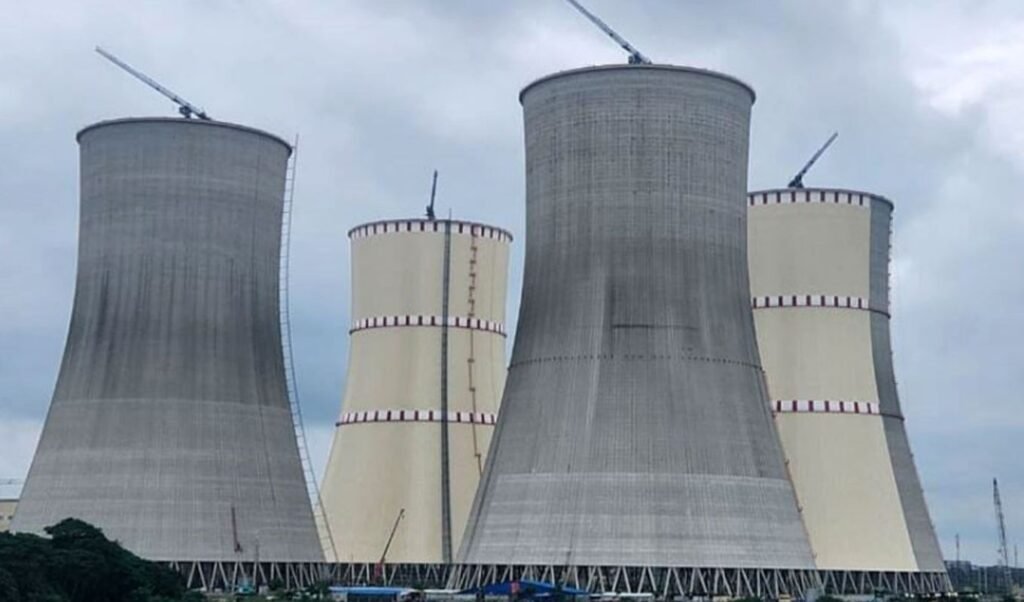
The Rooppur Nuclear Power Plant project is facing growing challenges as delays continue to affect cost, loan burden and power security. The first unit, originally scheduled to generate electricity this December, will not begin operation on time. The second unit’s schedule has also become uncertain.
A new proposal seeks to add Tk 261.81 billion to the project’s cost, raising the total to Tk 1.39274 trillion—around 23 per cent higher than the original allocation. The project timeline has been proposed to extend to June 2028.
In its initial revised proposal in early November, the Ministry of Science and Technology suggested increasing the cost by Tk 133.86 billion. During the PEC meeting on 11 November, it was noted that the foreign currency exchange rate had not been calculated properly. The reassessed cost proposal was sent to the Planning Commission on 27 November.
The project’s original cost in 2016 was Tk 1.13092 trillion. Although Russia’s USD 11.38 billion loan remains unchanged in dollars, in taka it now stands at Tk 1.16799 trillion. Under the revised DPA calculation, USD rates have been set at Tk 95.28 until June 2025 and Tk 122 thereafter for three years.
The project includes two 1,200 MW units, equipment supply, training and fuel arrangements under the Bangladesh–Russia intergovernmental agreement. The first revision projected the first unit to enter commercial production in 2026, but the latest delays indicate the second unit will also be affected.
The Planning Commission warned that inaccurate cost calculations could severely impact production costs, financial assessments and profitability estimates. The PEC meeting reviewed maintenance expenditure, civil works and various economic codes.
Loan disbursement from Russia slowed due to the pandemic and the Russia–Ukraine conflict. The remaining USD 3.68 billion is expected by December 2026. Loan repayment begins in March 2029 and must be completed in two instalments over 20 years. Any instalment delayed by more than 30 days will incur 150 per cent annual interest.
The planned December commissioning of Unit-1 is no longer achievable. According to IMED, neither unit has a confirmed updated production schedule, and the project office has failed to provide a list of incomplete work. Atomstroyexport has been asked to strengthen coordination.
Professor Md Shafiqul Islam of Dhaka University told the media that depreciation of the taka and other factors have raised per-unit production costs by around 50 per cent. With the project already delayed by nearly three years, loan instalments are increasing, equipment lifespan is shortening and workforce costs rising. He said the economic risks of the project have intensified.
TSN