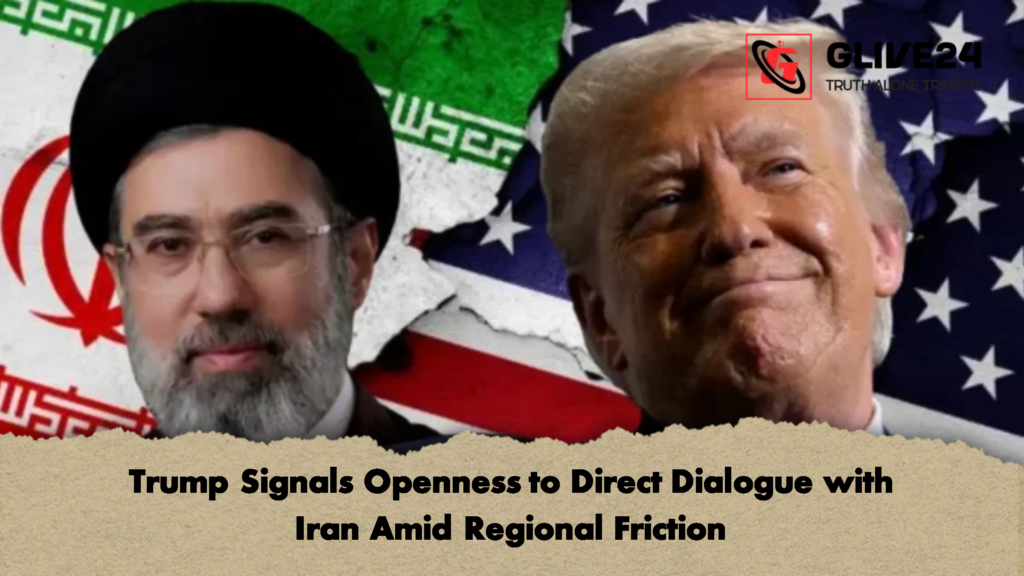
In a recent televised interview addressing the volatile geopolitical landscape of the Middle East, United States President Donald Trump has expressed a willingness to engage in direct communication with Iran. Speaking during an appearance on the Fox News programme, ‘The Sunday Briefing’, the President indicated that the path to diplomatic engagement remains accessible, provided the Iranian leadership takes the initiative to resolve ongoing hostilities.
These remarks were delivered on Sunday, 26 April 2026, amidst a period of heightened strategic competition and military posturing in the Persian Gulf. President Trump’s statements suggest that while the United States maintains its rigorous policy stance, the administration is prepared to consider formal diplomatic overtures if Tehran chooses to initiate contact.
Communication Infrastructure and Diplomatic Overtures
During the broadcast, President Trump dismissed the perception that diplomatic engagement between Washington and Tehran is hindered by technical or bureaucratic complexities. He emphasised that the American administration possesses the necessary infrastructure to facilitate secure high-level discussions at short notice.
“If they [Iran] want to talk, they can come to us or they can call us,” the President remarked. “You know, there are telephones there. We have excellent and secure communication systems in place.”
The President’s reference to “secure communication systems” highlights the existence of established, albeit indirect, protocols used for crisis management between nations that do not maintain formal diplomatic ties. Since the severance of direct diplomatic relations in 1980, the Swiss Embassy in Tehran has served as the “protecting power” for American interests, often acting as a neutral intermediary for the exchange of urgent messages. By publicly encouraging a “telephone call,” the President is signaling a preference for direct leader-to-leader interaction over traditional, slower diplomatic channels—a hallmark of his foreign policy approach.
Projections on the Resolution of Hostilities
While maintaining an openness to dialogue, President Trump also conveyed a firm confidence in the eventual resolution of the friction. His rhetoric balanced the prospect of peace with an assertion of American strategic superiority, suggesting that the current impasse will not be prolonged indefinitely.
The President expressed his belief that the standoff with Iran would conclude shortly and on terms advantageous to the United States. “I believe the Iran conflict will end very soon, and the United States will emerge victorious,” he stated. This outlook aligns with the administration’s broader strategic framework, which utilises a combination of comprehensive economic sanctions and a reinforced military presence to exert “maximum pressure” on the Iranian government.
Geopolitical Context and Regional Security
The President’s comments follow a series of escalatory actions in the region. According to reports sourced from Al Jazeera, the United States has recently augmented its military footprint in the Middle East, deploying advanced naval assets and long-range bombers. These movements have been officially described as deterrent measures against potential threats to American personnel and regional allies.
In response, the Iranian government has consistently denied seeking a full-scale military conflict, while simultaneously asserting its readiness to defend its sovereignty. The roots of the current tension lie in the 2018 U.S. withdrawal from the Joint Comprehensive Plan of Action (JCPOA). Following the exit from the nuclear accord, the Trump administration re-imposed stringent sanctions targeting Iran’s energy exports and financial institutions, aimed at curtailing its nuclear programme and regional influence.
International analysts observe that the President’s invitation for a direct call mirrors his previous diplomatic strategies involving other global flashpoints. However, Iranian officials have previously stipulated that they would not negotiate under the duress of economic sanctions, which they characterise as “economic terrorism.”
As of Sunday evening, the Iranian Ministry of Foreign Affairs has not issued a formal reply to the President’s televised remarks. The international community continues to monitor whether this public invitation will lead to a substantive de-escalation or if the regional environment will remain defined by a state of high military readiness and assertive rhetoric.