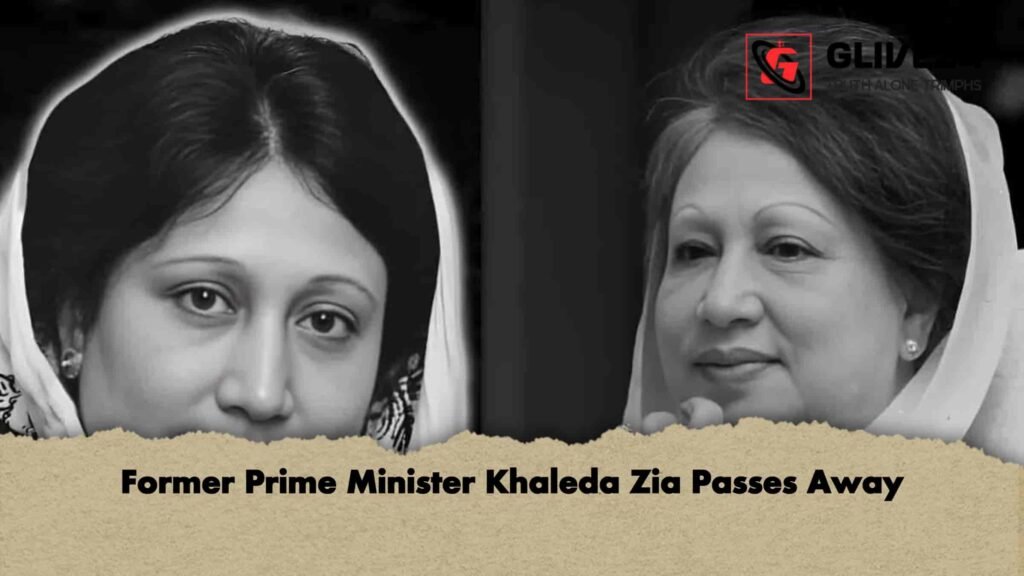
Bangladesh Nationalist Party (BNP) Chairperson and former prime minister Begum Khaleda Zia passed away in the early hours of today while receiving treatment at Evercare Hospital in Dhaka. She was 80. According to party officials, she breathed her last shortly after the Fajr prayers, at around 6:00 am. The news was first announced through a verified BNP social media statement and was later formally confirmed by the party’s Secretary General, Mirza Fakhrul Islam Alamgir. Her death marks the end of a long, complex and highly influential chapter in Bangladesh’s modern political history.
Begum Khaleda Zia had been admitted to Evercare Hospital on 23 November on the advice of physicians. Medical sources indicated that she was suffering from pneumonia, alongside infections affecting her heart and lungs. For many years, she had battled multiple chronic and serious ailments, including heart disease, liver and kidney complications, diabetes, respiratory problems, arthritis and vision-related difficulties. Her medical history included the implantation of a permanent pacemaker and the placement of cardiac stents. After returning from London for advanced medical care earlier this year, she had been undergoing regular follow-up treatment at the same hospital since 6 May.
Born in 1945 in Jalpaiguri, then part of undivided India, Khaleda Zia was affectionately known within her family as “Putul”. She spent much of her childhood and adolescence in Dinajpur. In 1960, she married Ziaur Rahman, then an officer in the Pakistan Army. Following Bangladesh’s Liberation War in 1971, Ziaur Rahman rose rapidly in national politics and later became President of Bangladesh. His assassination in 1981 left the BNP without leadership, and in an unexpected turn of events, Khaleda Zia entered politics.
Despite being a political novice, she quickly consolidated her position and was elected BNP Chairperson in 1984. Her uncompromising role in the mass movement against the military rule of Hussain Muhammad Ershad earned her a reputation as a resolute and defiant leader. She endured repeated arrests, house detention and political repression, yet remained at the forefront of opposition politics.
In 1991, Khaleda Zia made history by becoming Bangladesh’s first woman prime minister through a direct parliamentary election. Her government restored the parliamentary system of democracy and played a key role in re-establishing constitutional balance within the state. She was also instrumental in introducing the caretaker government system to ensure credible national elections. Over the course of her career, she served three terms as prime minister and, at different times, led the opposition in parliament.
The final phase of her life was marked by prolonged legal battles, imprisonment and severe illness. Convicted in corruption cases in 2018, she was temporarily released in 2020 on humanitarian grounds during the Covid-19 pandemic. Earlier this year, a presidential pardon formally cleared the remaining legal obstacles against her.
She is survived by her elder son, Tarique Rahman, who returned to Bangladesh last December after years in exile, along with his wife and daughter. Her younger son, Arafat Rahman Koko, passed away in Malaysia several years ago.
Begum Khaleda Zia’s passing leaves a profound void in Bangladesh’s political landscape. Her legacy—defined by democratic struggles, governance, confrontation and enduring rivalry—will continue to shape political discourse for years to come.
Key Milestones in Begum Khaleda Zia’s Life
| Year | Event |
|---|---|
| 1945 | Born in Jalpaiguri |
| 1960 | Married Ziaur Rahman |
| 1984 | Elected BNP Chairperson |
| 1991 | Sworn in as first woman prime minister |
| 1996 | Handed over power to caretaker government |
| 2001 | Began third term as prime minister |
| 2018 | Imprisoned in corruption cases |
| 2020 | Temporarily released on humanitarian grounds |
| 2025 | Granted full presidential pardon |
| 2025 | Passed away in Dhaka |