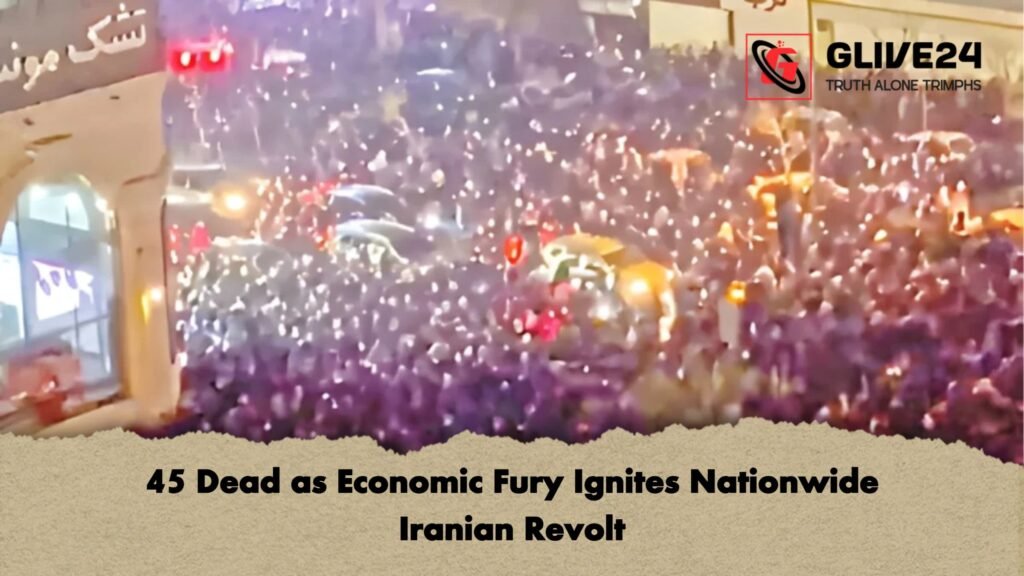
The Islamic Republic of Iran is currently gripped by a convulsion of anti-government violence that has rapidly escalated from localized economic grievances into a full-scale existential challenge to the clerical regime. Over the past thirteen days, the unrest has claimed at least 45 lives, including eight children, as security forces struggle to contain a rebellion that has now penetrated every one of the nation’s 31 provinces.
A Nation Cloaked in Silence
In an effort to stifle the coordination of dissent and blind the international community, the Iranian authorities have enforced a draconian digital blackout. According to the monitoring group NetBlocks, the country has been almost entirely severed from the global internet for over 24 hours. This strategic isolation has not only crippled the domestic banking sector but has also made the neutral verification of casualties nearly impossible for global news agencies.
The physical manifestations of this rage are visible in the charred remains of state infrastructure. From Tehran to Isfahan, government buildings, police vehicles, and state-run banks have been set ablaze. Protesters have been filmed tearing down national symbols and replacing them with slogans demanding the end of the Supreme Leader’s rule.
Table: Comparative Scale of Iranian Civil Unrest
| Event Period | Primary Trigger | Reported Fatalities | Reported Arrests |
| 2009 (Green Movement) | Election Integrity | ~72 (Unverified) | 4,000+ |
| 2022 (Mahsa Amini) | Human Rights/Hijab | 550+ | 20,000+ |
| 2026 (Current Revolt) | Economic Collapse | 45 (In 13 days) | 2,270+ |
The Catalyst: Hyperinflation and War
The current volatility is rooted in a devastating economic crisis. With inflation surpassing 40% and the Rial’s value evaporating, the average Iranian is facing unprecedented hardship. This was exacerbated by the 12-day kinetic conflict with Israel last June, which resulted in significant damage to Iran’s nuclear and industrial facilities. Citizens now blame systemic government corruption for the country’s inability to recover from these external shocks.
International Friction and the Pahlavi Factor
The crisis has taken on a dangerous geopolitical dimension following statements from US President Donald Trump. Having recently intervened in Venezuela, Trump has warned that the US is “ready to strike” if the Iranian government continues to kill its own people. This rhetoric has allowed Ayatollah Ali Khamenei to brand the protesters as “foreign mercenaries” and “terrorists,” claiming that the blood of Iranians is on Trump’s hands.
Simultaneously, Reza Pahlavi, the exiled son of the deposed Shah, has called for a continuous “battle in the streets” from his base in the United States. While his presence provides a rallying point for some—with chants of “The Pahlavi will return” heard in the capital—it also deepens the internal divisions within a nation already on the precipice.
As international airlines like Turkish Airlines and Emirates suspend flights to the region, the world watches a nation in flames, unable to hear the voices of those trapped behind the digital curtain.