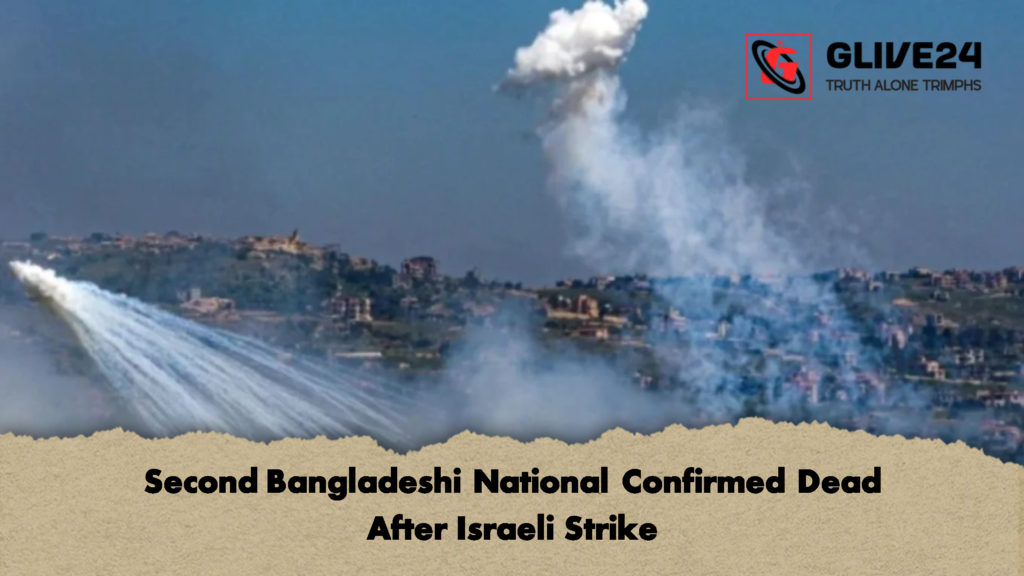
The Embassy of Bangladesh in Beirut has officially confirmed the death of a second Bangladeshi migrant worker following an Israeli drone strike in Southern Lebanon. This confirmation follows a period of uncertainty regarding the casualties sustained during the aerial bombardment. Furthermore, diplomatic and rescue sources indicate that the remains of a third Bangladeshi national are believed to be trapped beneath the debris of the targeted structure, although active recovery efforts have been impeded by persistent security concerns in the region.
According to a formal statement released by the mission on Wednesday, 13 May, the fatal incident occurred during the late hours of 11 May. The strike targeted a residential building in the Maifadoun area, located within the Nabatieh Governorate of Southern Lebanon. Initial intelligence and local reports suggested that two individuals—Shri Shubha Kumar Das, a native of Satkhira, and Karim Mia, hailing from Narsingdi—had perished in the attack.
Recovery Operations and Identification Procedures
On 13 May, a coordinated recovery operation involving the Lebanese Armed Forces and the Lebanese Red Cross succeeded in retrieving a severely dismembered body from the site of the explosion. Following the recovery, the remains were transported to the Najd Hospital in Nabatieh for formal processing.
The identification of the deceased was facilitated by a fellow Bangladeshi expatriate, identified as Rajib, who lived in close proximity to the victims. Rajib provided a positive identification, confirming that the retrieved remains belonged to Shri Shubha Kumar Das. The embassy is currently coordinating with the local medical authorities and the victim’s family in Satkhira to manage the subsequent legal and repatriation protocols.
Challenges in Retrieving Remaining Casualties
While the remains of Mr Das have been secured, the situation regarding the second victim remains critical. Embassy officials stated that Karim Mia is also presumed dead; however, his body remains trapped under the heavy wreckage of the demolished residence.
Reports from the site suggest that the Lebanese Army and the Lebanese Red Cross were forced to suspend recovery efforts for the second body due to heightened security risks and the threat of secondary strikes in the Nabatieh region. A diplomatic source confirmed that the embassy remains in constant communication with the local Lebanese authorities to resume the search as soon as the security environment permits.
Context of Migrant Workers in Conflict Zones
This incident marks an escalation in the casualties suffered by the Bangladeshi expatriate community in Lebanon amidst the ongoing cross-border hostilities. Southern Lebanon, particularly the Nabatieh Governorate, has been the site of frequent exchanges of fire and targeted drone strikes over recent months.
The Bangladeshi community in Lebanon is estimated to be significant, with many individuals employed in the agricultural, construction, and service sectors. The Ministry of Foreign Affairs in Dhaka, via the Beirut mission, has repeatedly advised its citizens to move away from the southern border regions to safer areas in the north. However, many workers remain in high-risk zones due to employment obligations or a lack of viable alternative accommodation.
The embassy has reiterated its commitment to providing all necessary assistance to the affected families. This includes facilitating the repatriation of remains and ensuring that the legal rights of the deceased workers are upheld under Lebanese labour laws. The confirmation of these deaths brings the total number of Bangladeshi nationals killed in recent Southern Lebanon strikes to three, following a similar report of a fatality on Monday. As the conflict continues, the safety of neutral migrant workers remains a primary concern for international observers and the Bangladeshi government alike.