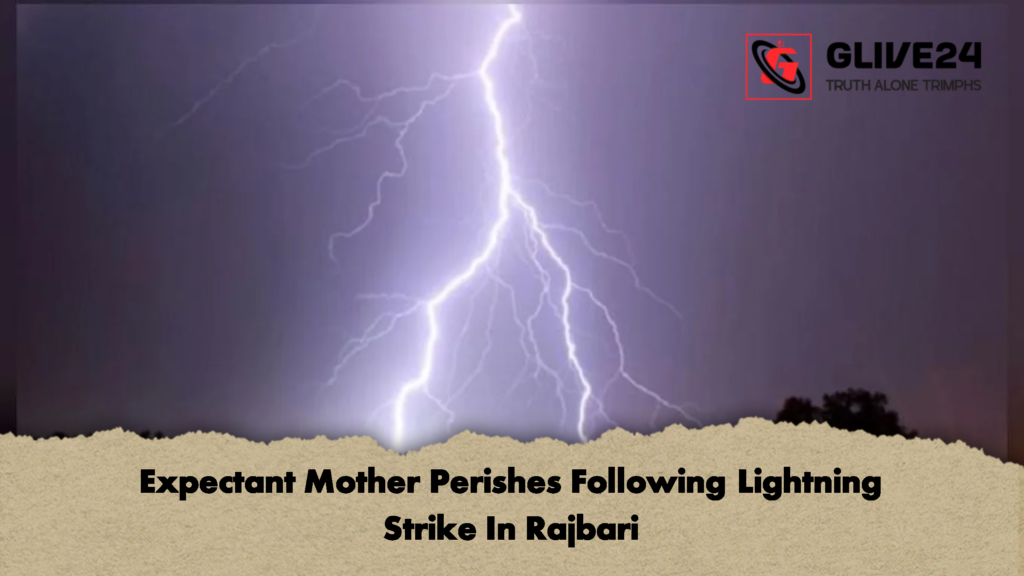
A tragic meteorological incident has claimed the life of a nine-month-pregnant woman in the Rajbari Sadar Upazila of central Bangladesh. The victim, identified as thirty-year-old Bonna, was fatally struck by lightning during a sudden period of atmospheric instability on Wednesday, 13 May. The incident occurred at approximately 3:30 pm within the precincts of her family residence in the village of Sheikhpara, situated under the Khankhanapur Union.
Bonna was the spouse of Nurul Huq, a resident of the aforementioned village. Her death has caused profound distress within the local community, particularly given her advanced stage of pregnancy and the sudden nature of the weather-related event that led to her demise.
Circumstances Surrounding the Fatal Incident
According to testimonies provided by local residents and family members, the region was experiencing a shift in weather conditions during the afternoon hours, characterised by moderate rainfall accompanied by thunder and lightning. At approximately 3:30 pm, Bonna ventured into the courtyard of her home with the intention of retrieving and relocating a pile of firewood (lakri) to protect it from the encroaching rain.
Whilst she was engaged in this task, a lightning bolt struck the courtyard directly. Witnesses reported that the impact was instantaneous, and Bonna succumbed to her injuries at the scene before any medical intervention could be sought. AKM Iqbal Hossain, the Chairman of the Khankhanapur Union Parishad, formally confirmed the details of the incident to the media, noting that the community has been left in shock by the loss of both the mother and her unborn child.
Meteorological Context and Regional Trends
The incident in Rajbari coincides with a broader pattern of pre-monsoon weather activity currently affecting much of Bangladesh. The Bangladesh Meteorological Department (BMD) has recently issued warnings regarding a low-pressure system in the Bay of Bengal, which has resulted in increased moisture levels and the formation of convective clouds across the interior districts.
Lightning strikes represent a significant and recurring natural hazard in Bangladesh, particularly during the months of April and May. Statistics from the Ministry of Disaster Management and Relief indicate that lightning has become one of the deadliest natural disasters in the country over the last decade. Several factors contribute to the high casualty rate associated with lightning in rural Bangladesh:
-
Geographic Vulnerability: The flat terrain of the deltaic plain makes individuals in open spaces or courtyards primary targets for electrical discharges.
-
Occupational Exposure: Rural residents often engage in outdoor activities, such as agricultural work or household chores in open courtyards, during the onset of storms.
-
Lack of Protective Infrastructure: Many rural dwellings lack lightning arrestors or tall trees that could serve as natural conductors to divert electrical energy away from living areas.
Safety Protocols and Government Response
In light of the increasing frequency of such fatalities, the government of Bangladesh officially declared lightning strikes as a natural disaster in 2016. Public health officials and disaster management experts consistently urge citizens to seek immediate shelter within permanent structures at the first sound of thunder.
Standard safety protocols during lightning activity include:
-
Avoiding open spaces such as courtyards, fields, or bodies of water.
-
Refraining from touching metal objects or using electronic devices connected to a power source.
-
Staying away from tall, isolated objects like single trees or electricity pylons.
The local administration in Rajbari has been informed of the tragedy, and standard procedures for documenting such accidental deaths are underway. Whilst the loss of life in Khankhanapur is a singular event, it underscores the lethal potential of the current weather system prevailing over the country. The authorities continue to advise residents in Rajbari and surrounding districts to exercise extreme caution as the low-pressure system continues to generate thundershowers and high-voltage electrical activity across the region.