
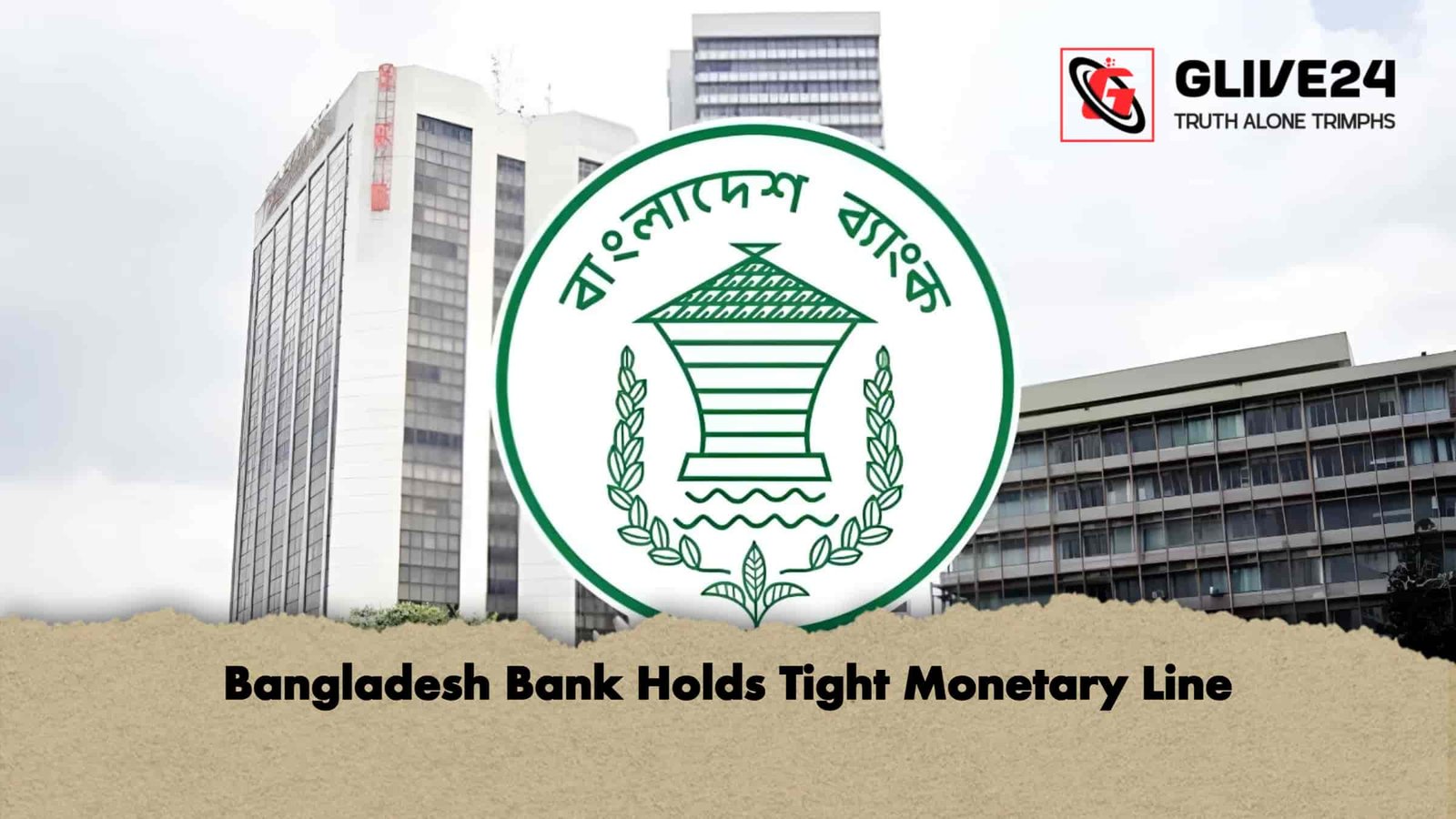
Bangladesh Bank has opted to maintain a restrictive monetary stance for the second half of the 2026–27 fiscal year, underscoring its determination to bring inflation firmly under control despite mounting pressure from the business community to lower interest rates. In its Monetary Policy Statement covering January to June, the central bank kept the policy interest rate, or repo rate, unchanged at 10 per cent, signalling that inflation management remains the overriding priority.
Central bank officials acknowledge that inflation has eased from its recent peaks but stress that it is still well above desired levels. Consumer price inflation stood at slightly above 8 per cent in December, compared with an official target of 6.5 per cent for the current fiscal year. In earlier policy guidance, Bangladesh Bank had stated clearly that a tight monetary posture would remain in place until inflation fell below 7 per cent. That threshold has yet to be achieved, justifying, in the bank’s view, the continuation of restrictive measures.
Against this backdrop, the target for private sector credit growth has been kept unchanged at 8 per cent. Actual credit growth, however, is currently running at around 6.2 per cent, reflecting subdued investment sentiment and weaker demand following the political transition of August 2024. In contrast, the ceiling for government sector credit growth may be raised from 18 per cent to 19 per cent, pointing to a cautiously more expansionary fiscal stance to support priority spending without undermining overall macroeconomic stability.
Interest rates in the banking system have shown a mild upward trend over the past six months. Average lending rates are hovering close to 12 per cent, while average deposit rates have climbed above 6 per cent. This has offered some relief to savers after a prolonged period of negative real returns, but it has also increased borrowing costs for businesses, particularly small and medium-sized enterprises already facing higher input prices.
Governor Ahsan H Mansur has publicly acknowledged the concerns of the private sector, noting that he personally would prefer lower interest rates if conditions allowed. However, he emphasised that a premature easing could jeopardise hard-won gains against inflation. He pointed out that inflation had previously reached nearly 12.5 per cent and that the decline to around 8.5 per cent represented progress, though not yet success. The central bank’s medium-term objective is to reduce inflation to between 3 and 4 per cent within the next two years.
The external sector has provided a more encouraging backdrop for policymakers. Since adopting a more flexible exchange rate regime in May 2025, Bangladesh Bank has refrained from selling dollars and instead purchased roughly USD 3.7 billion since August 2024. As a result, the current account has moved close to balance, the financial account has recorded a surplus, and foreign exchange reserves have been gradually rebuilding. By late January, gross reserves exceeded USD 28 billion, while the exchange rate has remained broadly stable at around Tk122–123 per US dollar for nearly a year.
The central bank aims to lift reserves to USD 35–36 billion by June. Policymakers see the slowdown in capital outflows and renewed interest from foreign investors as early signs that macroeconomic stability is being restored.
Key Monetary and Financial Indicators
| Indicator | Current Position | Previous / Target |
|---|---|---|
| Policy rate (repo) | 10% | Unchanged |
| Inflation (December) | Above 8% | Target 6.5% |
| Private sector credit growth | 6.2% (actual) | Target 8% |
| Government credit growth ceiling | 19% | Previously 18% |
| Average lending rate | около 12% | Past six months |
| Average deposit rate | Above 6% | Past six months |
| Exchange rate | Tk122–123 per USD | Stable for ~1 year |



Comments