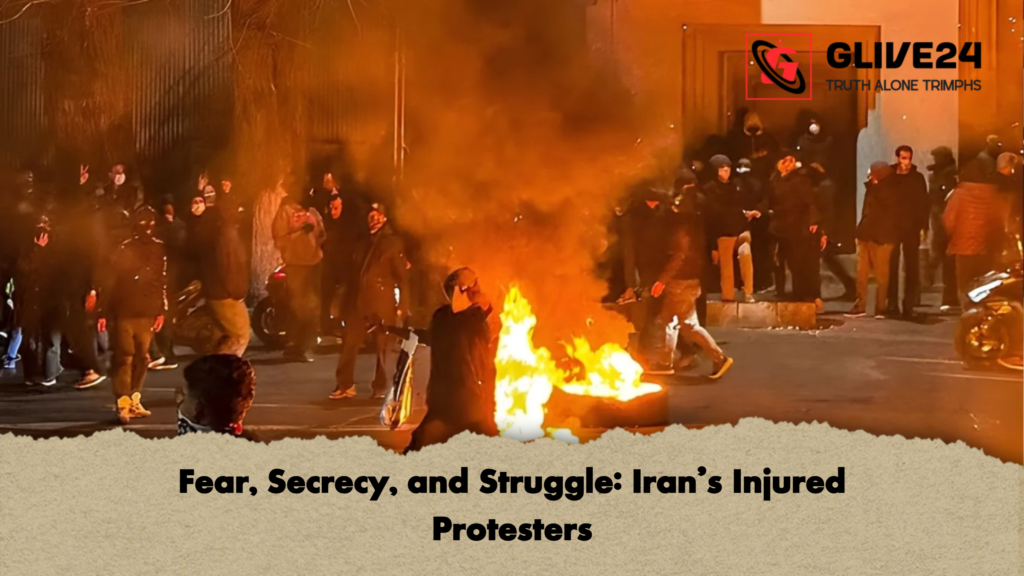
In the midst of ongoing anti-government protests across multiple Iranian cities, including Isfahan and Tehran, many injured demonstrators are avoiding treatment at state-run hospitals, fearing arrest or persecution by security forces. Instead, they are relying on trusted volunteer medics and acquaintances for clandestine home-based care.
A protester from Isfahan, speaking under the pseudonym Tara, described the harrowing circumstances. “After security forces opened fire on us, my friend and I, soaked in blood, sought refuge in the home of a local couple,” she said. “A familiar doctor cleaned our wounds, and later a surgeon came to remove small bullet fragments. The medics warned that not all bullets could be removed; some would remain inside the body.”
Such fears are understandable. Hospitals in Iran are heavily monitored, with security personnel checking patient records and identifying the wounded. A Tehran-based surgeon, Nima, told the BBC that on 8 January he saw bloodied young protesters in the streets and had to hide one in the trunk of his car to protect him from police. “I performed continuous surgery for 96 hours without sleep,” he added.
Casualty Figures
There is a marked discrepancy between figures reported by the US-based Human Rights Activist News Agency (HRANA) and the Iranian government:
| Source | Protester Deaths | Children | Civilians | Security Forces | Total Deaths | Notes |
|---|---|---|---|---|---|---|
| HRANA | 5,925 | 112 | 50 | 214 | 6,301 | Over 17,000 deaths under verification |
| Iranian Government | ~2,800 | Unknown | Unknown | Unknown | 3,100 | Majority reportedly security personnel |
According to HRANA, at least 11,000 protesters have suffered serious injuries. Medical personnel in Tehran and Isfahan report underreporting injuries in hospital records due to persistent monitoring by security forces.
Hospital Conditions and Treatment Challenges
Dr. Qasem Fakhrayi, chief surgeon at Tehran’s Farabi Eye Hospital, revealed that by 10 January, 700 patients requiring emergency surgery had been treated, while 200 were referred to other facilities. He warned that many patients had sustained severe injuries to their eyes, hands, or legs, leaving them at risk of permanent disability.
A patient from a smaller city, speaking as Sina, described hospitals as “like war zones,” with insufficient blankets or medical supplies. Fear of the security forces has forced patients to seek covert treatment from known doctors or volunteers.
Nevertheless, the Iranian Ministry of Health maintains that public hospitals remain trusted. According to spokesperson Hossein Shokri, approximately 3,000 people have received care in the past six days, with services delivered impartially.
For safety reasons, all names and locations in these accounts have been altered.