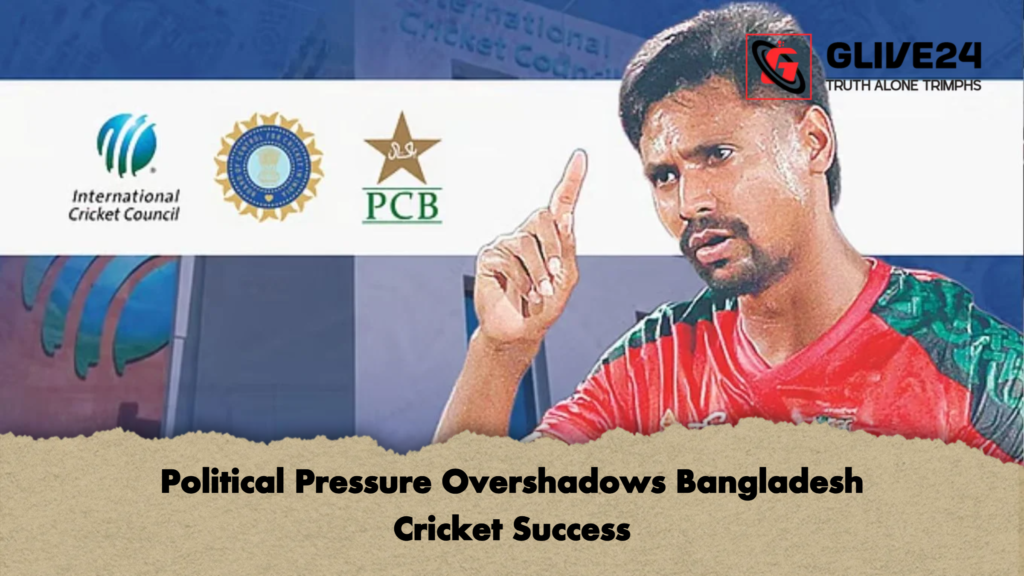
On 16 December last year, during the Indian Premier League (IPL) auction, Bangladesh’s star pacer Mustafizur Rahman was bought by Kolkata Knight Riders (KKR) for an unprecedented 9.2 crore Indian Rupees. This record fee marked the highest price ever paid for a Bangladeshi cricketer, sparking immense joy among cricket fans across Bangladesh.
However, the euphoria was short-lived. On 3 January, under pressure from certain extremist groups in India, the Board of Control for Cricket in India (BCCI) instructed Kolkata Knight Riders to release Mustafizur from the squad. What might have remained a purely sporting decision soon escalated into a political spectacle, transcending the boundaries of cricket. Fans and media were left entangled in political debate rather than focusing on the game itself, which had the potential to be the region’s premier entertainment.
The repercussions of this incident were felt far beyond the IPL. Political tensions and security concerns prompted Bangladesh to request the ICC not to schedule their matches in India for the T20 World Cup. Consequently, Bangladesh was excluded from the tournament, while Pakistan also withdrew from matches against India. The ripple effect inflicted significant financial losses on the International Cricket Council (ICC) and the cricket boards involved.
The following table summarises the estimated financial impact of the controversy:
| Issue | Amount | Details |
|---|---|---|
| Mustafizur’s IPL Contract | 9.2 crore INR | Kolkata Knight Riders |
| Potential India–Pakistan Match Market | 50 million USD (~6,120 crore BDT) | Ticket sales, broadcasting, sponsorships |
| Bangladesh’s T20 World Cup Absence | 330 crore BDT | ICC revenue loss and reduced viewership |
Experts have described this sequence of events as a “domino effect.” A single decision—Mustafizur being dropped from a domestic league—set off a chain reaction: India-Pakistan matches were cancelled, Bangladesh was excluded, and the ICC faced losses amounting to hundreds of crores of rupees.
Former ICC Head of Communications Sami-ul-Hassan commented that the situation might have been mitigated if KKR had been informed privately and the matter had not been publicised in the media.
The episode highlights the growing influence of politics and finance on South Asian cricket. While the game continues with bat and ball on the field, the innocence and enjoyment of cricket are steadily diminishing. Cricket in the subcontinent has increasingly become a complex amalgam of sport, politics, financial interests, and fan passions, raising concerns about the sport’s impartiality and long-term sustainability.