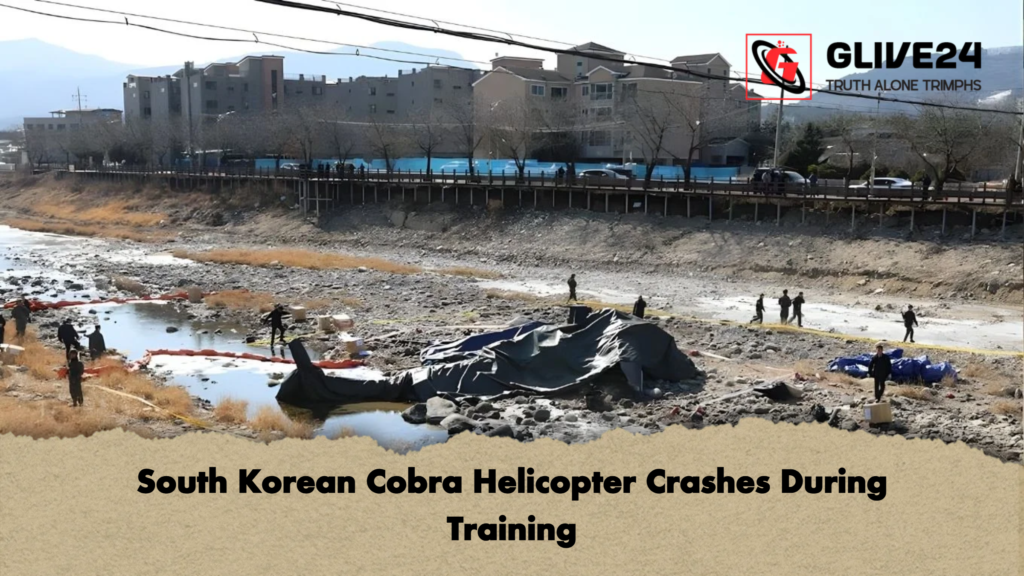
A South Korean AH-1S Cobra attack helicopter tragically crashed during a domestic training exercise on Thursday, resulting in the deaths of both crew members. The country’s military confirmed the incident in an official statement, highlighting the gravity of the accident.
According to reports, the helicopter went down shortly after 11:00 a.m. local time. The exact cause of the crash has not yet been determined. Preliminary information from the military indicates that the aircraft was engaged in an emergency landing drill while keeping its engine running as part of a crucial training operation. Whether the exercise directly contributed to the crash will be clarified following a full investigation.
The two crew members were immediately transported to the nearest medical facility. Unfortunately, doctors declared them dead upon arrival. In response to the incident, South Korean armed forces have temporarily grounded all AH-1S Cobra helicopters nationwide. An emergency response team has been established to investigate the circumstances of the crash as swiftly as possible.
A military spokesperson said, “This incident has underscored the urgent need to thoroughly review our safety and training protocols. We are committed to ensuring such accidents can be prevented in the future.”
The AH-1S Cobra helicopters are primarily used for offensive operations, defence, and border surveillance missions. Equipped with advanced sensors, chain guns, missiles, and rockets, they are capable of performing emergency landing drills, which are essential both in training exercises and operational deployments.
Key Specifications of the AH-1S Cobra Helicopter:
| Feature | Description |
|---|---|
| Model | AH-1S Cobra |
| Primary Use | Attack, defence, training |
| Crew | 2 (pilot and co-pilot/gunner) |
| Maximum Speed | 293 km/h |
| Armament | Chain gun, missiles, rockets |
| Special Capability | Instantaneous emergency landing exercises |
| Manufacturer | Bell Helicopter Company, United States |
In recent years, South Korea has intensified its military presence along the border. Incidents such as this one have prompted a renewed focus on helicopter maintenance, crew training, and operational safety. Military analysts emphasise that stricter safety protocols, enhanced crew training, and improved technical fault detection systems are critical to preventing similar tragedies.
The armed forces have initiated a comprehensive investigation and expressed determination to implement effective safety measures based on its findings. The accident is also leading to a reassessment of the country’s military training procedures and emergency preparedness operations, highlighting the delicate balance between rigorous training and operational safety.