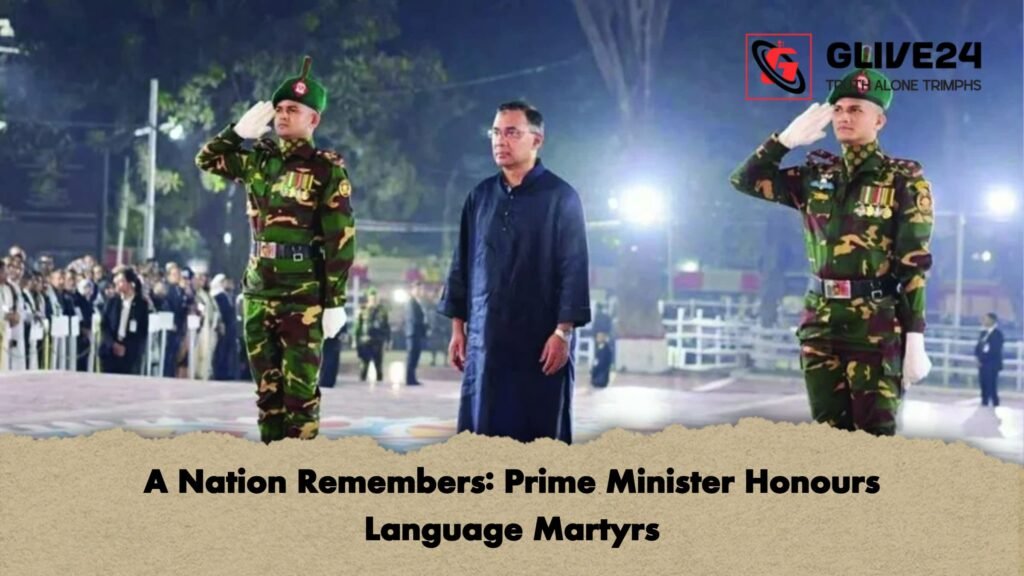
In the solemn opening moments of Shaheed Dibash (Martyrs’ Day) and International Mother Language Day, Prime Minister Tarique Rahman led the nation in paying profound respects to the heroes of the 1952 Language Movement. The ceremony took place at the stroke of midnight on Friday, 20 February 2026, at the Central Shaheed Minar in Dhaka, marking the 74th anniversary of the historic struggle for linguistic rights.
Table of Contents
A Midnight Procession of Honour
The air at the monument was thick with reverence as the first hour of the 21st of February commenced. Following state protocol, the proceedings began with President Mohammed Shahabuddin placing a floral wreath at the altar of the memorial at 12:01 am. Immediately following the President, Prime Minister Tarique Rahman, having been sworn into office only days prior following a landslide election victory, approached the monument to the sound of the somber orchestral rendition of “Amar Bhaier Rokte Rangano Ekushey February.”
After laying the wreath, the Prime Minister stood in solemn silence for several minutes, a gesture of profound gratitude to those who sacrificed their lives to establish Bangla as a state language.
Prayer and Collective Remembrance
The floral tribute was followed by a special munajat (supplication), led by the senior imam. The Prime Minister was joined by thousands of citizens, including students, diplomats, and cultural activists, in praying for the eternal peace of the martyrs’ souls—specifically remembering Rafiq, Salam, Barkat, Jabbar, and Shafiur.
Once the initial state honours were concluded, the Prime Minister returned to the monument to offer a second tribute alongside members of his newly formed Cabinet and senior Advisers. Following the executive delegation, senior leaders of the Bangladesh Nationalist Party (BNP) placed their wreaths, signifying the deep political and cultural importance of the day.
Key Historical Significance of 21 February
| Aspect | Significance |
| National Status | Observed as Shaheed Dibash (Martyrs’ Day) in Bangladesh. |
| Global Status | Proclaimed International Mother Language Day by UNESCO in 1999. |
| Core Conflict | A protest against the imposition of Urdu as the sole state language of Pakistan. |
| Legacy | The movement acted as the primary catalyst for Bangladeshi secular nationalism. |
A Nation United in Spirit
The Central Shaheed Minar and its surrounding areas were adorned with murals and Bengali alphabets, while the streets were painted with traditional alpana (floor art). Despite the midnight hour, the area was teeming with barefooted citizens carrying black badges and floral bouquets, echoing the sentiment of the Language Movement.
In a brief message released shortly after the ceremony, the Prime Minister reaffirmed his government’s commitment to promoting the use of the mother tongue in all spheres of national life and ensuring that the legacy of 1952 continues to inspire future generations to uphold their cultural identity and democratic rights.