
Khabor Wala Desk
Published: 9th May 2026, 7:45 PM
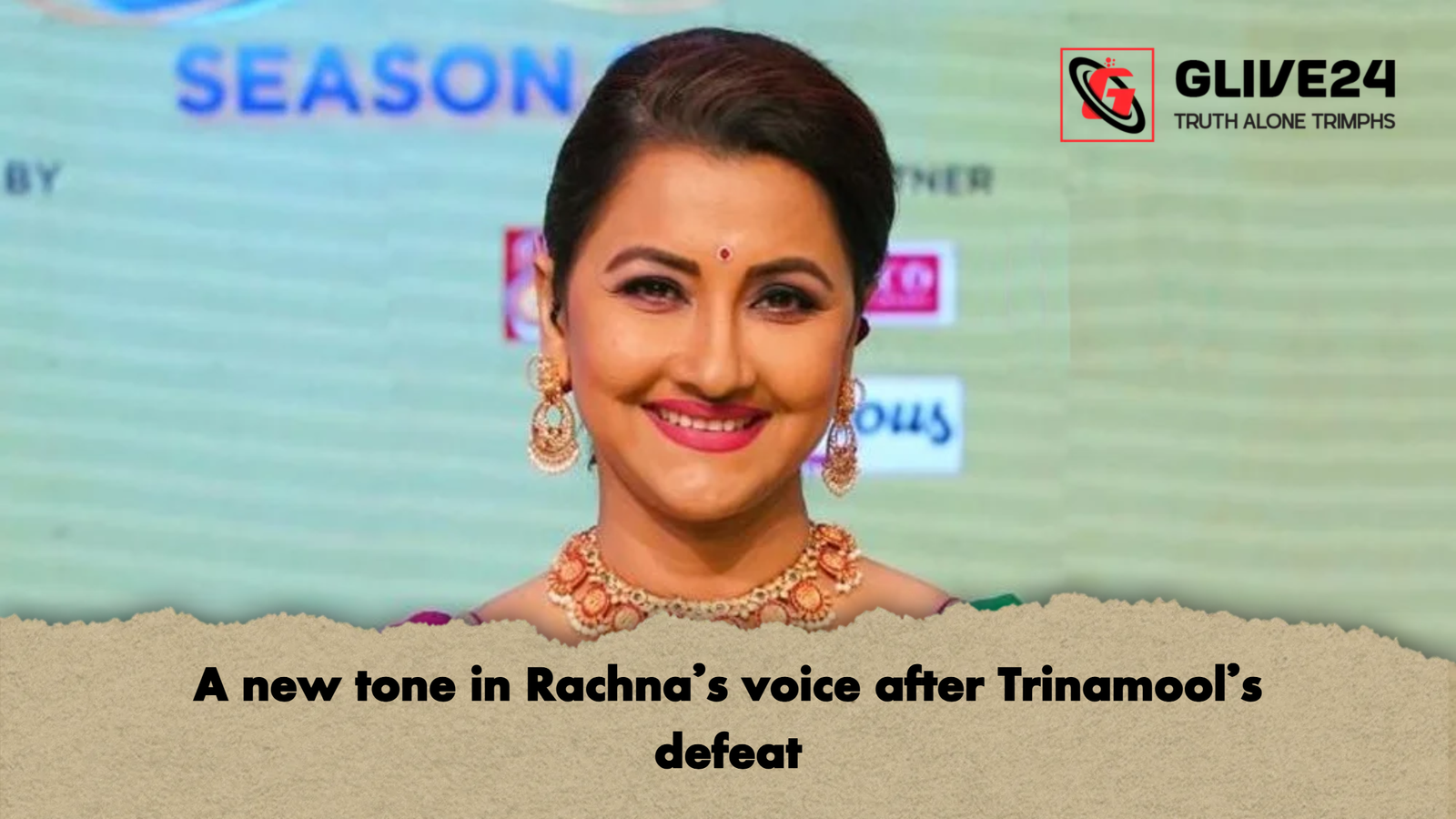
Rachana Banerjee, the Member of Parliament representing the Hooghly constituency, has sparked significant public debate following her recent remarks regarding the intersection of politics and the Bengali film industry, commonly known as Tollywood. Having entered active politics on a Trinamool Congress (TMC) ticket, Banerjee’s transition from a storied three-decade acting career to the legislative halls of Delhi was initially seen as a seamless integration of celebrity and governance. However, her recent public statements suggest a critical perspective on the very establishment she represents.
Table of Contents
Banerjee, regarded as a senior figure in Tollywood by the current generation of actors, has highlighted a stark contrast between the industry’s past and present working environments. According to her testimony, the professional atmosphere in Tollywood was historically governed by internal merit and institutional autonomy rather than external political mandates. She asserted that until approximately fifteen years ago, political parties did not exercise control over the film industry.
During her earlier years in the industry, Banerjee noted that various professional bodies worked in unison to ensure a peaceful and productive environment. Key organisations involved in this collaborative framework included:
The Eastern India Motion Picture Association (EIMPA): Responsible for the administrative and distributive aspects of cinema.
The Artists’ Forum: Representing the interests and welfare of the performers.
Sector-Specific Guilds: Individual forums for different technical fields, each managed by a designated ‘head’ or supervisor.
The Member of Parliament expressed concerns regarding the increasing volatility within the industry. She claimed that the current “turbulent environment” was a departure from the collaborative spirit of previous decades. When questioned about her prior silence on these issues, Banerjee offered a candid explanation, stating that because the industry was under the influence of the governing administration, many individuals felt unable to raise their voices effectively.
This admission has led to social media discussions regarding her loyalty to the TMC, with some commentators labelling her remarks as a “volte-face” or “somersault” in her political stance.
Beyond the confines of the film studios, Banerjee also shared insights into her experiences during the recent electoral campaign. She observed a disconnect between personal popularity and political support. While citizens were eager to engage with her as a cinematic icon—frequently requesting photographs and personal interactions—she noted that this enthusiasm did not necessarily translate into votes for her party.
She stated that she had perceived a gradual decline in public support for the Trinamool Congress long before the election results were finalised. This observation aligns with broader shifts in the regional political landscape, where celebrity candidates often face the challenge of converting fanbases into stable voting blocs.
| Attribute | Details |
| Full Name | Rachana Banerjee |
| Profession | Actress, Television Host, Politician |
| Political Affiliation | Trinamool Congress (TMC) |
| Constituency | Hooghly, West Bengal |
| Experience in Tollywood | 30+ Years |
| Key Organisations Mentioned | EIMPA, Artists’ Forum |
| Primary Critique | Political interference in the film industry |
The statements made by Banerjee highlight a growing tension between professional industries and political governance in West Bengal. Her remarks emphasize a desire for a return to a period where industry “heads” and independent forums dictated the workflow, rather than political intermediaries. As a sitting MP, her critique of the “peace-less” environment serves as a significant internal reflection on the current state of Tollywood and the perceived erosion of public confidence in the ruling party.



Comments