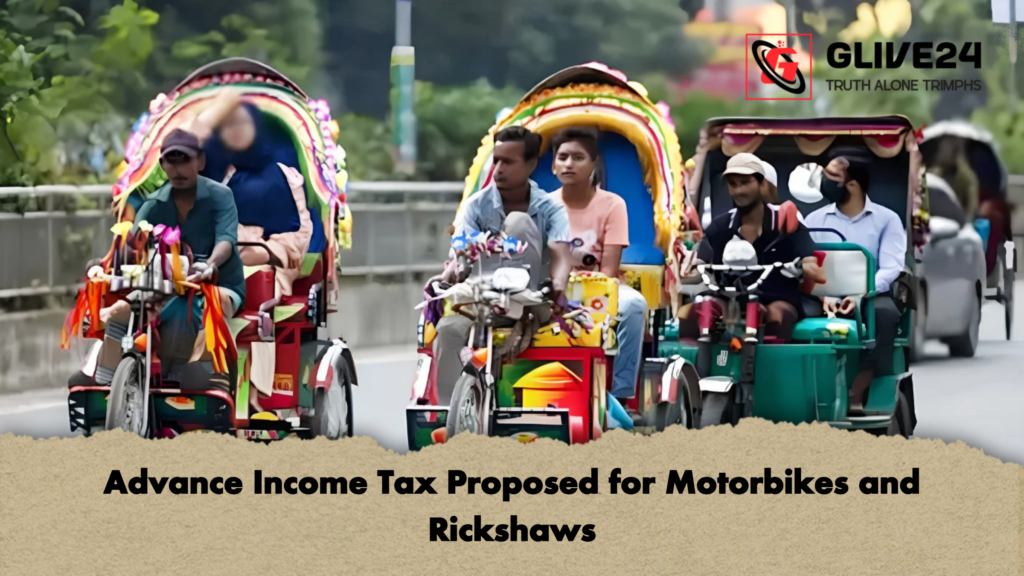
The Government of Bangladesh is preparing to bring motorcycles and battery-powered auto-rickshaws under the Advance Income Tax (AIT) framework for the first time. During a budget-related meeting held on Monday, Finance Minister Amir Khosru Mahmud Chowdhury reportedly granted consent to this proposal. This move marks a significant shift in the country’s fiscal policy regarding two-wheeled and three-wheeled transport.
Expansion of the Tax Net
Currently, AIT is levied only on specific categories of vehicles, including CNG-powered auto-rickshaws, private cars, jeeps, buses, trucks, and pickups. The new proposal aims to bridge the gap in revenue collection by targeting the rapidly expanding motorcycle and electric rickshaw sectors. According to sources within the Ministry of Finance, these changes are slated for inclusion in the upcoming 2026-27 fiscal year budget.
The proposed tax rates vary based on technical specifications for motorcycles and geographical locations for auto-rickshaws. Motorcycles will be taxed based on engine capacity (cc), while battery-powered rickshaws will be taxed according to the area of operation.
| Vehicle Type | Basis of Taxation | Annual Tax Rate (BDT) |
| Motorcycles | Engine Capacity (cc) | 2,000 to 10,000 |
| Battery-powered Auto-rickshaws | Operational Area | 1,000 to 5,000 |
| CNG Auto-rickshaws | Existing Flat Rate | Subject to current regulations |
Regulatory Framework and Statistics
Due to the lack of mandatory registration requirements for battery-powered auto-rickshaws, the government lacks an official tally of these vehicles. However, industry stakeholders estimate that at least 5 million such rickshaws are operational nationwide, with approximately 1.2 to 1.5 million running within the capital, Dhaka.
To address this lack of oversight, the government drafted the ‘Electric Three-Wheeler Management Policy 2025’ last year. This policy mandates that all electric three-wheelers obtain:
-
Official registration certificates.
-
Updated fitness certificates.
-
Tax tokens.
-
Payment of duties and taxes at rates determined by the National Board of Revenue (NBR).
Legal Compliance and Economic Impact
Under the Income Tax Act 2023, vehicle owners are required to pay AIT during the annual renewal of their vehicle fitness certificates. This advance payment is adjustable against the owner’s final income tax return. The same mechanism will apply to motorcycle and auto-rickshaw owners, allowing them to reconcile these payments when filing their annual returns.
Dr Zahid Hussain, former Lead Economist at the World Bank’s Dhaka office, provided context on the practical implications of this policy. He noted that while advance tax can represent a financial burden, individuals capable of purchasing a motorcycle generally possess the capacity to contribute to the tax net. He suggested that the tax would likely be collected during registration or annual fitness inspections.
However, Dr Hussain also highlighted a significant implementation hurdle regarding battery-powered rickshaws. As the vast majority of these vehicles remain unregistered, the government faces a logistical challenge in enforcing tax collection within this specific sub-sector until the registration infrastructure is fully established.