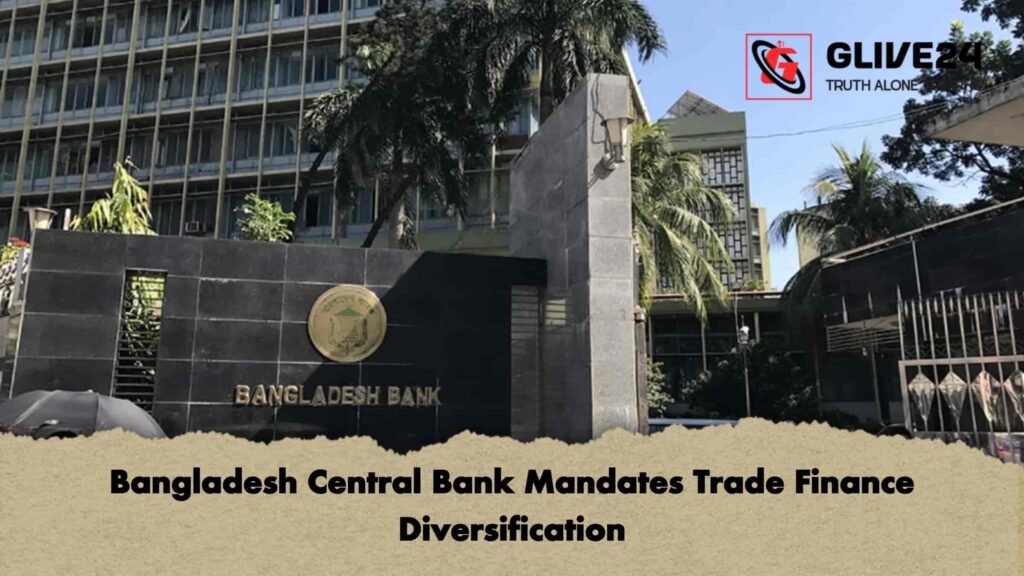
The central bank of Bangladesh has ordered commercial banks to expedite the implementation of alternative trade finance mechanisms. The directive aims to reduce the nation’s overwhelming dependence on traditional Letter of Credit (LC) arrangements. According to a regulatory circular issued by Bangladesh Bank on Thursday, authorised dealer (AD) banks are now required to facilitate a much broader spectrum of international trade settlement options.
The revised regulatory framework authorises financial institutions to process transactions using advance payments, open account exports, and documentary collection channels—specifically Documents against Payment (DP) and Documents against Acceptance (DA).
Advancing Digitalisation and Supply Chain Liquidity
While the central bank clarified that LCs will remain a legitimate and globally accepted trade instrument, it emphasized the urgent necessity of integrating modern transactional tools. The directive specifically targets the expansion of open account trading, standard documentary collections, and structured supply chain finance (SCF) models, such as reverse factoring and specialized supplier or buyer credit facilities.
Under the new guidelines, cross-border import transactions can be executed solely under purchase and sales contracts without an accompanying LC. These arrangements are strictly subject to compliance with existing statutory regulations and do not impose any payment liabilities on the handling banks unless a separate, legally binding contract is executed.
To improve liquidity across supply networks, the circular actively encourages banks to roll out reverse factoring solutions. This allows suppliers to access early payments backed by invoices that have been verified and approved by high-credit buyers. Additionally, Bangladesh Bank has urged the financial sector to adopt digital trade documentation systems. Electronic files, including digital commercial invoices and transport manifests, are now permissible for official trade settlement, provided they clear rigorous institutional verification, establish unambiguous legal validity, and pass comprehensive risk assessments.
Comparative Analysis of Authorised Settlement Methods
The updated regulatory framework establishes specific parameters for both traditional and alternative trade financing methods:
| Financing Mechanism | Operational Timing | Primary Risk Bearer | Bank Commitment Level |
| Traditional Letter of Credit | Settled upon verified document compliance | Issuing Financial Institution | Full payment guarantee upon matching documents |
| Advance Payment Structure | Paid entirely prior to cargo shipment | Importer (Buyer) | Processing agent only; no credit exposure |
| Open Account Facility | Settled post-delivery at a designated date | Exporter (Seller) | Administrative role without payment guarantee |
| Documents against Payment | Settled at sight prior to document release | Balanced between trading parties | Collecting intermediary without credit liability |
| Documents against Acceptance | Settled on a specified future maturity date | Exporter post-acceptance of terms | Zero liability unless bank explicitly guarantees the bill |
| Reverse Factoring (SCF) | Early invoice discounting pre-maturity | Aligned with the buyer’s credit | Financing provided based on approved invoices |
According to domestic trade experts and financial analysts, these updates will fundamentally enhance international transactional efficiency, inject vital working capital into import-export channels, and accelerate the integration of Bangladesh into automated global supply chains while preserving critical regulatory safeguards.