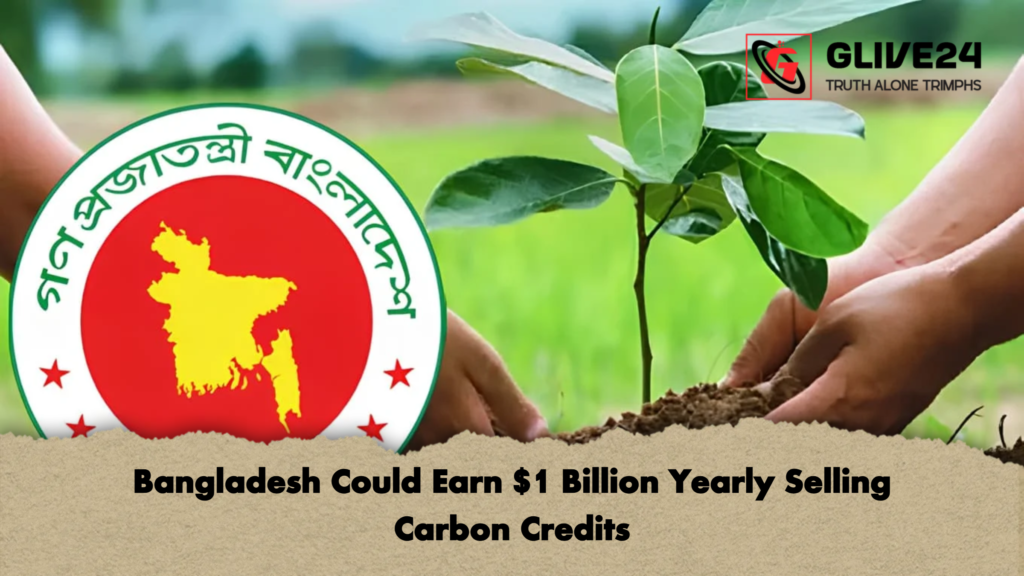
DHAKA — Bangladesh could secure an estimated USD 1 billion annually by trading carbon credits generated from its ambitious nationwide tree plantation campaign. According to an official government report, the mass afforestation drive, which targets the planting of millions of saplings across the country, holds immense economic potential alongside its primary ecological objectives.
The five-year initiative was officially inaugurated on 13 June by Prime Minister Tariq Rahman, aiming to fortify environmental defences and mitigate the escalating impacts of climate change. The Climate Finance Budget Report has highlighted this large-scale afforestation as a primary vehicle for carbon sequestration, turning environmental conservation into a lucrative economic prospect.
Under international carbon trading frameworks, designated plantation areas must be rigorously registered and reported to relevant global bodies and participating nations before any credits can be commercialised. By substantially increasing carbon absorption and lowering net greenhouse gas emissions, Bangladesh stands to gain considerable financial returns. Estimates from the World Bank, cited within the report, confirm that a successful execution of the programme could yield up to USD 1 billion each year solely through forestry-backed carbon credits.
Beyond the financial windfalls, the ecological dividends are projected to be profound. The massive influx of canopy cover is expected to regulate local temperatures, improve rainfall patterns, enrich soil quality, and foster overall ecosystem resilience. This positions the campaign as a dual-purpose strategy for sustainable development and green economic growth.
The global carbon pricing market has shown robust momentum, reaching USD 107 billion in 2025—a 2 per cent increase in real terms compared to the previous year. The current market capacity stands at roughly USD 250 billion and is projected to skyrocket to USD 1 trillion by 2050, with private sector investments driving the bulk of this expansion. As one of the world’s lowest per-capita greenhouse gas emitters, Bangladesh is uniquely positioned to benefit from these global capital flows, provided it can demonstrate verifiable project progress.
Key Metrics and Market Projections
The following table summarises the core data points, financial projections, and historical achievements related to Bangladesh’s carbon market prospects:
| Financial and Environmental Parameters | Value / Details |
| National tree plantation target | 250 million trees |
| Campaign implementation timeline | 5 years |
| Estimated annual revenue potential for Bangladesh | USD 1 billion |
| Global carbon pricing market value (2025) | USD 107 billion |
| Real market growth rate (2024–2025) | Approximately 2% |
| Current global carbon market capacity | USD 250 billion |
| Projected global carbon market value by 2050 | USD 1 trillion |
| Year of Bangladesh’s first registered CDM project | 2006 |
| Cumulative carbon credits sold by IDCOL | 2.53 million |
| Total revenue generated by IDCOL to date | USD 16.25 million (approx. BDT 170 crore) |
Structural Challenges and Historical Precedents
Despite this lucrative outlook, the government report acknowledges that the country is not yet fully equipped to integrate seamlessly into international carbon markets. Critical bottlenecks include limited technical expertise regarding Article 6 mechanisms of the Paris Agreement, a fragile legal and regulatory framework for issuing and trading credits, and inadequate capacity within both public and private sectors concerning Measurement, Reporting, and Verification (MRV) protocols. Addressing these structural deficiencies through regulatory reforms remains a strategic priority.
A single carbon credit represents one verified metric tonne of carbon dioxide or an equivalent greenhouse gas prevented from entering the atmosphere. These are typically generated through renewable energy, energy efficiency, and forestry projects, and can be traded on both regulated and voluntary markets.
While the current scale of the plantation project is unprecedented, Bangladesh is not a novice in this arena. The Infrastructure Development Company Limited (IDCOL) registered the nation’s first Clean Development Mechanism (CDM) project with the United Nations framework back in 2006. Since then, IDCOL has successfully traded millions of carbon credits, generating vital revenue through solar energy and efficient cookstove initiatives. This historical footprint provides a credible foundation upon which the country can scale its future green market operations.