
Khabor Wala Desk
Published: 26th April 2026, 6:18 PM
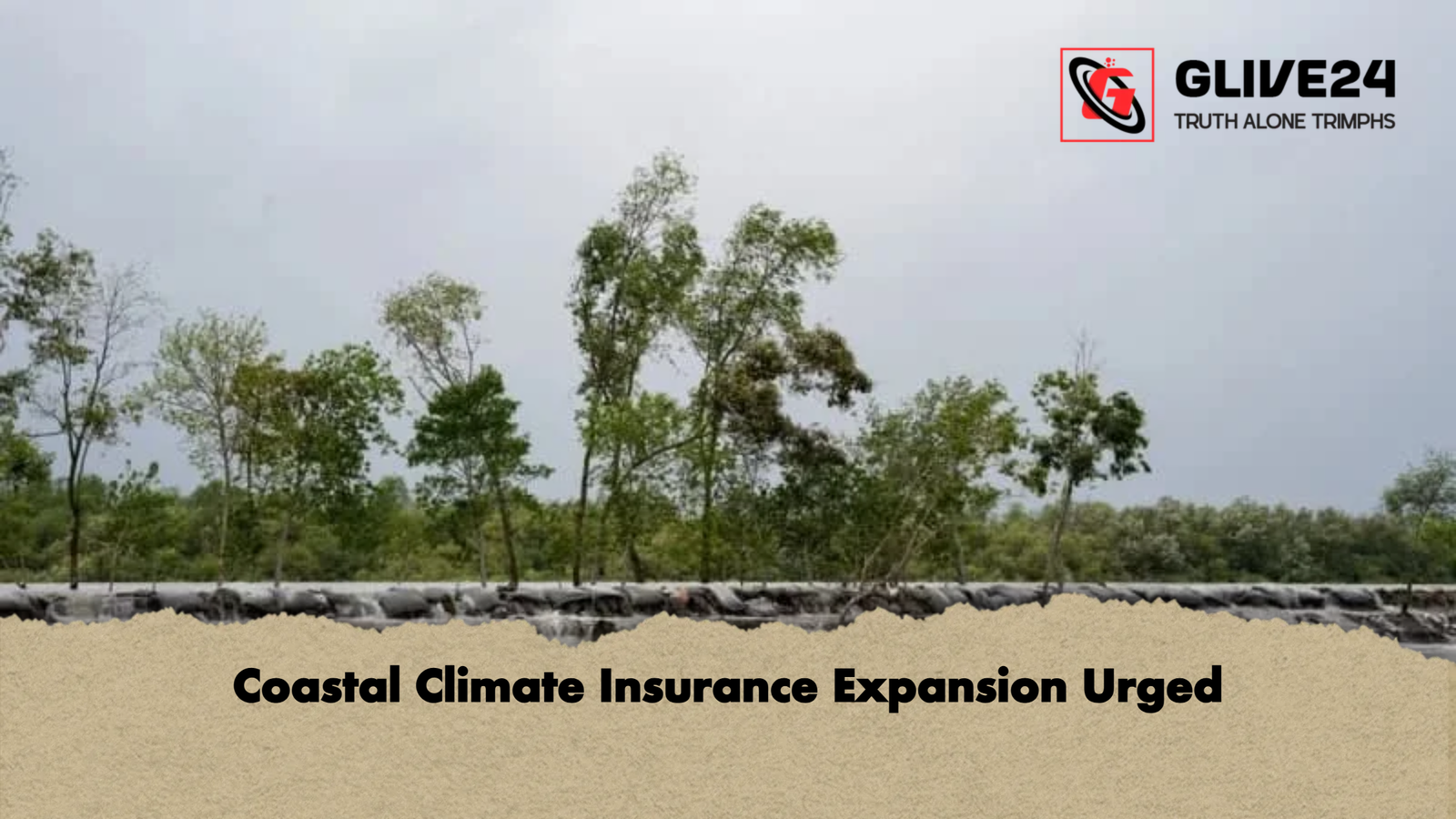
Experts have called for the urgent expansion of climate insurance coverage for marginal communities living in Bangladesh’s coastal regions, arguing that vulnerable households are increasingly unable to withstand escalating climate-related shocks without structured financial protection.
They stressed that the government should assume responsibility for paying insurance premiums in order to protect poor families from repeated and compounding losses. They further emphasised that such financial support should be sourced from international climate finance mechanisms, noting that developed countries have long pledged assistance to climate-vulnerable nations such as Bangladesh, but have largely failed to provide adequate compensation in practice.
These issues were discussed at a divisional roundtable on a pro-poor, gender-sensitive, and human rights-based Climate and Disaster Risk Finance and Insurance (CDRFI) framework for coastal regions. The event was organised in Khulna on Saturday at a hotel by AOSED (An Organisation for Socio-Economic Development), with support from CARE Bangladesh.
AOSED has been implementing the Multi-Actor Partnerships on Climate and Disaster Risk Finance and Insurance (MAP CDRFI) project in Bagerhat and Satkhira districts from April 2023 to March 2026, with financial support from BMZ and technical support from CARE Bangladesh.
AOSED Executive Director Shamim Arfeen stated that developed countries have been promising financial and technological assistance to climate-affected nations since 1995. He noted that while these commitments included emissions reductions, global emissions have instead increased by 34.4 per cent over the same period. He further said that rather than delivering compensation, existing mechanisms have contributed to increasing debt burdens for countries such as Bangladesh.
He added that the government should undertake strong preparations for upcoming international climate negotiations, including the Bonn Climate Conference in Germany and COP31 in Turkey, in order to secure favourable financing through effective engagement with developed countries.
Shamim Arfeen also stated that as climate insurance has become essential for addressing climate-induced losses, insurance companies should introduce more accessible and user-friendly systems for marginal communities. At the same time, he reiterated that the government must bear premium costs and secure funding from global climate finance sources.
Khulna City Corporation Administrator Nazrul Islam Monju said that political parties currently lack dedicated platforms to discuss climate-related issues. He noted that elected representatives often neglect such matters once in office and added that these issues were largely overlooked during the previous government. He further stated that the current government is democratic and assured that he would raise these concerns with the Prime Minister and relevant authorities.
Khulna Zila Parishad Administrator SM Monirul Hasan (Bappi) said he has directly witnessed the severe suffering of climate-affected communities. He stressed the importance of protecting crops, households, and ensuring access to safe drinking water so that affected populations can lead normal lives.
Professor Anwarul Kadir, Chief Executive of the Sundarbans Academy, said that despite long-standing efforts, no effective solution regarding climate insurance has been achieved, as the focus remains on profitability rather than people-centred policy design.
Khulna University Professor Sharif Hasan Limon highlighted that a robust database is essential for accessing climate finance. He emphasised the need for comprehensive data collection at both national and local levels.
Professor Dr Nazia Hasan stated that a comprehensive, long-term, and research-based master plan is required to address climate impacts effectively.
Deputy Director of the Department of Agricultural Extension in Khulna, agriculturist Md Nazrul Islam, said initiatives are underway to diversify crops in coastal areas, including watermelon and sunflower cultivation. However, he noted that this remains highly challenging and requires increased financial and technical support.
Assistant General Manager of Sadharon Bima Corporation, Khulna, Bishwajit Kar, said that climate insurance is currently the only effective means of reducing the suffering of affected populations.
NGO representative from Satkhira, Ashik E Ilahi, said that corruption remains a major concern and has contributed to public mistrust in insurance systems.
CARE Bangladesh Technical Coordinator Himadri Shekhar Mondal noted that climate finance models are evolving rapidly, making it increasingly difficult to distinguish between grants, loans, and commercial interests of developed countries.
Other speakers at the event included Professor Dr Tushar Kanti Roy of Khulna University of Engineering and Technology, Biplob Kumar Basak, Director of the Department of Fisheries in Khulna, SA Rashid, President of the Communist Party of Bangladesh (Khulna district), AOSED Deputy Director Helen Khatun, Financial Express Senior Staff Reporter Yasir Wardad, and CCJEB Senior Research Fellow Moumita Das Gupta, among others.
| Speaker | Designation | Key Point |
|---|---|---|
| Shamim Arfeen | Executive Director, AOSED | Climate insurance essential; government should pay premiums; reliance on international finance |
| Nazrul Islam Monju | Khulna City Corporation Administrator | Lack of political platforms for climate issues; need to raise concerns nationally |
| SM Monirul Hasan (Bappi) | Khulna Zila Parishad Administrator | Need to protect crops, homes, and drinking water access |
| Prof. Anwarul Kadir | Sundarbans Academy | Policy focus too profit-driven, lacking people-centred solutions |
| Prof. Sharif Hasan Limon | Khulna University | Strong database required for climate finance access |
| Prof. Dr Nazia Hasan | Academic | Need for long-term, research-based master plan |
| Md Nazrul Islam | Dept. of Agricultural Extension | Crop diversification underway but requires more support |
| Bishwajit Kar | Sadharon Bima Corporation | Climate insurance seen as key mitigation tool |
| Ashik E Ilahi | NGO Representative | Corruption undermines trust in insurance systems |
| Himadri Shekhar Mondal | CARE Bangladesh | Climate finance models increasingly complex and evolving |




Comments