Severe pre-monsoon storms accompanied by prolonged rainfall have caused extensive disruption across Comilla district in south-eastern Bangladesh, inflicting major losses on agriculture, damaging electricity infrastructure, and severely affecting urban and rural life. The weather system, driven by atmospheric instability over the Bay of Bengal, has persisted intermittently for several days.
From Tuesday morning through Wednesday morning, the district experienced alternating spells of heavy rain and gusty winds. Peak rainfall of approximately 102 millimetres was recorded on Tuesday, followed by a further 36.2 millimetres over the next 24-hour period. Although rainfall intensity eased slightly on Wednesday, scattered showers and unstable wind conditions continued to disrupt normal activity.
Table of Contents
Widespread Agricultural Impact
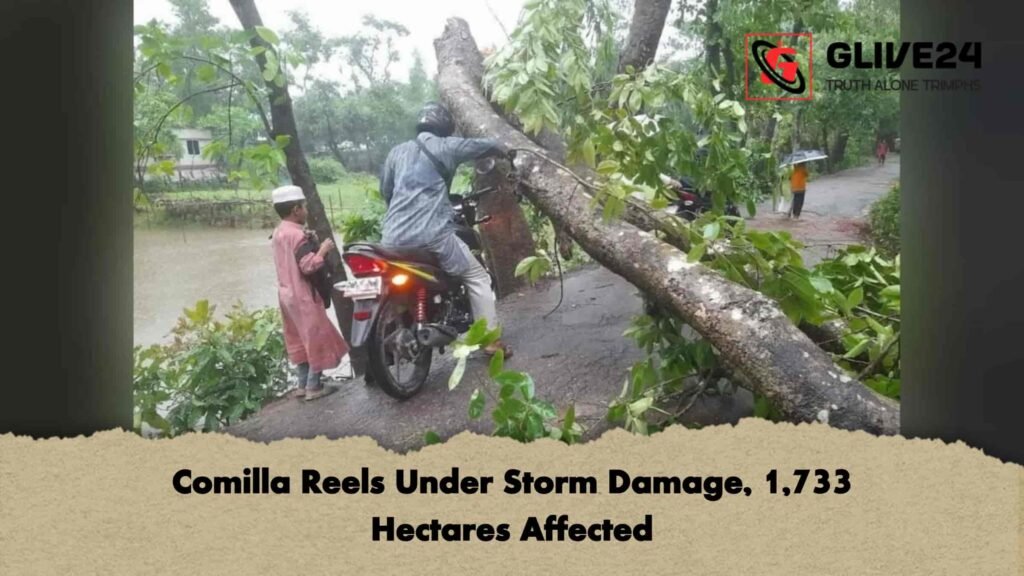
The Department of Agricultural Extension in Comilla has confirmed significant crop losses across all 17 upazilas. In total, 1,733 hectares of farmland have been affected by wind damage, lodging, and waterlogging. The hardest-hit crops include maize, seasonal vegetables, sesame, and partially harvested Boro rice.
| Category | Area Damaged (hectares) |
|---|---|
| Maize | 550 |
| Summer vegetables | 364 |
| Sesame | 91 |
| Other crops | 728 |
| Total | 1,733 |
Officials noted that around 23 per cent of the Boro rice crop had already been harvested prior to the storms. While much of the remaining rice was near maturity, agricultural experts warned that prolonged standing water could still lead to post-harvest spoilage and reduced yields.
Authorities have also reiterated long-standing advice for farmers to begin harvesting rice once it reaches approximately 80 per cent maturity, rather than waiting for full ripening, as delayed harvesting increases exposure to seasonal storms.
Electricity Infrastructure in Crisis
The rural and urban power distribution network suffered extensive damage as strong winds uprooted trees and brought them into contact with overhead lines. More than one hundred electricity poles were reported collapsed, while at least fifty transformers were damaged across the district. In addition, nearly 1,500 points along the grid were disrupted due to fallen vegetation.
As a result, large sections of the district have remained without electricity for more than 24 hours. Restoration efforts are ongoing, but engineers have reported that repeated storm activity has compounded earlier damage sustained only days before.
A senior official from the regional electricity distribution authority stated that manpower constraints and widespread structural damage have significantly slowed repair operations, particularly in remote rural areas.
Meteorological Warning and Ongoing Risk
Meteorological observations indicate significant pressure variation over the Bay of Bengal, a condition often associated with early cyclonic development. River ports in the region have been advised to maintain cautionary signal level three.
Wind speeds previously reached between 62 and 65 kilometres per hour before easing slightly on Wednesday. However, forecasters have warned that unstable conditions, including thunderstorms and lightning, may persist for at least another 24 hours.
Authorities have urged residents to avoid unnecessary outdoor movement due to the elevated risk of lightning strikes, which have already resulted in casualties across the country during this weather system.
Urban Disruption and Public Hardship
In Comilla city, heavy rainfall overwhelmed drainage systems, resulting in widespread waterlogging across major roads, administrative zones, and educational institutions. Blocked drainage channels and accumulated waste significantly worsened flooding conditions.
Daily life has been severely disrupted, with thousands of residents affected by impassable streets and power outages. Examination candidates were among the most affected groups, with several centres reporting electricity failures during national examinations. In some cases, students were forced to continue their exams under emergency lighting, while others sat in partially flooded classrooms.
City authorities have acknowledged longstanding drainage inefficiencies and have launched emergency clearing operations in key areas. However, continued rainfall has limited the effectiveness of these interventions, with officials warning that full recovery will depend on sustained dry conditions.