
Khabor Wala Desk
Published: 15th May 2026, 4:02 PM
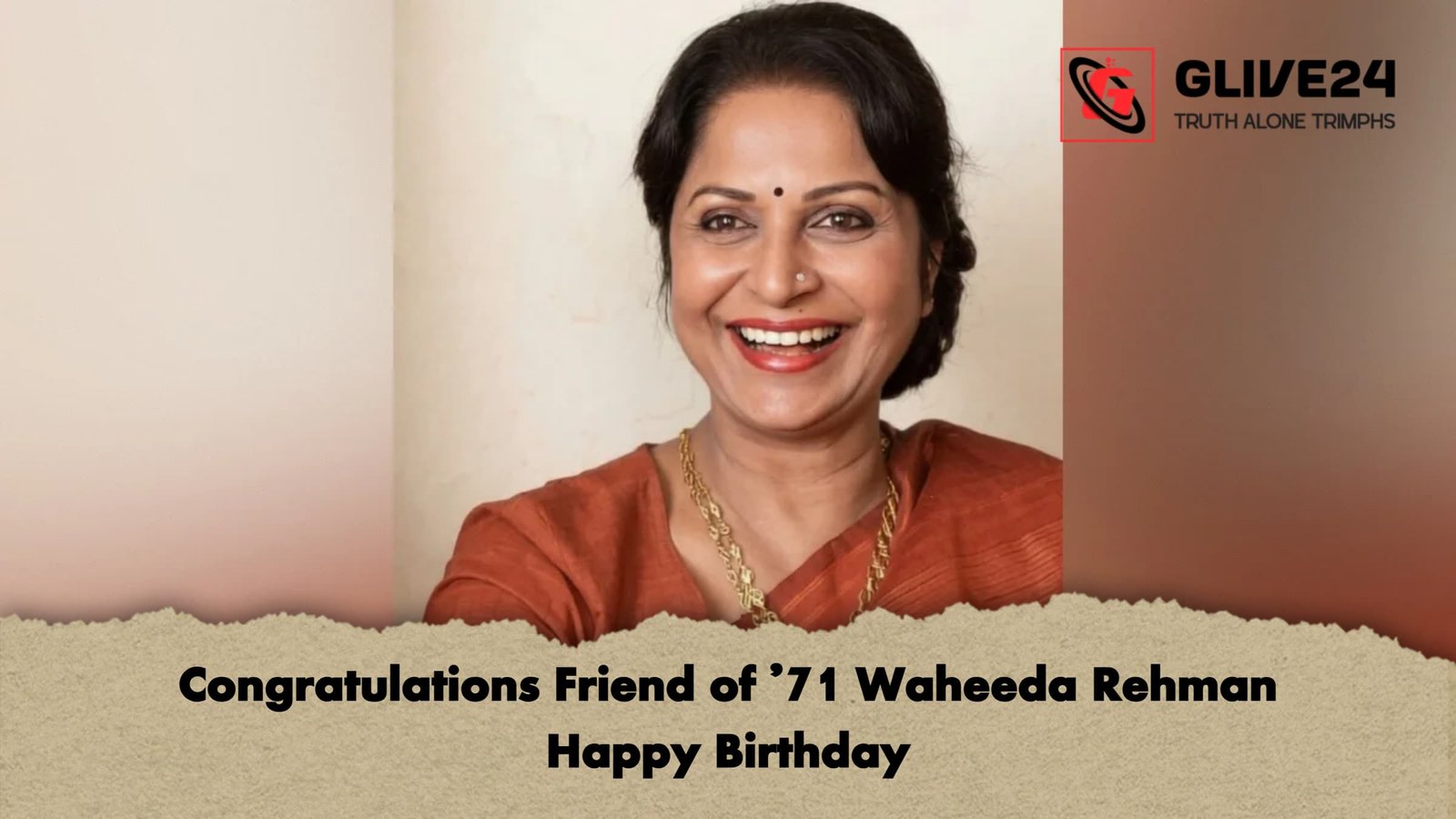
Waheeda Rehman, the legendary actress of Indian cinema, was born on 14 May 1936 in Chingleput, Madras, India. Throughout the 1950s, 1960s, and 1970s, she stood as one of the most powerful and influential actresses in Indian cinema. She is remembered with deep respect and admiration among the brightest stars of the golden era of Indian films.
With her beauty, talent, refined acting skills, and dignified personality, she became widely regarded by film critics as a “classical beauty.” Her unforgettable on-screen pairing with filmmaker Guru Dutt produced timeless cinematic masterpieces such as Pyaasa, Kaagaz Ke Phool, and Sahib Bibi Aur Ghulam. Later, her performance alongside Dev Anand in the film Guide remains deeply etched in the hearts of film lovers across the subcontinent.
However, for the people of Bangladesh, Waheeda Rehman is not only a great actress; she is also a sincere friend of the 1971 Liberation War and a shining symbol of humanity.
When the Pakistani military launched a brutal genocide against the unarmed people of Bangladesh on 25 March 1971, many conscientious individuals in India stood in solidarity with Bangladesh. Among them, Waheeda Rehman played a notable role.
As the Vice-President of the “Bangladesh Aid Committee” formed in Mumbai, she actively worked in support of Bangladesh during the Liberation War. Alongside journalists such as Salil Choudhury, Subrata Banerjee, and other socially aware individuals, she helped build public opinion in favour of Bangladesh’s independence.
On 9 July 1971, when freedom fighter Nurul Kadir met her carrying a letter from the Provisional Government of Bangladesh, she warmly invited him to her home despite her busy shooting schedule. During breakfast, she attentively listened to detailed accounts of the atrocities, violence, and genocide carried out by the Pakistani forces.
Deeply moved by the suffering of the Bangladeshi people, she even cancelled her shooting schedule that day. She further expressed interest in learning more about the Liberation War and immediately took initiatives to extend support.
Through her remarkable organisational ability, she contacted industrialists, journalists, intellectuals, lawyers, newspaper editors, and influential figures of the Mumbai film industry. Alongside raising public awareness in favour of Bangladesh’s independence, she also played an important role in mobilising financial assistance.
Due to her sincere efforts, many members of the Mumbai film industry came forward in support of Bangladesh. In response to this humanitarian appeal, Waheeda Rehman became a trusted name among those who supported the freedom-seeking people of Bangladesh.
In recognition of her outstanding contribution, the Government of Bangladesh honoured her in 2003 with the “Friends of the Liberation War Honour.” Later, in 2023, the Government of India awarded her the country’s highest film honour, the “Dadasaheb Phalke Award.”
This luminous figure of cinema proved that true artists achieve greatness not only through acting, but also through the brilliance of their humanity.
To the people of Bangladesh, Waheeda Rehman is not merely an actress; she is a friend of ’71 and a beacon of human compassion.
Happy Birthday, Waheeda Rehman.
With sincere respect and best wishes for your health, longevity, and peaceful life.


Comments