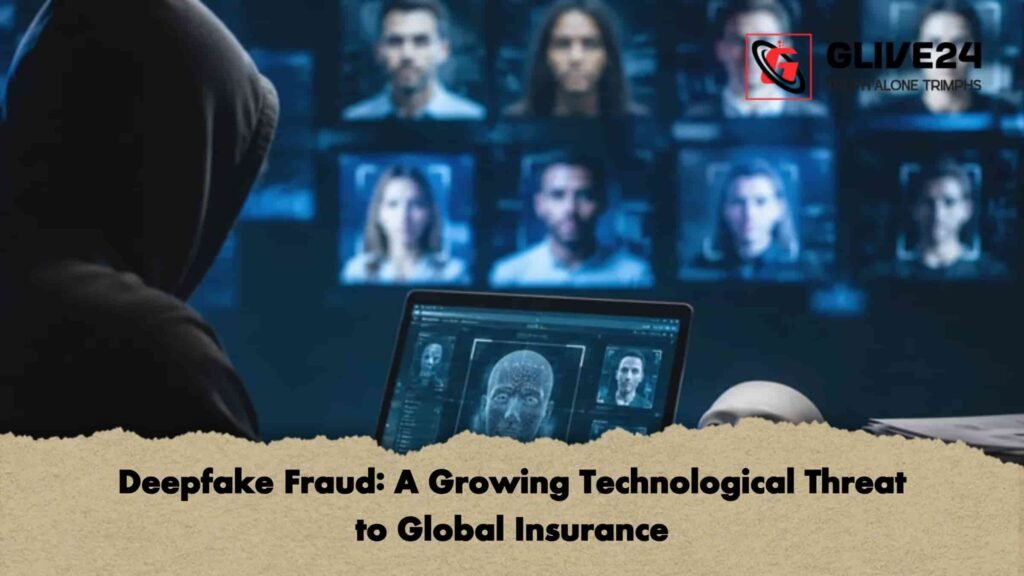
The rapid evolution of Artificial Intelligence (AI) has fundamentally altered the risk landscape for the global insurance industry. Insurers are increasingly alarmed by the rise of “deepfake” technology—synthetic media created by AI that can convincingly mimic real people. While deepfakes were previously associated with social media disinformation and political manipulation, they have now emerged as a potent tool for sophisticated financial crimes and insurance fraud.
Table of Contents
The Mechanism of Digital Deception
With the increasing accessibility of generative AI tools, fraudsters can now produce realistic photographs, videos, voice recordings, and forged identification documents in a matter of minutes. This technological leap allows for the fabrication of evidence across multiple sectors, including motor, health, property, and life insurance. Traditional, document-based forgery is being rapidly replaced by high-tech, AI-driven cyber fraud.
In the United Kingdom, the insurance firm Admiral reported a sharp rise in fraudulent activity. In 2025, the company identified fraudulent claims totalling approximately £86.8 million, compared to £50.9 million in 2024—a 71% increase in just one year. Common tactics include using AI to alter images of vehicle damage, creating counterfeit number plates, and submitting fabricated claims for luxury items using images harvested from the internet.
Global Trends in AI-Driven Insurance Fraud
| Organisation / Entity | Key Finding or Statistic |
| Allianz (Germany) | 300% increase in fraud cases involving manipulated media (2021–2023). |
| NICB & Verisk (USA) | 36% of consumers admit they might consider digitally altering claim data. |
| Sprout.ai (UK) | 83% of claims handlers believe AI fraud is present in 5% or more of claims. |
| UK Insurance Sector | Undetected fraud is estimated to cost an additional £2 billion annually. |
| European Union | Implementation of the ‘EU AI Act’ to mandate transparency in AI content. |
Emerging Threats: Voice Cloning and Video Impersonation
The scope of deepfake threats has expanded beyond static imagery to include “voice cloning” and deepfake video calls. Criminals now impersonate policyholders or insurance company representatives to facilitate unauthorised fund transfers or alter policy details. A notable instance occurred in Hong Kong, where an engineering firm, Arup, was defrauded of $25 million (approximately HK$200 million) after an employee was deceived by deepfake representations of company executives during a video conference.
Vulnerability of the Bangladeshi Insurance Market
Although comprehensive national statistics on deepfake-related insurance fraud are not yet available for Bangladesh, the risk is escalating as the country adopts more digital financial services. Recently, law enforcement agencies arrested ten individuals for deepfake-related scams, seizing a significant amount of hardware, which indicates that the technical infrastructure for such fraud is already locally present.
This technological threat arrives as the Bangladeshi insurance sector is already grappling with systemic challenges. According to the Insurance Development and Regulatory Authority (IDRA), the claim settlement rate for life insurance fell to 66.06% in 2025, down from 85% in 2020. Outstanding claims total Tk 38.80 billion, leaving approximately 1.6 million policyholders at risk. Furthermore, insurance penetration remains low at 0.30% of GDP.
Economic Consequences and Strategic Response
Deepfake fraud does not only affect corporations; it has a direct impact on the general public. As insurers incur higher losses due to fraud, they are likely to increase premiums for all customers. Moreover, the need for more rigorous verification processes to detect synthetic media will inevitably lead to longer wait times for legitimate claim settlements.
To combat this, global insurers are investing in advanced detection technologies, such as:
-
Digital Forensic Analysis: Examining metadata and pixel patterns to spot inconsistencies.
-
Biometric Verification: Implementing real-time “liveness” checks for video and audio.
-
Metadata Validation: Verifying the history and origin of digital files submitted as evidence.
In Bangladesh, experts recommend the establishment of a central fraud monitoring framework under IDRA and the introduction of mandatory manual verification for high-value claims. Without proactive investment in AI-based detection tools, the trust deficit in the local insurance industry may worsen as digital deception becomes more prevalent.