Eastern Bank PLC has broadened its commitment to thalassaemia treatment in Bangladesh through a strategic partnership with the Bangladesh Thalassemia Foundation. The initiative, undertaken as part of the bank’s corporate social responsibility programme, is designed to strengthen advanced blood storage and transfusion facilities for low-income and underprivileged patients who rely on lifelong clinical care.
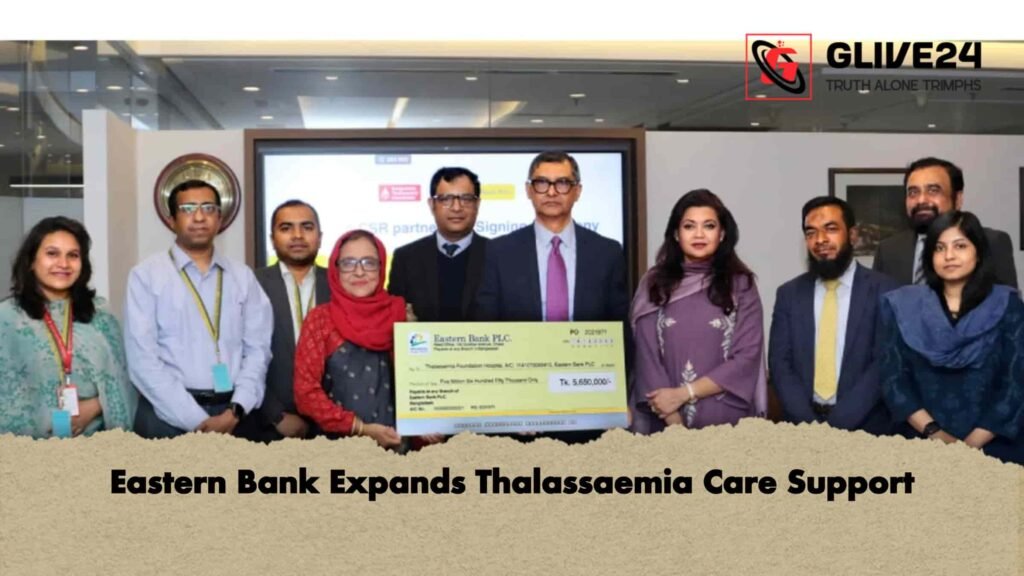
The formal agreement was marked at the bank’s head office in Dhaka, where Ziaul Karim, Head of Communications and External Affairs at Eastern Bank PLC, handed over a donation cheque to Professor Dr Syeda Masuma Rahman, Vice-President of the foundation. Senior representatives from both organisations were present, underscoring the institutional significance of the collaboration.
Strengthening Medical Infrastructure
Under the terms of the partnership, Eastern Bank will finance the procurement and installation of specialised medical equipment at the foundation’s treatment centre. The investment focuses on enhancing the precision, safety and efficiency of blood component separation, storage and transfusion procedures.
Patients with transfusion-dependent thalassaemia typically require blood every two to four weeks throughout their lives. This makes high-quality blood processing infrastructure critical to preventing complications such as iron overload, transfusion reactions and infections.
The principal areas of support are summarised below:
| Area of Support | Equipment Provided | Expected Impact |
|---|---|---|
| Blood component separation | Refrigerated centrifuge | Greater accuracy in separating red cells, plasma and platelets |
| Platelet preservation | Platelet storage unit and agitator | Improved platelet viability and transfusion safety |
| Plasma storage | Plasma freezer | Stable long-term preservation of plasma components |
| Whole blood storage | Blood bank refrigerator | Reduced wastage and safer transfusion management |
By modernising laboratory and storage systems, the foundation expects to improve clinical outcomes, extend patient life expectancy and enhance overall quality of life.
A National Health Challenge
Thalassaemia remains a serious inherited blood disorder in Bangladesh. Medical specialists estimate that between six and twelve per cent of the population carry the gene associated with the condition. Each year, a significant number of children are born with transfusion-dependent thalassaemia, requiring uninterrupted medical support from infancy.
For families with limited financial means, the cumulative cost of repeated transfusions, iron chelation therapy and hospital visits imposes a sustained economic and psychological burden. Inadequate storage facilities and outdated equipment can further heighten clinical risks.
Professor Rahman noted that establishing modern transfusion infrastructure would substantially reduce preventable complications and improve therapeutic effectiveness. She emphasised that proper preservation and processing of blood components are essential to maintaining treatment integrity.
Ziaul Karim stated that investment in life-saving healthcare forms a central pillar of the bank’s social responsibility strategy. He added that targeted interventions in high-risk health sectors yield long-term social dividends and reinforce community resilience.
Through this partnership, both institutions have reaffirmed their commitment to building a safer, more efficient and sustainable treatment ecosystem for thalassaemia patients across the country.