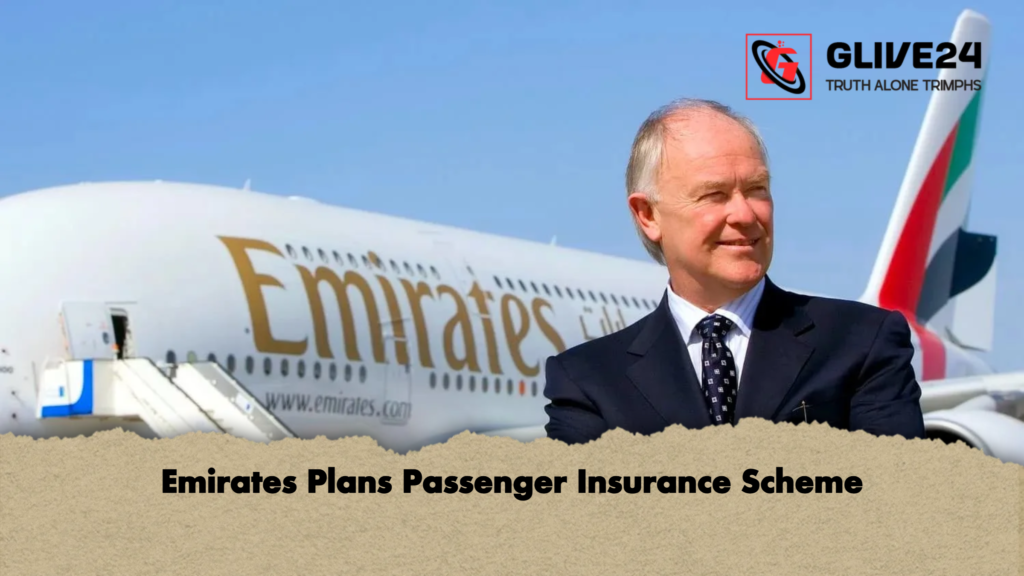
Emirates has announced that it is working with insurance providers to develop a dedicated travel insurance product for passengers travelling to or transiting through Dubai, in response to gaps in coverage linked to ongoing Middle East conflict advisories.
The initiative was outlined by Emirates President Tim Clark in an interview published on 11 June with a leading publication. Clark said the proposed policy would be “reasonably priced” and would ensure that passengers are returned home, regardless of whether their return journey is operated by Emirates or another carrier.
He explained that one of the primary concerns being addressed is the possibility of passengers being stranded abroad due to disruptions. “I think one of the big concerns is that if they get caught overseas and they can’t get back,” Clark said, adding that the airline is working with insurers “to do the right thing.”
More than three months after the outbreak of the current Middle East conflict, several countries continue to issue no-fly advisories for the Gulf region. These advisories have significantly affected the availability of standard travel insurance for new bookings, as most policies exclude coverage once official warnings related to war or conflict are issued.
Although specialist high-risk insurance products remain available, they are typically offered at higher premiums and under stricter conditions. This has created a protection gap for many travellers, who often only become aware of the limitations when attempting to make claims.
Despite ongoing advisories, approximately 40,000 passengers per day are still transiting through Dubai International Airport, compared with around 100,000 before the conflict began. Emirates has also reported steady recovery in passenger volumes, with some routes from London operating at or near full capacity.
Clark also referred to the airline’s own war-risk insurance arrangements, noting that Emirates is paying approximately USD 100,000 per week in additional premiums to maintain coverage for its fleet operating in and out of the region. An insurance industry executive reportedly described this figure as “outrageously low”. By comparison, rival airlines are being quoted between USD 70,000 and USD 150,000 per individual flight landing in Gulf airspace.
Operationally, Emirates resumed services within four days of the conflict’s onset and returned to around 40% of its capacity shortly afterwards. Clark stated that Dubai’s defence systems intercepted approximately 98% of nearly 3,000 incoming drones, missiles, and cruise missiles. During this period, flights operated through restricted air corridors under military surveillance.
In the initial phase of the disruption, Emirates aircraft carried an additional five hours of fuel on board to account for potential diversions, reflecting the operational adjustments required under evolving regional security conditions.
Key Operational and Insurance Details
| Category | Information |
|---|---|
| Initiative | Dedicated travel insurance for Dubai-bound/transit passengers |
| Announced by | Emirates President Tim Clark |
| Date of statement | 11 June |
| Purpose | Address insurance gap due to conflict-related advisories |
| Current passenger flow | ~40,000 per day via Dubai Airport |
| Pre-conflict flow | ~100,000 per day |
| Airline war-risk premium | ~USD 100,000 per week |
| Industry comparison | USD 70,000–150,000 per flight (Gulf routes) |
| Service restoration | Within 4 days of conflict onset |
| Capacity recovery | Around 40% after resumption |
| Security context | ~98% of incoming threats reportedly intercepted |
| Operational adjustment | Additional fuel carried for early flights |
Emirates continues to coordinate with insurers to finalise the proposed product while maintaining operations under existing regional risk and insurance frameworks.