
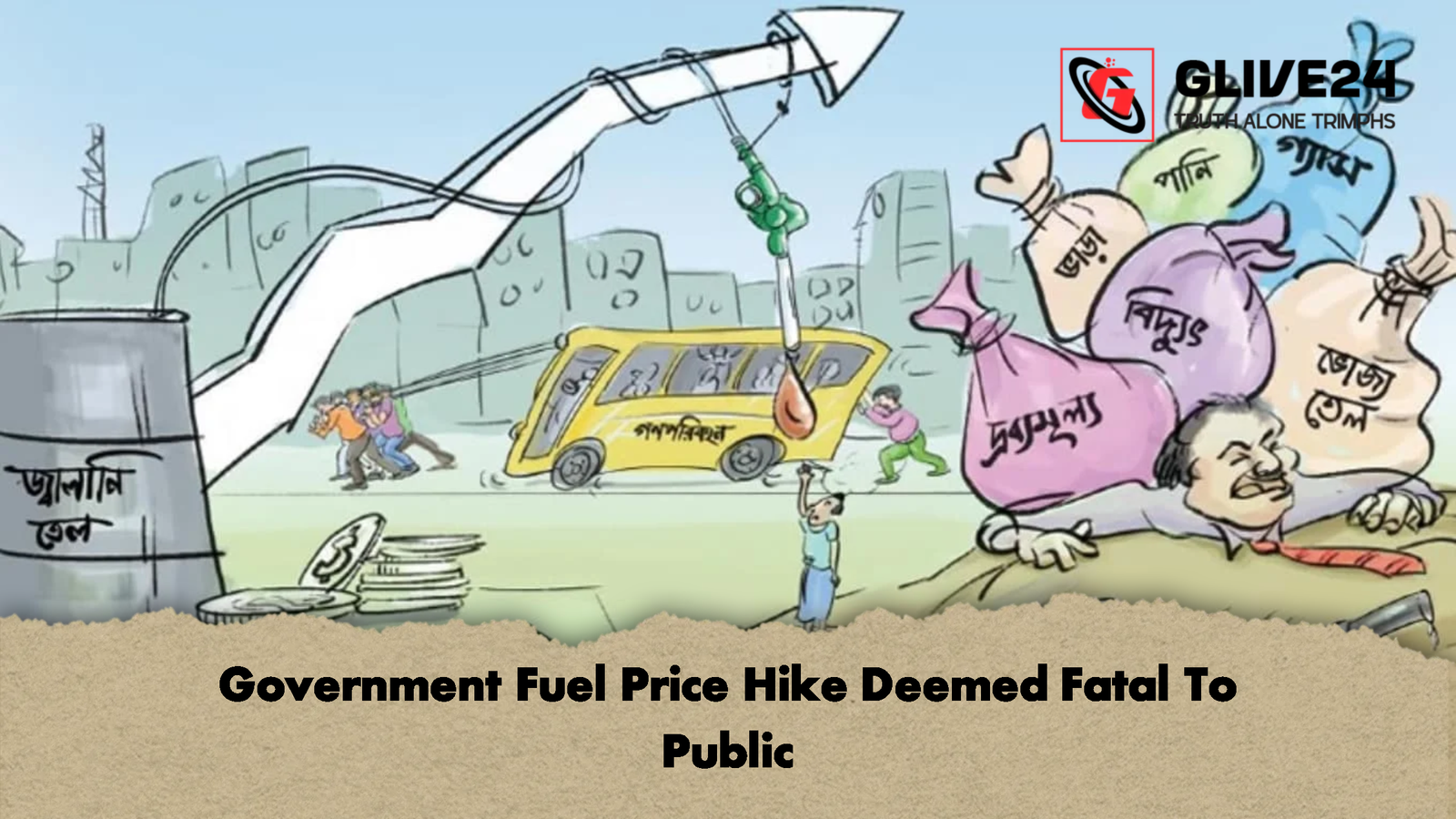
The economic landscape of Bangladesh faces a turbulent period as the government formalises a significant upward revision of fuel prices across the retail sector. Late on the evening of Saturday, 18 April 2026, the Ministry of Power, Energy, and Mineral Resources issued a definitive press release detailing the new price structures. These changes, set to take effect from the early hours of Sunday, have been met with fierce resistance from political adversaries and economic analysts alike, who argue the timing could not be more detrimental to the national interest.
Table of Contents
The Ministerial Decree and Global Disparity
The government’s decision to re-calibrate fuel costs comes at a perplexing moment for the global energy market. While international crude oil prices have shown a downward trend, providing relief to many emerging economies, the Ministry has opted for a domestic increase. Official spokespersons have framed this as a “necessary alignment” to bridge budgetary gaps and fund essential energy infrastructure. However, this justification has done little to appease a public already struggling with a high cost of living.
The price adjustments are comprehensive, targeting the primary fuels that drive both the industrial and domestic sectors:
Diesel: Used extensively in the transport of goods and for irrigation pumps in the northern agricultural belts.
Petrol and Octane: The primary fuels for the nation’s burgeoning fleet of private and commercial vehicles.
Kerosene: A vital energy source for cooking and lighting in rural households that remain off the national power grid.
Political Backlash: “The Final Blow”
The Leader of the Opposition and Ameer of Jamaat-e-Islami, Dr Shafiqur Rahman, has emerged as a leading critic of the move. In a sharply worded statement shared via his verified digital channels, he characterised the price hike as “adding insult to injury.” He employed a vivid metaphor, describing the policy as “a final blow to a dying man” (morar upor kharar gha), suggesting that the populace is already at a breaking point.
Dr Rahman highlighted the irony of the government’s fiscal policy:
“It is profoundly regrettable that while the global market sees a reduction in fuel costs, the people of Bangladesh are being burdened with higher prices under the guise of ‘coordination.’ The common man is already gasping for breath under the weight of current expenditures; this hike will be catastrophic.”
Projected Socio-Economic Consequences
The impact of this policy is expected to be felt far beyond the petrol station forecourts. Because energy costs are baked into the price of nearly every consumer good, the “cascading effect” of inflation is a primary concern. The agricultural sector, in particular, is vulnerable; as diesel prices rise, the cost of food production climbs, inevitably leading to higher prices in the kitchen markets of Dhaka and beyond.
| Sector of Impact | Anticipated Economic Consequence |
| Agriculture | Increased overheads for irrigation and mechanised harvesting. |
| Public Transport | Imminent strikes or demands for higher commuter fares. |
| Retail Goods | Higher logistics costs leading to a rise in the price of staples. |
| Manufacturing | Reduced profit margins for SMEs relying on diesel generators. |
| Public Welfare | Further erosion of the purchasing power of low-income earners. |
A Nation in Waiting
As the midnight deadline approached, a sense of urgency gripped the country. In major cities, petrol stations were inundated with motorists seeking to capitalise on the final hours of the lower rates. This rush serves as a physical manifestation of the anxiety currently felt by the public regarding their financial stability.
The opposition has called for a transparent review of the pricing mechanism, demanding that the benefits of lower international oil prices be passed directly to the consumer rather than being absorbed by the state treasury. With the new rates now in effect, the political climate is expected to heat up as various groups contemplate the necessity of public demonstrations. Whether the government will introduce any mitigating subsidies remains to be seen, but for now, the mood across the nation is one of somber apprehension.