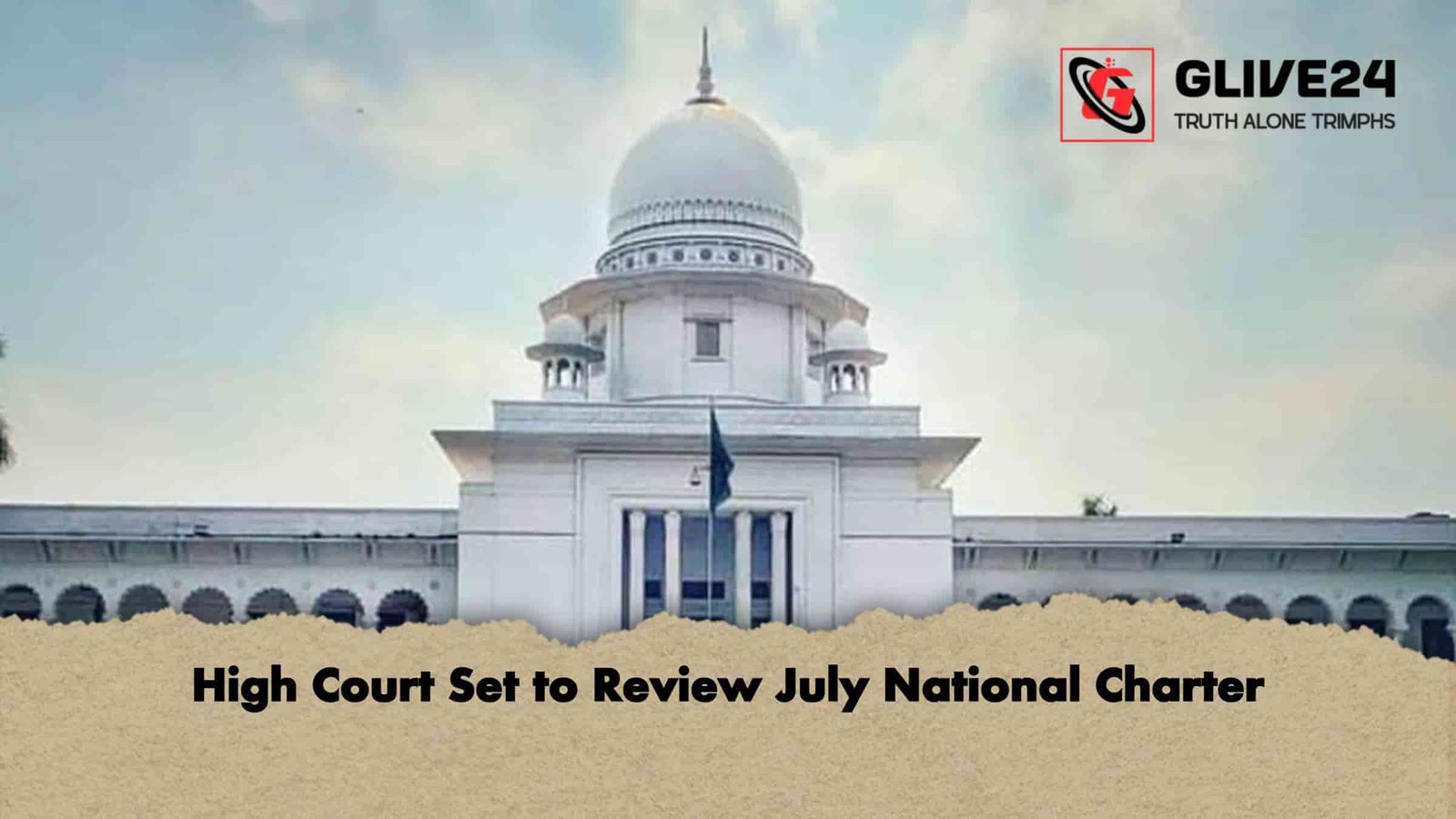
The High Court will hear a public interest writ petition on Sunday, 1 March, seeking to annul the July National Charter and prevent any declarations that may conflict with the Constitution. The petition, filed in the interest of safeguarding national principles, aims to ensure that the Charter’s implementation does not undermine public welfare or constitutional provisions.
A bench of Justices Khizir Ahmed Chowdhury and Md. Ziaul Haque set the hearing date on Wednesday, 25 February. Supreme Court lawyer Advocate Yunus Ali Akand will appear on behalf of the petitioners.
According to the petition, the July National Charter was declared effective in a manner inconsistent with constitutional requirements, potentially harming public interest. The petitioners have requested the High Court to issue an order suspending the Charter’s operation and to invalidate any provisions found to contradict the Constitution.
The key respondents listed in the petition are prominent government officials and institutions, as detailed below:
| Respondent | Position / Institution | Notes |
|---|---|---|
| Cabinet Secretary | Senior Government Official | Named as respondent in the petition |
| Law Secretary | Senior Government Official | Named as respondent in the petition |
| National Consensus Commission | Government Agency | Named as respondent in the petition |
| Chief Election Commissioner | Election Commission | Named as respondent in the petition |
This writ follows an earlier public interest petition filed on 18 February concerning the same issue, also represented by Advocate Yunus Ali Akand. That petition similarly requested the High Court to suspend the Charter and revoke any unconstitutional declarations.
Earlier in February, separate petitions challenged the legality of the 12 February referendum and sought annulment of its results on 13 February. These petitions were filed by Supreme Court lawyer ABM Ataul Majid Touhid, with the Chief Election Commissioner, Cabinet Secretary, and Law Secretary as respondents.
Legal experts emphasise that the High Court’s decision on this petition will have significant implications for national governance. The ruling could influence the enforcement of constitutional safeguards, the transparency of the country’s election processes, and the protection of citizens’ rights.
Observers note that the upcoming hearing may establish a crucial precedent, reinforcing public accountability and ensuring that national policy aligns strictly with constitutional mandates. The High Court’s eventual verdict will therefore be closely monitored by both legal circles and the general public.