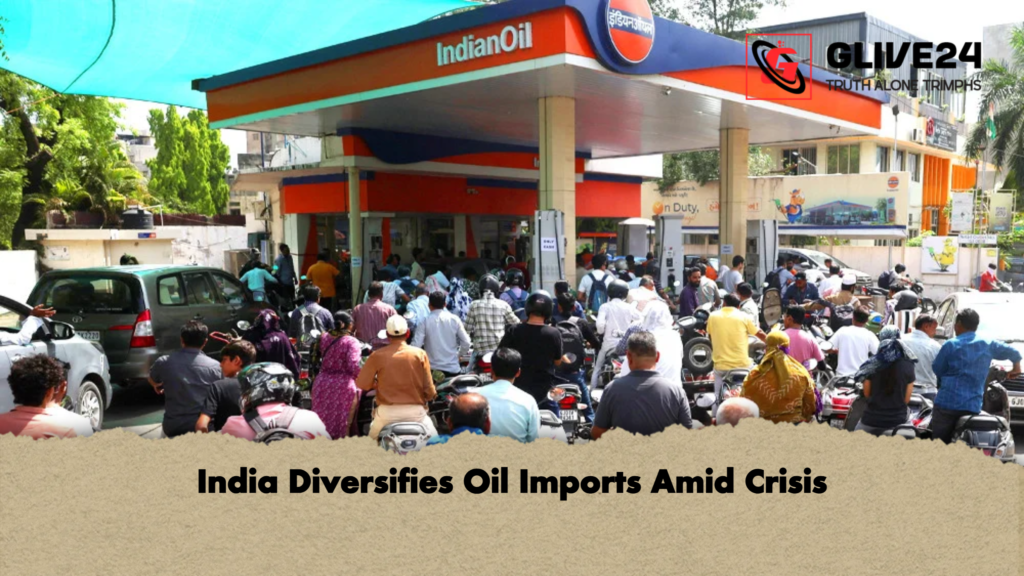
India, one of the world’s largest importers of crude oil, has begun aggressively diversifying its supply sources as geopolitical tensions and disruptions in global shipping routes threaten energy security. As the third-largest crude oil importer after China and the United States, India typically relies on imports for nearly half of its energy needs, with a substantial portion historically transported through the Strait of Hormuz—one of the world’s most strategic maritime chokepoints.
Recent instability in the Middle East has significantly heightened concerns over supply continuity. Following joint military actions by the United States and Israel after 28 February, Iran imposed stricter controls over shipping through the Strait of Hormuz. This effectively disrupted one of the most critical arteries of global oil transport, sending shockwaves through international energy markets and placing import-dependent economies such as India in a vulnerable position.
Although India has so far avoided the severe fuel shortages seen in some neighbouring countries, early signs of strain have emerged, particularly within the liquefied petroleum gas distribution system. Analysts note that India’s limited strategic reserves and high dependence on imported crude make it especially sensitive to price volatility and supply interruptions.
In response, New Delhi has accelerated efforts to broaden its supplier base. Russia has emerged as a key beneficiary of this strategy. According to data from international monitoring agencies, India imported an average of approximately 1.98 million barrels of Russian crude per day in March, nearly double the volumes recorded in the previous two months. Market analysts attribute this increase partly to temporary exemptions granted by the United States, which eased restrictions on seaborne Russian oil shipments.
However, this shift has drawn criticism from some international stakeholders, particularly in relation to the ongoing conflict in Ukraine, highlighting the geopolitical complexity of India’s energy strategy.
Simultaneously, India has expanded imports from Africa and Latin America. Supplies from Angola rose sharply to around 327,000 barrels per day in March—almost three times February’s levels. Nigeria also recorded increased shipments, while imports from Iran and Venezuela resumed after a period of suspension.
Despite these efforts to diversify, overall import volumes declined. India’s total crude oil imports fell to 4.5 million barrels per day in March, compared with 5.2 million barrels in February, reflecting both supply constraints and market adjustments.
India’s Crude Oil Import Pattern
| Source Region/Country | March Daily Imports (barrels) | Trend |
|---|---|---|
| Russia | 1,980,000 | Significant increase |
| Angola | 327,000 | Nearly threefold rise |
| Nigeria | Not specified | Increased |
| Iran | Resumed | Newly reintroduced |
| Venezuela | Resumed | Newly reintroduced |
Experts caution that African crude, while increasingly important, cannot fully replace Middle Eastern supplies due to technical constraints in Indian refineries, which are configured to process specific crude grades. In addition, global oil prices have risen, forcing India to pay between $5 and $15 more per barrel compared with earlier levels.
Despite mounting pressures, the Indian government has so far refrained from increasing retail fuel prices. Instead, it has temporarily reduced certain taxes and duties to cushion consumers. However, economists warn that once political conditions stabilise, a price adjustment may become unavoidable, potentially increasing fuel costs by up to 28 rupees per litre.
For now, state-owned oil companies are absorbing financial strain, providing short-term relief to consumers. Yet analysts suggest that sustained volatility in global energy markets could pose significant long-term fiscal and economic challenges for India.