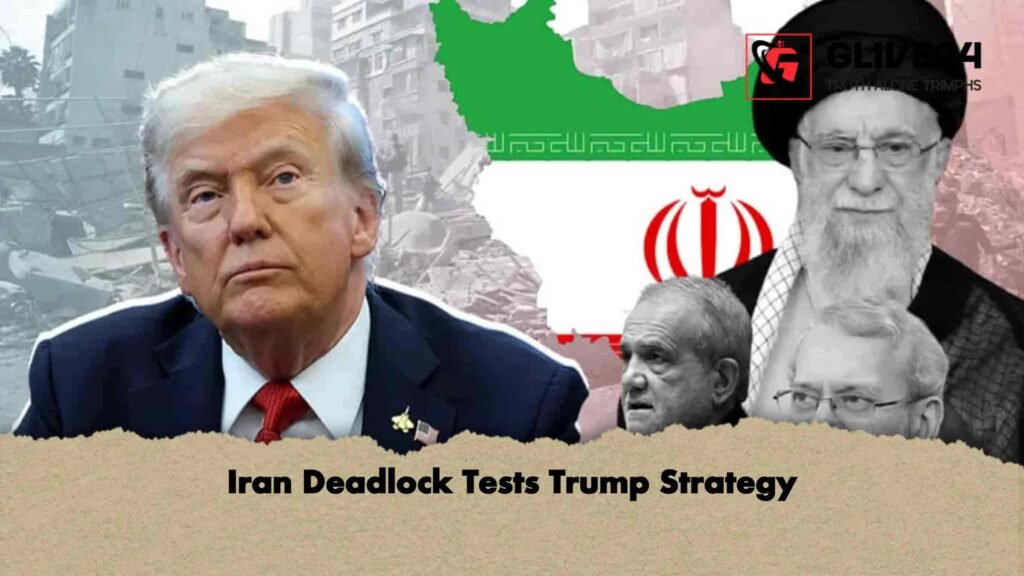
After more than two months of hostilities involving Iran, no decisive military or diplomatic outcome has been achieved, leaving Donald Trump under increasing political and strategic pressure. Analysts warn that the continuing stalemate over a ceasefire could persist, heightening the risk of broader instability affecting both the United States and the global system. These assessments were reported by Reuters.
Table of Contents
Mounting pressure from prolonged impasse
Although both sides continue to claim that their positions remain strong, analysts observe that there is no clear pathway to resolution. A renewed proposal for negotiations from Iran was rejected by President Trump, further reducing the likelihood of immediate diplomatic progress.
If the impasse continues, the economic consequences could be substantial. Elevated energy prices in the United States may place sustained pressure on consumers, while global markets could remain volatile. Domestically, political implications are also becoming evident. President Trump’s approval ratings have already declined, and a prolonged crisis could intensify public dissatisfaction.
There are also concerns regarding the November midterm elections, where candidates from the Republican Party may face additional challenges if the situation remains unresolved.
Strategic objectives yet to be achieved
In addition to the financial and operational costs of the conflict, a central concern is the failure to meet several declared objectives of the Trump administration. While joint military actions by the United States and Israel have reportedly weakened aspects of Iran’s military capability, broader goals remain unmet.
| Strategic Objective | Current Status |
|---|---|
| Weakening military capability | Partially achieved |
| Political regime change | Not achieved |
| Halting nuclear programme | Not achieved |
Ceasefire prospects remain uncertain
Recent developments have further complicated efforts to restore a ceasefire. A planned diplomatic visit to Islamabad was cancelled, and Iran’s proposal to revive the ceasefire—effectively suspended since 8 April—was rejected by President Trump.
Tehran had suggested that discussions on its nuclear programme could take place after the end of hostilities and proposed reopening the Strait of Hormuz. However, the United States insisted that the nuclear issue be resolved first, leading to the rejection of the proposal.
According to IRNA, a revised proposal has recently been conveyed through mediation by Pakistan. This development contributed to a modest decline in global oil prices, though it has not yet resulted in meaningful diplomatic progress.
Military and economic options under consideration
Officials within the Trump administration are considering a range of further measures. These include the possibility of a prolonged naval blockade aimed at restricting Iran’s oil exports and increasing economic pressure. At the same time, military options remain available, with United States Central Command prepared for rapid escalation if necessary.
Another option under discussion involves securing partial control of the Strait of Hormuz to restore maritime traffic. Prior to the conflict, approximately one-fifth of global oil shipments passed through this route, underlining its strategic importance.
Ongoing nuclear concerns
The issue of Iran’s nuclear programme remains unresolved. Analysts believe that significant stockpiles of highly enriched uranium may still exist underground, despite earlier air strikes. These reserves could potentially be further processed for weapons use.
Iran continues to maintain that its nuclear activities are intended for peaceful purposes and asserts its right to uranium enrichment. Meanwhile, White House spokesperson Olivia Wells has stated that Iran is weakening under sustained military and economic pressure and that the United States retains a strategic advantage.
Risk of a prolonged stalemate
Many analysts suggest that the situation could evolve into a prolonged “frozen conflict”, characterised by the absence of a definitive resolution. Such an outcome could extend the United States’ military presence in the Middle East and strain relations with European allies, some of whom have expressed dissatisfaction over limited prior consultation before the conflict began.
Domestically, pressure on President Trump is increasing. Survey data indicates that his approval rating has fallen to 34 per cent, while rising fuel prices have contributed to growing public dissatisfaction. Analysts also suggest that Iran may be adopting a strategy of delay, anticipating that internal pressures within the United States will intensify over time.
In the absence of a clear resolution, the combination of geopolitical uncertainty, economic strain, and political risk suggests that the conflict may persist, with significant implications for regional stability and global markets.