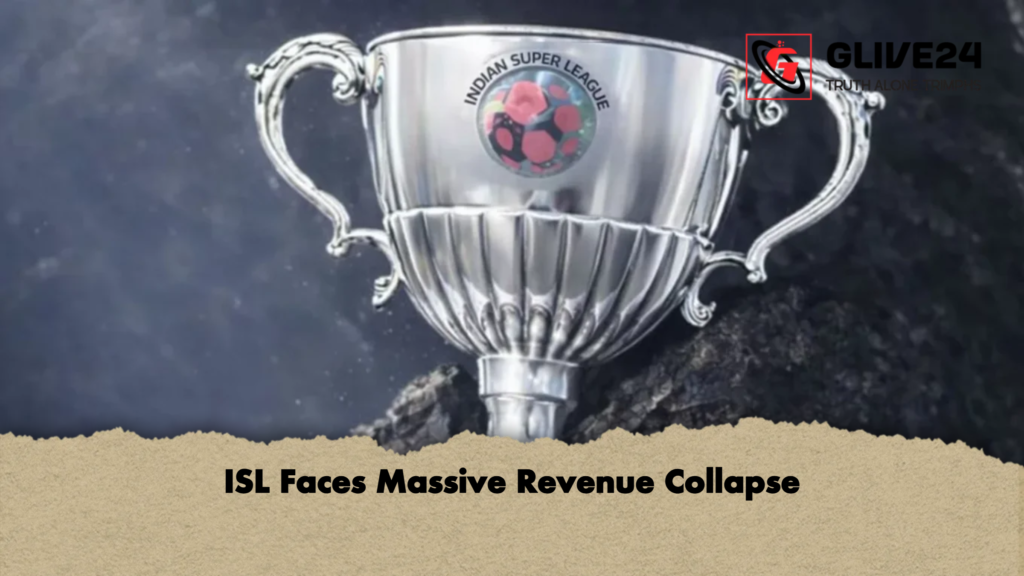
After months of uncertainty and speculation, India’s premier domestic football competition, the Indian Super League (ISL), is finally set to kick off its upcoming season. While broadcasting rights have been secured, the league faces an unprecedented financial setback, with revenues plummeting dramatically compared to previous seasons.
For the upcoming season, Fancode has acquired the rights to stream ISL matches for a total of ₹8.62 crore, agreeing to pay ₹9.5 lakh per match to the All India Football Federation (AIFF). In stark contrast, over the past decade, AIFF earned approximately ₹275 crore per season from broadcasting rights alone. This represents a staggering decline of ₹266.38 crore, equivalent to nearly 97% less revenue.
In previous seasons, the ISL staged 163 matches, with AIFF earning around ₹1.68 crore per match. Under the new arrangement, the federation will see a 95% reduction in per-match income, marking a dramatic shift in the league’s financial landscape.
ISL Broadcasting Revenue: Past vs. Upcoming Season
| Metric | Previous Seasons | Upcoming Season | Change (%) |
|---|---|---|---|
| Total Revenue (₹ crore) | 275 | 8.62 | -97% |
| Revenue per Match (₹ lakh) | 168 | 9.5 | -95% |
| Total Matches | 163 | 91 | -44% |
Experts point out that this revenue drop positions the ISL far behind other major Indian sports leagues. To put the scale in perspective, the Board of Control for Cricket in India (BCCI) earns 5,613 times more from broadcasting a single Indian Premier League (IPL) match than AIFF will receive from an ISL match. Additionally, the monetary value of one IPL game is 1,242 times higher than that of an ISL fixture.
The financial implications for ISL clubs are significant. Reduced broadcasting revenue may constrain budgets for player salaries, training facilities, marketing campaigns, and grassroots development programmes. Analysts warn that without securing new sponsorship deals or expanding international streaming partnerships, the league’s economic stability could remain under pressure in the coming years.
Nevertheless, football fans remain hopeful that the ISL can maintain its competitive standards and gradually recover financially. Increasing stadium attendance, attracting global viewership, and leveraging digital platforms are seen as critical strategies to restore the league’s revenue potential. Despite the challenges, the ISL continues to play a vital role in promoting professional football in India and nurturing emerging talent.