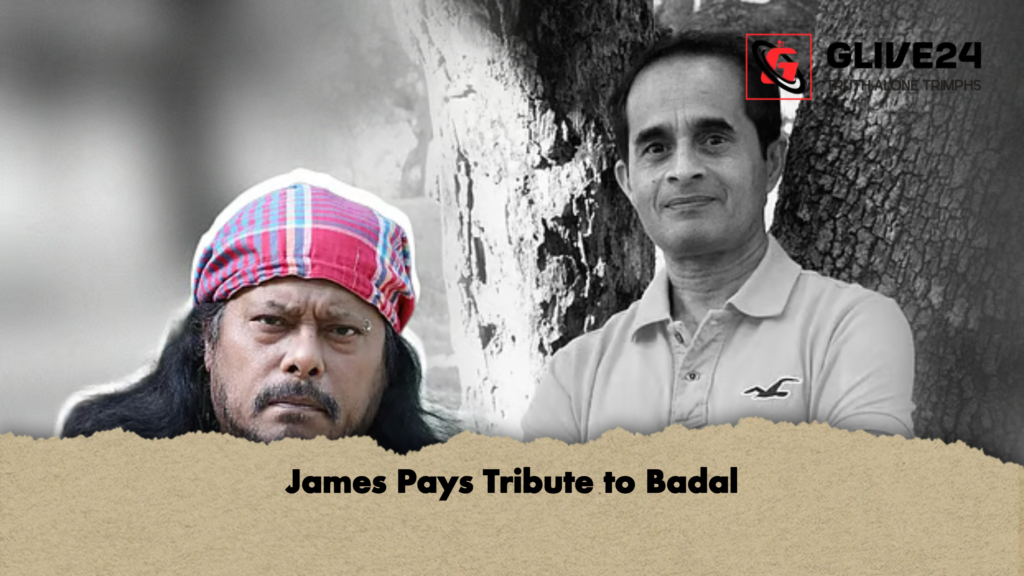
Bangladeshi rock icon Nagarbaul James has paid an emotional tribute to his long-time friend and producer Faruk Kabir Badal, describing him as far more than a professional associate—he was, in James’s words, “a member of the family.” The singer became visibly emotional during a recent phone conversation in which he reflected on their decades-long bond, built on trust, companionship and creative collaboration.
Badal passed away on 2 May. He had returned to Bangladesh three years earlier after spending an extended period abroad. In his final years, he lived a quiet and increasingly isolated life in a flat in the Khilkhet area of Dhaka, maintaining limited contact with others. His passing was confirmed after neighbours last saw him alive on 28 April, with his body later recovered from his residence.
Table of Contents
A partnership rooted in music history
James and Badal’s relationship began in the formative years of Bangladesh’s modern rock and pop scene. Their collaboration was closely tied to the Sargam Studio, which served as a creative hub during the 1990s. It was here that James’s early solo career took shape.
In 1989, his debut solo album Onanya was released, followed in 1993 by Jail Theke Bolchhi. Both records played a crucial role in establishing James as a leading voice in the country’s music industry, achieving both critical recognition and commercial success.
However, James has consistently emphasised that the true value of that era was not only the music itself, but the companionship he shared with Badal. He recalled long conversations, shared frustrations, reconciliations and everyday camaraderie that extended far beyond professional boundaries.
Separation and unexpected reconnection
By the mid-1990s, changes in the music industry led Badal to gradually step away from active production work. He eventually moved abroad and remained largely out of public contact for many years. After nearly 27 years, he returned to Bangladesh, but continued to live a relatively private life, avoiding most social interactions.
A chance reconnection occurred on 15 August 2024, when lyricist Bappi Khan unexpectedly met Badal in Uttara during a family-related visit. At first, he failed to recognise him, but the identity soon became clear, leading to an emotional exchange. Bappi later shared a photograph of the meeting on social media, though he respected Badal’s request not to disclose any personal contact details.
This post ultimately helped reconnect James with his old friend.
Final conversation and lasting memory
At the time, James was in transit in Dubai while returning from the United States. After seeing Bappi Khan’s post, he immediately reached out to learn more. With the help of shared contact information, he managed to speak directly with Badal over the phone.
The conversation lasted around ten minutes. According to James, the call was filled with laughter and reminiscence, echoing the warmth of their earlier years. Although he chose not to disclose the private details of their discussion, he described the moment as profoundly meaningful and deeply imprinted on his memory.
Passing and farewell
Badal’s final days were marked by solitude. After being last seen on 28 April, his death was confirmed on 2 May. He was laid to rest at Banani Cemetery on 3 May.
James expressed deep sorrow at his passing, stating that Badal’s absence represents not only a personal loss but also a significant void within the music community. He credited Badal with playing an essential role in shaping a defining era of his career and the broader cultural landscape.
Key timeline
| Date | Event |
|---|---|
| 1989 | Release of Onanya album |
| 1993 | Release of Jail Theke Bolchhi album |
| Mid-1990s | Badal gradually withdraws from music production |
| 15 August 2024 | Reconnection with lyricist Bappi Khan |
| 28 April | Last seen alive by neighbours |
| 2 May | Body recovered from residence |
| 3 May | Burial at Banani Cemetery |
James concluded that Badal’s absence is not merely a personal grief but a lasting loss for the country’s musical heritage, marking the end of a quietly influential chapter in its cultural history.