
Khabor Wala Desk
Published: 11th May 2026, 3:45 PM
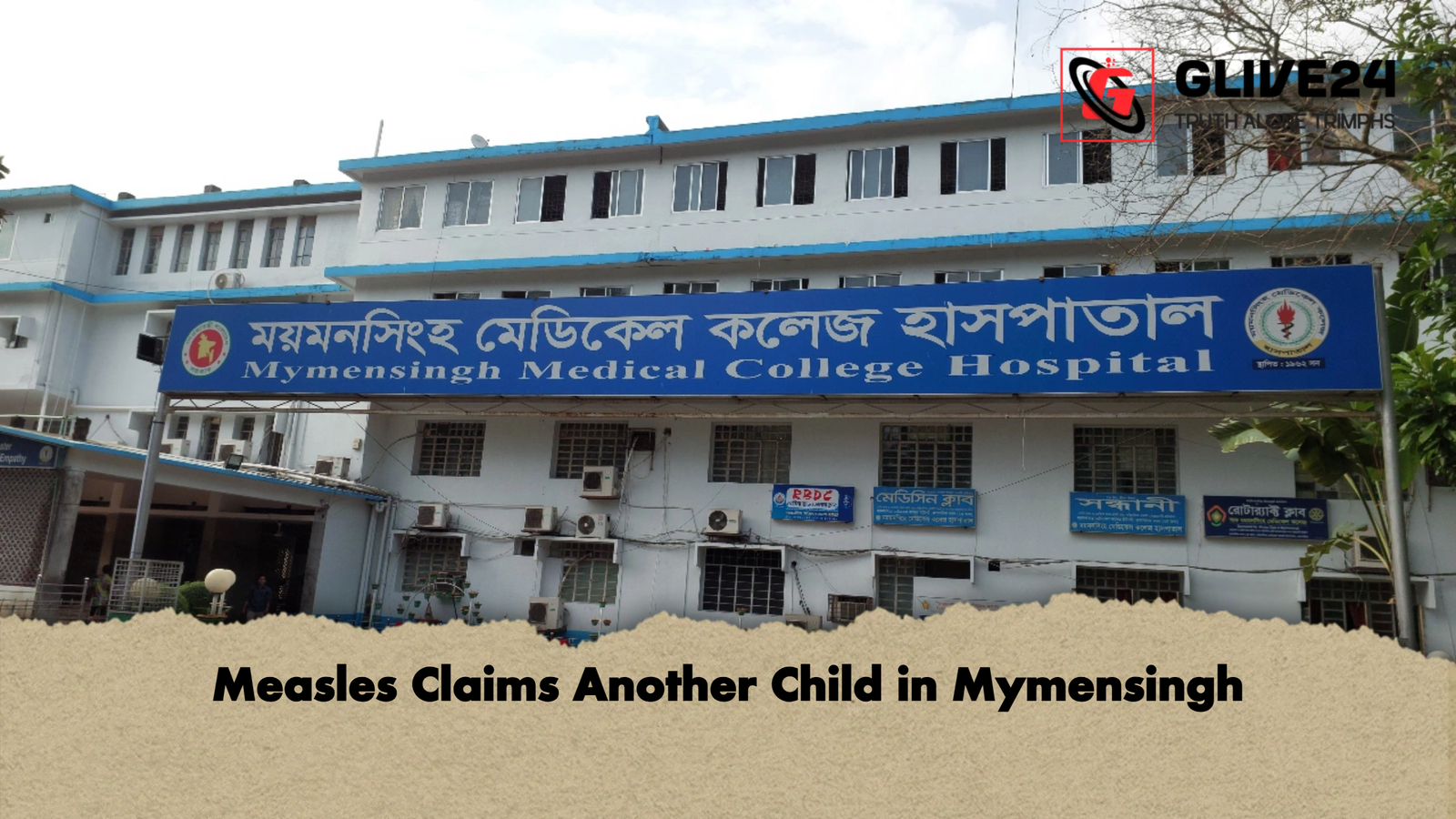
A further child has died within the past 24 hours at Mymensingh Medical College Hospital showing symptoms consistent with measles, bringing renewed concern over the ongoing outbreak and pressure on critical care facilities.
According to a statement issued on Monday morning (11 May) by the hospital’s Assistant Director (Administration), Dr Mohammad Mainuddin Khan, the deceased was seven-year-old Sumaiya Akter, daughter of Ujjal Mia from Muktagacha upazila in Mymensingh district. She was admitted to the hospital on 8 May after developing measles-like symptoms and passed away at 5:50 am on Monday while undergoing treatment.
The hospital authorities confirmed that the child had been suffering from additional complications alongside measles-like symptoms. Officials stated that her condition required intensive care support, which was not available at the time. Dr Khan noted that the absence of an intensive care unit (ICU) bed may have contributed to the fatal outcome, although she was also affected by other medical conditions.
The incident comes amid a continuing influx of paediatric patients presenting with suspected measles symptoms at the facility. Between 8 am Sunday and 8 am Monday alone, 24 new children were admitted to the measles isolation ward.
Hospital data from 17 March to 11 May provides a clearer picture of the scale of the situation:
| Indicator | Number of Children |
|---|---|
| Total admissions (since 17 March) | 1,244 |
| Discharged patients | 1,127 |
| Current patients under treatment | 89 |
| Deaths recorded | 28 |
| Discharged in last 24 hours | 35 |
| New admissions in last 24 hours | 24 |
The hospital reports that although a large number of children have recovered and been discharged, a significant number remain under treatment, placing continued pressure on isolation and general paediatric services.
The father of the deceased child, Ujjal Mia, expressed deep anguish, blaming the lack of ICU facilities for his daughter’s death. Speaking tearfully, he said his daughter’s condition had been deteriorating for several days and doctors had advised that intensive care was urgently required. However, no ICU bed was available at the time of need.
He further questioned the capacity of a major tertiary hospital to handle critically ill patients without adequate intensive care support, stating that preventable deaths should not occur due to resource shortages.
Hospital officials, while acknowledging the constraints in critical care availability, reiterated that multiple factors contributed to the child’s condition, including underlying complications in addition to measles-like illness.
The situation has underscored ongoing concerns about paediatric capacity, isolation facilities, and critical care resources in the region as the hospital continues to manage a high volume of suspected measles cases.


Comments