
Khabor Wala Desk
Published: 20th April 2026, 11:47 PM
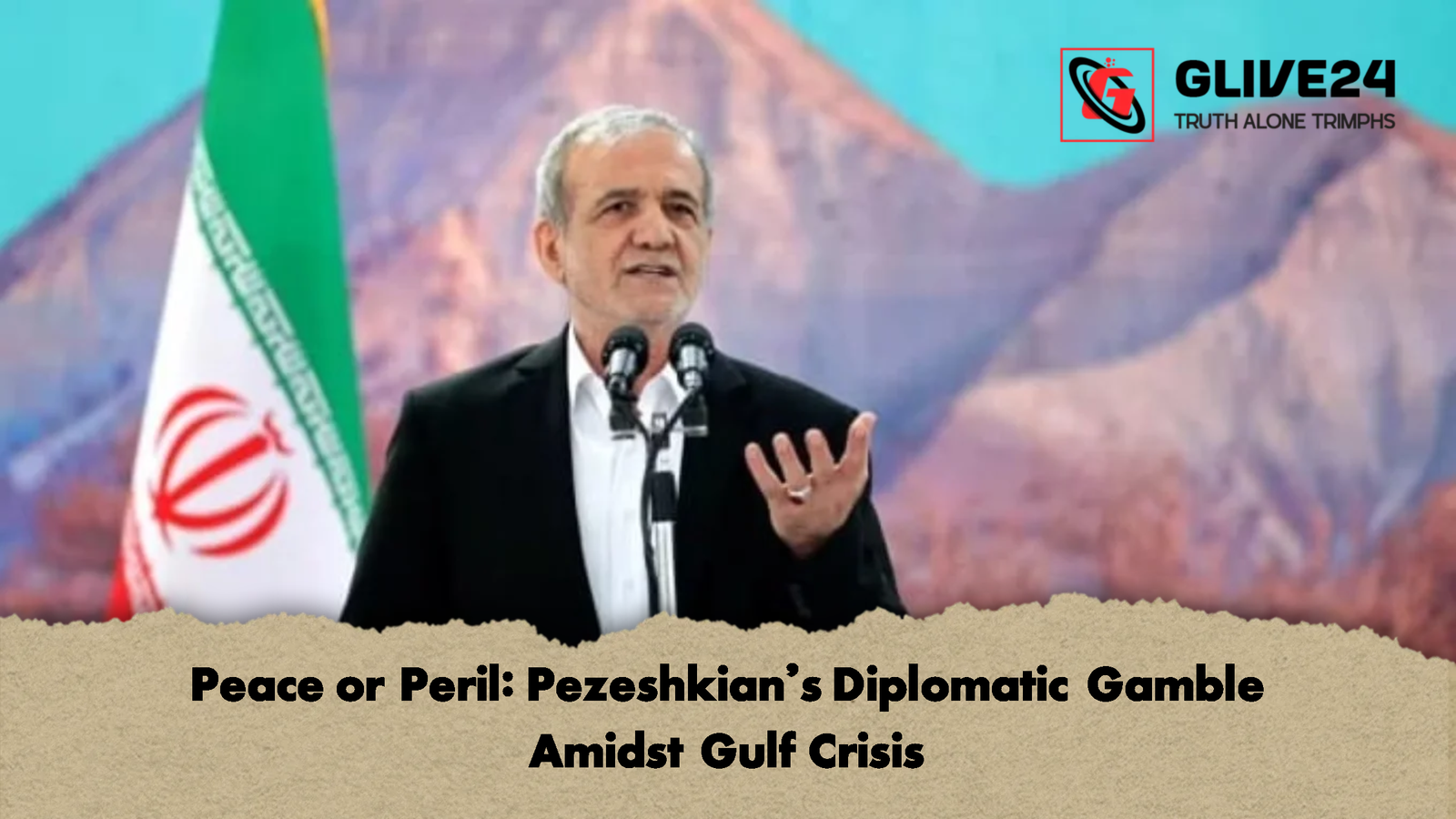
In a high-stakes address aimed at navigating the most severe regional escalation in recent memory, Iranian President Masoud Pezeshkian has asserted that armed conflict provides no strategic benefit to any nation. Speaking during a visit to the Ministry of Justice on Monday, 20th April 2026, the President urged for a “rational and diplomatic” de-escalation, even as Iranian and American forces remain in a volatile stand-off in the Gulf of Oman.
Table of Contents
President Pezeshkian’s remarks come at a precarious juncture for the Islamic Republic, which is currently reeling from the dual pressures of an international naval blockade and a damaged domestic economy. He emphasised that while Iran remains steadfast in defending its territorial integrity against “excessive demands,” the government must pursue every available diplomatic avenue to prevent a catastrophic regional war.
“War is not a boon for any side—not for us, not for the other side, and not for the future of the region,” Pezeshkian remarked. Notably, he pivoted to the theme of domestic integrity, warning that solving national problems with “unrealistic promises” or misinformation only serves to erode public trust. He argued that it is a moral obligation for the state to present a transparent account of the country’s condition, particularly as it faces an estimated $270 billion in infrastructural damage from recent hostilities.
The President’s plea for diplomacy stands in stark contrast to the unfolding reality at sea. On Sunday, 19th April, the USS Spruance intercepted and disabled the Iranian-flagged container vessel, M/V Touska, in the Gulf of Oman. According to CENTCOM, the vessel was warned for six hours before the U.S. Navy fired into its engine room to enforce a naval blockade.
| Event Variable | Details of the Maritime Incident |
| Vessel Involved | M/V Touska (Iranian-flagged cargo ship) |
| Intercepting Force | USS Spruance (DDG 111) & 31st Marine Expeditionary Unit |
| Location | Gulf of Oman / North Arabian Sea |
| Reason Cited | Violation of the U.S. naval blockade near Bandar Abbas |
| Outcome | Ship propulsion disabled; vessel currently in U.S. custody |
| Iranian Response | Retaliatory drone strikes on U.S. warships reported |
While U.S. President Donald Trump has announced that a delegation led by Vice President JD Vance is “en route” to Pakistan for a second round of peace talks, Tehran has signaled deep scepticism. The Iranian Foreign Ministry spokesperson, Esmail Baghaei, stated on Monday that there are currently “no plans” for negotiations, citing the U.S. seizure of the Touska as a flagrant violation of the ceasefire established on 8th April.
Tehran views the naval blockade—which has reportedly turned back 25 commercial vessels in the last week alone—as an act of “maritime piracy” incompatible with sincere de-escalation. Consequently, the Strait of Hormuz remains closed to commercial traffic as of Monday evening, further straining global energy markets.
Political commentators suggest that Pezeshkian’s stance reflects a sophisticated “dual-track” strategy. By highlighting the futility of war and the need for reconstruction, he is attempting to consolidate domestic support and appeal to moderate regional factions. Simultaneously, the refusal of the Foreign Ministry to engage in immediate talks indicates that Iran will not negotiate under the “coercion” of a blockade.
As the ceasefire deadline of Wednesday, 22nd April looms, the international community remains on a knife-edge. The success of Pezeshkian’s “rational approach” will depend on whether a framework for lifting the maritime blockade can be established, or if the current cycle of seizures and retaliations will spiral into the very conflict the Iranian President insists will benefit no one.


Comments