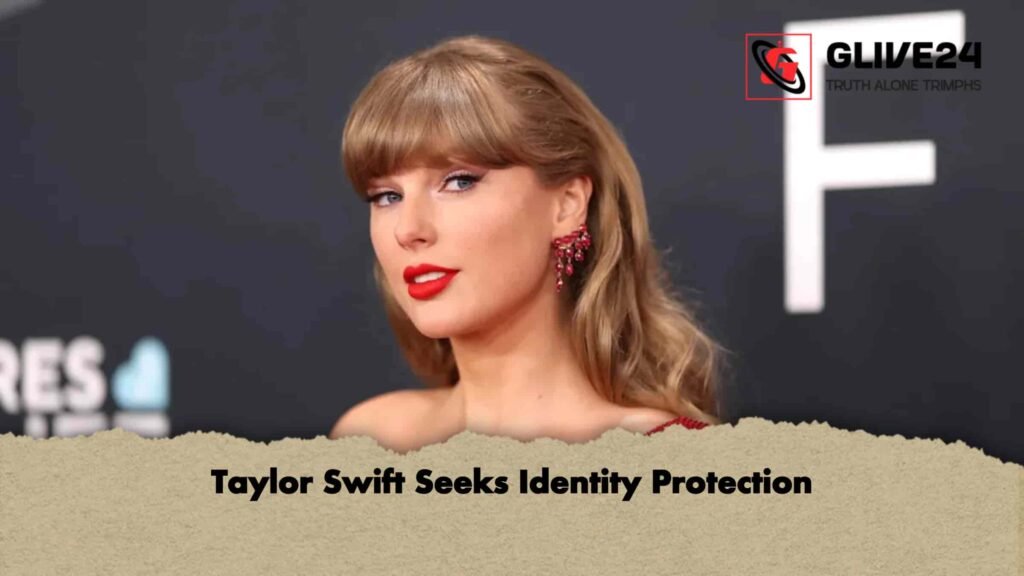
The accelerating capabilities of artificial intelligence have raised significant concerns within the global entertainment industry, particularly regarding the unauthorised reproduction of celebrities’ voices, likenesses and public personas. In response to these developments, Taylor Swift has undertaken new legal steps aimed at reinforcing protection over key elements of her identity.
As reported by Variety, Swift’s legal entity, TAS Rights Management, filed three trademark applications with the United States Patent and Trademark Office on 24 April. These filings represent a strategic attempt to secure formal recognition of both auditory and visual identifiers strongly associated with the artist.
Two of the applications focus on vocal expressions frequently linked to Swift in media and fan interactions. These include the phrases “Hey, it’s Taylor Swift” and “Hey, it’s Taylor”. The third application concerns a stylised visual representation showing Swift performing on stage, holding a pink guitar while wearing a sparkling performance outfit. The purpose of these filings is to prevent unauthorised commercial exploitation or artificial intelligence replication of these distinctive elements.
Legal analyst Josh Gerben has drawn attention to the broader implications of such filings, noting that modern artificial intelligence systems are increasingly capable of generating highly convincing synthetic voices and digital likenesses without consent. He further observed that existing legal frameworks were not originally designed to regulate full-scale digital imitation of personal identity.
Summary of Trademark Filings
| Category | Subject of Protection | Filing Date | Filing Authority |
|---|---|---|---|
| Voice Mark | “Hey, it’s Taylor Swift” | 24 April | TAS Rights Management |
| Voice Mark | “Hey, it’s Taylor” | 24 April | TAS Rights Management |
| Visual Mark | Stage performance image with pink guitar | 24 April | TAS Rights Management |
Although traditional trademark law does not explicitly cover the total protection of an individual’s voice or appearance, such filings can operate alongside “right of publicity” statutes. These laws are intended to prevent the commercial misuse of a person’s identity, although their scope and enforcement vary between jurisdictions.
Within the United States, states such as California and New York maintain established right of publicity protections. However, trademarks provide an additional legal mechanism because they are enforceable at the federal level, allowing for nationwide application and more consistent judicial recourse.
Swift has previously been affected by incidents involving artificial intelligence-generated content. In several instances, her likeness has been used without authorisation in digitally manipulated images circulating online. During the 2024 United States electoral period, misleading AI-generated content falsely suggested political endorsement involving Donald Trump, highlighting the potential for reputational harm through synthetic media.
This type of legal strategy is not unique to Swift. Actor Matthew McConaughey has also pursued trademark-based protections over aspects of his vocal identity, securing approvals in 2025. Such actions reflect a growing trend among high-profile individuals seeking to establish stronger safeguards against emerging forms of digital impersonation.
As artificial intelligence continues to evolve, legal experts anticipate an increase in preventive intellectual property filings designed to protect personal identity. The intersection of trademark law, publicity rights and AI regulation is therefore likely to become an increasingly important area of legal development in the entertainment sector.