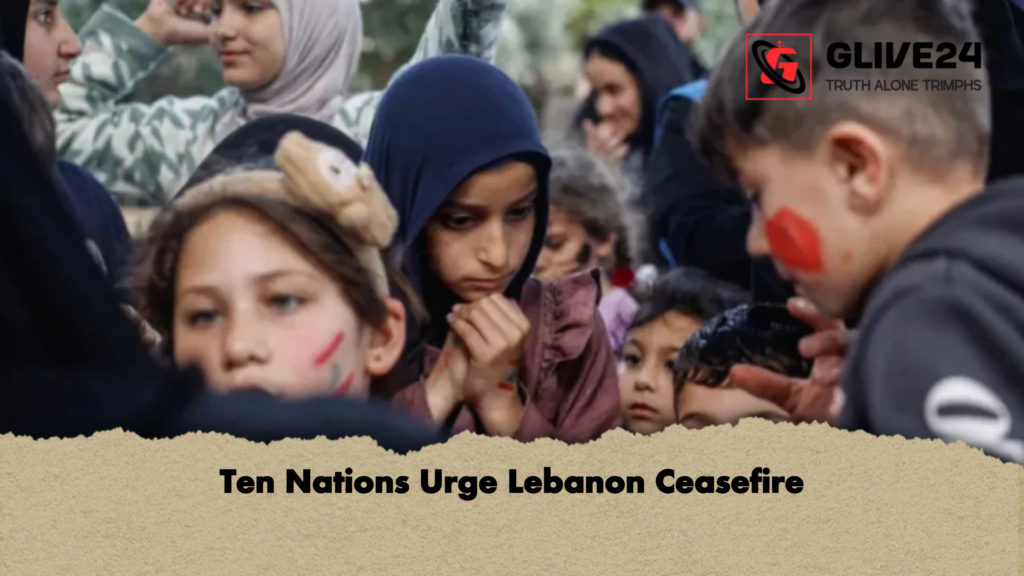
Ten countries, including the United Kingdom, Japan, Canada and Australia, have jointly called for an immediate end to hostilities in Lebanon, expressing deep concern over the escalating conflict and worsening humanitarian situation in the country.
In a joint statement issued on Wednesday (15 April), the countries condemned the reported deaths of more than 2,000 people since March due to Israeli military operations and highlighted the large-scale displacement of civilians. The signatories described the situation in Lebanon as a severe humanitarian crisis requiring urgent international attention.
The statement was issued by Australia, Brazil, Canada, Colombia, Indonesia, Japan, Jordan, Sierra Leone, Switzerland and the United Kingdom. It expressed particular concern over attacks on United Nations peacekeepers deployed in southern Lebanon and called for strengthened protection of humanitarian personnel operating in the region.
Although no specific party was named in relation to the attacks, the statement noted the deaths of peacekeepers with grave concern. This follows heightened international attention after the killing of three Indonesian peacekeepers last month.
According to preliminary findings cited by the United Nations, one peacekeeper is believed to have been killed by Israeli tank fire, while two others reportedly died as a result of improvised explosive devices allegedly planted by Hezbollah.
The escalation of violence was reported to have begun on 2 March, when Hezbollah launched missile strikes into Israel following a wider regional confrontation involving Iran and the United States. Israel subsequently launched airstrikes and later a ground operation in Lebanon.
According to Lebanese authorities, more than 2,000 people have been killed and over 1.2 million displaced since the start of the Israeli military operations.
The ten-country statement welcomed a recent two-week ceasefire agreement involving the United States, Israel and Iran, while emphasising that hostilities in Lebanon must also be included in any broader de-escalation efforts.
Iran has stated that any final peace settlement must incorporate a halt to the conflict in Lebanon. Israel, however, has so far rejected ceasefire discussions specific to Lebanon and has instead demanded the disarmament of Hezbollah in Beirut.
Israel has reported that Hezbollah attacks since March have resulted in the deaths of two civilians and 13 soldiers.
Key Positions of the Ten Countries
| Country | Position Highlight |
|---|---|
| United Kingdom | Urgent call for cessation of hostilities |
| Japan | Immediate end to violence |
| Canada | Concern over humanitarian crisis |
| Australia | Protection of peacekeepers |
| Brazil | Support for de-escalation |
| Colombia | Call for ceasefire expansion |
| Indonesia | Concern following peacekeeper casualties |
| Jordan | Regional stability emphasis |
| Sierra Leone | Humanitarian assistance priority |
| Switzerland | Support for diplomatic resolution |
The ongoing conflict in southern Lebanon is increasingly viewed as a significant risk to wider Middle Eastern stability. Analysts note that the joint stance of the ten nations reflects growing international pressure for renewed diplomatic engagement aimed at achieving a sustainable political resolution.
With a fragile two-week truce between the United States and Iran nearing its conclusion, concerns remain over the absence of a broader consensus on Lebanon. The situation continues to underscore the urgent need for sustained humanitarian access and the protection of civilians amid ongoing hostilities.