US President Donald Trump has announced a special maritime initiative aimed at securing commercial vessels reportedly stranded in the Strait of Hormuz. The operation, named “Project Freedom”, has prompted an immediate and strong response from Iran, further heightening tensions in one of the world’s most strategically sensitive waterways.
In a post on the social media platform X, Ibrahim Azizi, head of Iran’s National Security Commission, described the US plan as direct “interference” in regional maritime arrangements. He warned that any such intervention in the newly established administrative framework governing the Strait of Hormuz would be regarded as a violation of the existing ceasefire. His remarks are being viewed as diplomatically significant, given the already fragile security situation in the region.
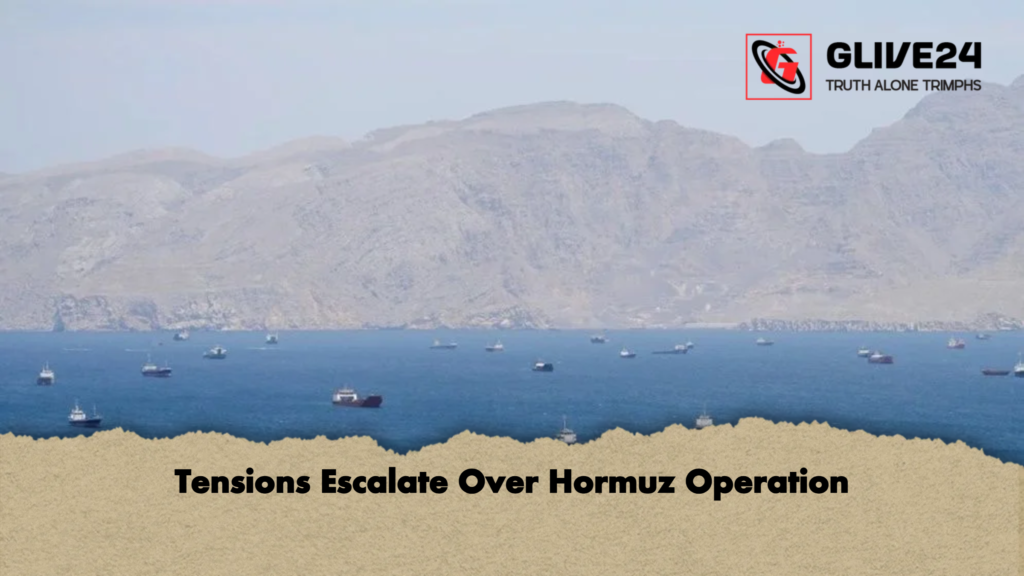
The Strait of Hormuz, which connects the Persian Gulf with the Gulf of Oman, is a narrow but critically important maritime corridor measuring approximately 167 kilometres in length. It is one of the most vital global energy transit routes, with nearly one-fifth of the world’s oil and liquefied natural gas passing through it. Any disruption in this passage has historically raised serious concerns in international energy markets.
According to recent reports, heightened regional tensions led to restrictions in the strait on 28 February, resulting in more than one hundred commercial vessels being unable to proceed through the waterway. These ships are understood to be of various international registries and are not directly involved in the ongoing geopolitical disputes.
In response, President Trump stated via his Truth Social platform that several nations had formally requested assistance after their commercial vessels became stranded. He further confirmed that the United States Navy would deploy resources under the banner of “Project Freedom” to assist in reopening the passage and ensuring safe navigation for commercial shipping.
Trump indicated that the operation was scheduled to begin on Monday morning local US time, corresponding to Monday night in Bangladesh.
Shortly after the announcement, Iran issued a firm counterstatement, signalling that it would closely monitor any foreign naval activity in the region. Analysts suggest that the situation has now entered a highly sensitive phase, where even limited military or naval engagement could have wider geopolitical consequences.
Key Positions
| Party | Position | Core Statement |
|---|---|---|
| United States | Naval operation initiated | Assisting stranded vessels and reopening the Strait of Hormuz |
| Iran | Strong warning issued | Any intervention seen as violation of ceasefire |
| Ibrahim Azizi | Security response | US action described as interference and security threat |
International observers note that continued escalation around the Strait of Hormuz could significantly impact global energy supplies and disrupt maritime trade routes, given the waterway’s critical role in international shipping networks.