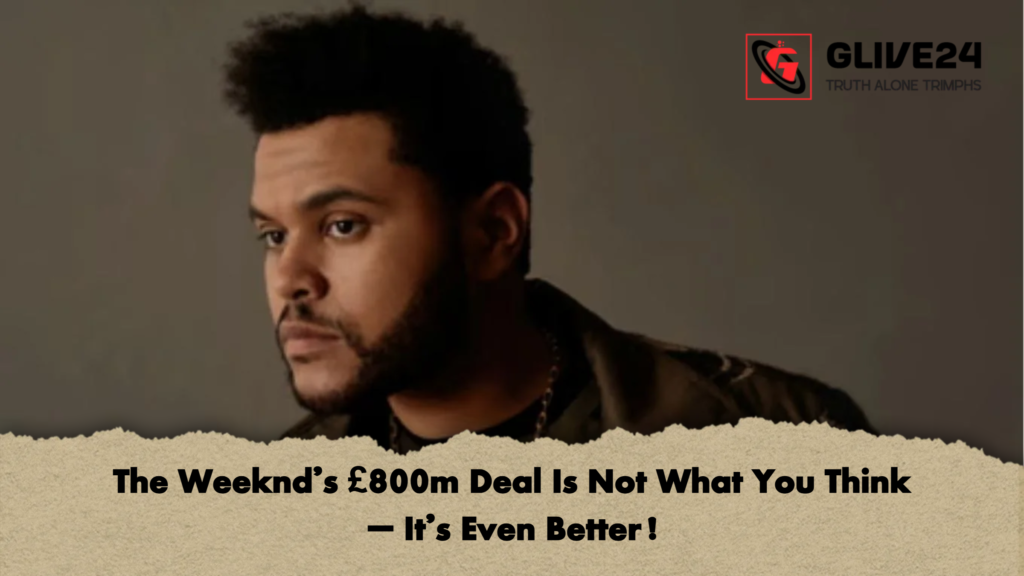
In what is being hailed as a monumental moment for music business innovation, The Weeknd has finalised a catalogue agreement with Lyric Capital Group that is believed to exceed $1 billion. But contrary to expectations set by other blockbuster music asset sales, this deal has not involved a traditional transfer of rights. Instead, it reframes how an artist’s catalogue can be monetised while preserving creative stewardship — a move that could inspire a wave of similar agreements across the industry.
Abel Tesfaye, globally recognised as The Weeknd, has agreed terms with Lyric Capital that cover his entire catalogue up to the end of 2025. Crucially, however, he and his team will retain control over the creative direction, licensing, and strategic use of his music. This approach stands in stark contrast to typical catalogue deals, which often see artists relinquish control in exchange for upfront capital.
Rumours of a $1 billion‑plus valuation circulated all summer, but details were elusive until the agreement was officially announced. As soon as talks with Lyric began, it was evident that Tesfaye had a very clear vision: he wanted to unlock the financial value of his catalogue without surrendering authority over how his work is utilised.
“Abel wasn’t interested in a straightforward sale of his catalogue,” explained a representative close to the transaction. “His priority was to innovate and create a structure that honoured his creative intentions while offering genuine financial upside. We’ve achieved something that’s truly unique.”
At the heart of this pioneering deal is a financial construct referred to as a Royalty Backed Note. Although technical, this instrument allows The Weeknd to realise significant value from his future royalties without resorting to asset‑backed securitisation — an approach expressly avoided in this transaction. “There’s no ABS or securitisation here,” the Weeknd’s spokesperson confirmed. Instead, Lyric engineered a bespoke solution that fits the artist’s long‑term objectives.
Industry analysts have been hard at work parsing what this might mean for the broader music business. Catalogue valuations have surged in recent years, fuelled by streaming growth and institutional investor interest. Yet with those valuations have come questions about what it means for artists to cede control of their life’s work. The Weeknd’s deal — by prioritising creative freedom — may offer an alternative path.
Ross Cameron, co‑managing partner at Lyric Capital, spoke enthusiastically about the agreement’s potential to change industry norms. “This isn’t just another catalogue sale — it’s a strategic alliance that re‑defines artist empowerment,” he said. “Abel and his team have created a model that respects artistic legacy and sets a new standard for creative control.”
Though financial terms remain private, external reports have placed the valuation in excess of $1 billion, making it one of the largest catalogue deals ever recorded. The only publicly acknowledged bigger deal to date was Sony’s estimated $1.27 billion acquisition of the Queen catalogue.
The Weeknd’s partnership with Lyric applies solely to music created up to 2025; future releases remain outside the scope of this agreement. He will continue to collaborate with XO/Republic/Universal Music Group on new music, and Universal will manage his publishing catalogue, including interests held by Chord Music Partners and Dundee Partners.
For fans, musicians, and industry executives alike, the significance of this announcement extends far beyond dollar signs. By placing creative control at the forefront of a major financial transaction, The Weeknd may well have rewritten the rulebook for how music catalogues are valued and managed — and opened the door for a new generation of artists to monetise their work without compromising their creative sovereignty.