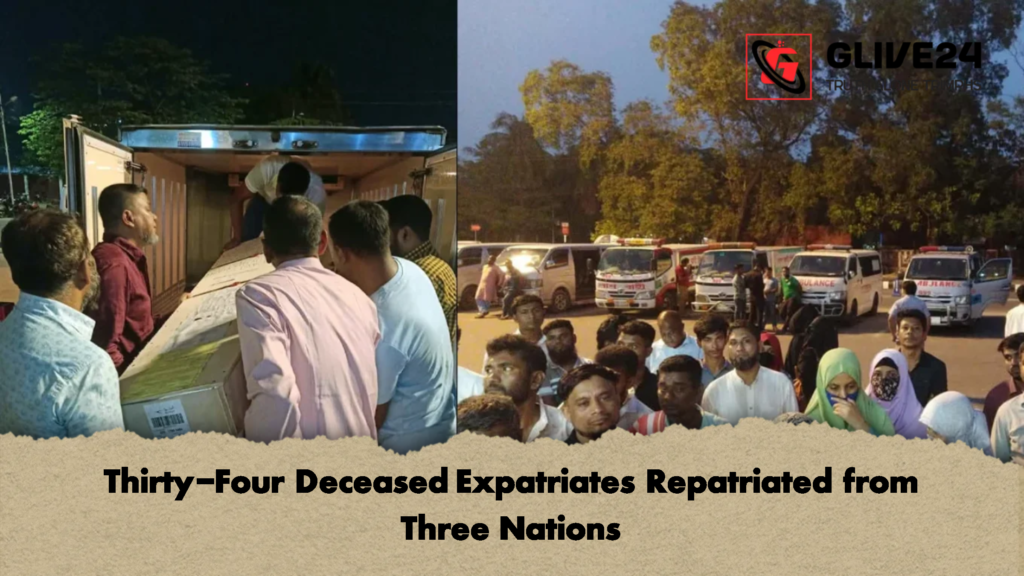
In a somber development at Hazrat Shahjalal International Airport, the mortal remains of 34 Bangladeshi expatriates arrived back in the country on Saturday, 18 April 2026. The deceased, who had been working in Kuwait, Malaysia, and Libya, were repatriated on separate flights following an extended and distressing delay caused by volatile geopolitical conditions and ongoing conflicts in the Middle East.
According to airport authorities and the Ministry of Expatriates’ Welfare and Overseas Employment, all 34 individuals are reported to have died of natural causes. However, the escalating regional tensions and subsequent flight disruptions had left their bodies stranded in foreign morgues for a significant period, causing immense emotional hardship for their grieving families.
Table of Contents
Repatriation Details and Flight Logistics
The majority of the deceased were repatriated from Kuwait, where a backlog of remains had accumulated due to repeated flight cancellations over the past few weeks. To resolve this, the government facilitated a special chartered flight to bring home those who had been awaiting burial in their homeland.
| Country of Origin | Number of Deceased | Primary Flight Information |
| Kuwait | 30 | Flight KU-5283 (Chartered) |
| Malaysia | 02 | Flight BS-316 |
| Libya | 02 | Flight QR-640 |
| Total | 34 | — |
Overcoming Logistical Hurdles Amid Conflict
The repatriation process faced severe challenges due to the current “war situation” in the Middle East. Many of these remains were scheduled for earlier transport, but the suspension of commercial airspace and the cancellation of multiple flights from Kuwait City had created a distressing bottleneck.
Al Amin Nayan, an official from the BRAC Migration Programme stationed at the airport, noted that the backlog had caused immense strain on the relatives. The government’s intervention in arranging the chartered Kuwait Airways flight was a critical step in clearing this backlog. Officials reiterated that while the deaths were natural, the circumstances of their return were anything but ordinary, requiring high-level diplomatic coordination to navigate the closed airspaces and security protocols.
State Support and Financial Assistance
Upon the arrival of the remains, the Wage Earners’ Welfare Board (WEWB) took immediate charge of the formal handover process. To assist with the immediate financial burden of funeral rites, burial, and local transportation to their respective villages, the board provided an initial grant of 35,000 BDT to each bereaved family.
Government representatives present at the airport—including senior officials from the Expatriate Welfare Desk—assured the families that this was merely the first step in the support process.
“We are committed to ensuring that these families receive every bit of support they are entitled to. Any pending insurance claims or financial benefits due from the deceased’s employers abroad will be processed and disbursed with the utmost urgency,” stated a representative from the Welfare Board.
Final Rites and Local Impact
As the hearses departed the airport, scenes of profound grief were witnessed among the relatives who had travelled from various districts to receive their loved ones. For many of these families, the deceased were the primary breadwinners who had ventured abroad in search of better livelihoods for their children, only to return in coffins after years of service.
The Ministry of Expatriates’ Welfare has reiterated its stance on prioritising the safety and dignity of migrant workers, both living and deceased. The successful coordination of these flights, despite the regional instability, is seen as a vital effort to honour the contributions of the diaspora. Local administrations in the respective home districts of the deceased have been instructed to facilitate the burial process and provide necessary administrative support to the families as they navigate life following these tragic losses.