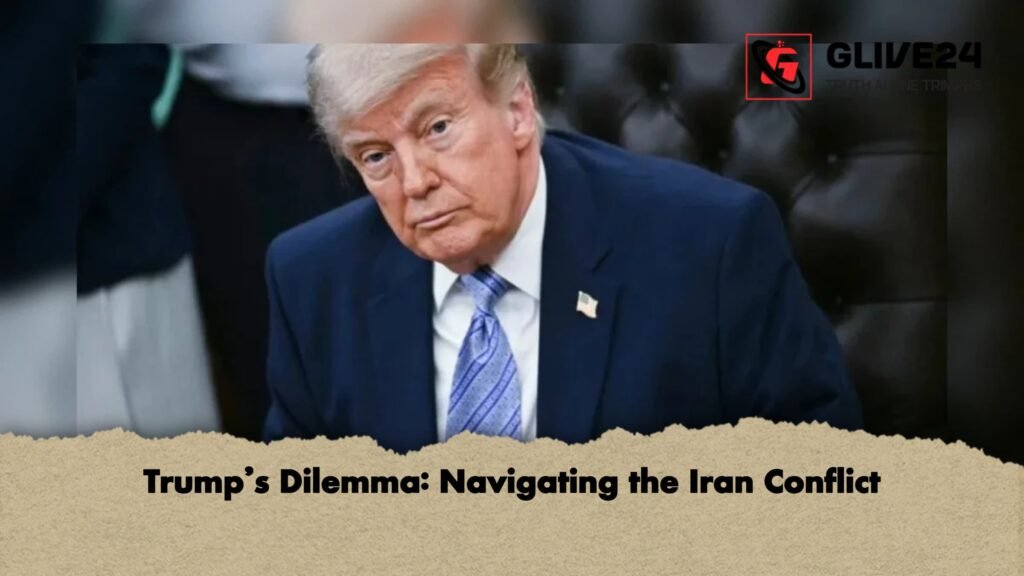
US President Donald Trump faces a significant political and strategic impasse regarding his administration’s engagement with Iran. Having initiated military hostilities without formal consultation with the US Congress or the American public, the President now finds himself in a “double bind.” The cessation of this unplanned conflict presents a set of challenges that could have long-term repercussions for the United States, further exacerbating the existing internal political divisions within Washington.
Table of Contents
The Diplomatic Deadlock
The current situation is frequently described as a “Catch-22” for the Trump administration. Resuming active warfare would likely trigger severe political and economic instability. Conversely, any potential diplomatic agreement is viewed by many as problematic and unpopular. Reports from CNN suggest that the President’s previous assertions regarding Iran’s intentions have frequently been contradicted by events. Consequently, members of both the Republican and Democratic parties harbour concerns that the administration may concede to an unfavourable deal.
Diplomatic sources indicate that a preliminary memorandum of understanding may involve:
-
The reopening of the Strait of Hormuz to international shipping.
-
The easing of US sanctions on Iranian vessels and strategic ports.
-
A framework for a comprehensive deal intended to curtail Iran’s nuclear ambitions.
Strategic and Economic Implications
While the international community remains hopeful for a definitive agreement to stabilise global energy markets, the domestic political landscape in Washington remains volatile. The aggressive stance of the Trump administration has been criticised for underestimating Iran’s defensive capabilities and resilience. Public opinion polls reflect a clear majority of US citizens opposing the war, suggesting that any further military escalation would be politically damaging for the President.
| Category | Potential Outcomes of an Agreement | Risks to the Trump Administration |
| Geopolitical | Reopening of the Strait of Hormuz. | Loss of leverage over vital maritime routes. |
| Economic | Reduction in global fuel prices. | Release of frozen Iranian assets. |
| Diplomatic | Iran’s pledge against nuclear armament. | Accusations of “appeasement” from hardliners. |
| Domestic | Alignment with anti-war public sentiment. | Fracturing of support within the Republican party. |
Challenges to US Bargaining Power
There is no guarantee that the terms of a new agreement will constitute a “victory” for Washington. The unfreezing of Iranian assets and the removal of maritime blockades could significantly benefit Tehran, potentially stripping the US of its primary bargaining chips. Furthermore, the Iranian leadership perceives their survival and continued resistance as a victory over a superpower. Historical patterns suggest that Tehran often utilises prolonged, unresolved diplomacy to its strategic advantage.
Internal Pressure and Political Survival
President Trump has notably pivoted from his previous demand for Iran’s “unconditional surrender.” This shift is largely attributed to domestic pressures, including rising gas prices and a decline in personal approval ratings. With weakened support among Congressional Republicans and intense pressure from hardliners to avoid “capitulation,” the President remains under immense scrutiny as he attempts to navigate a resolution to the Iran crisis.