
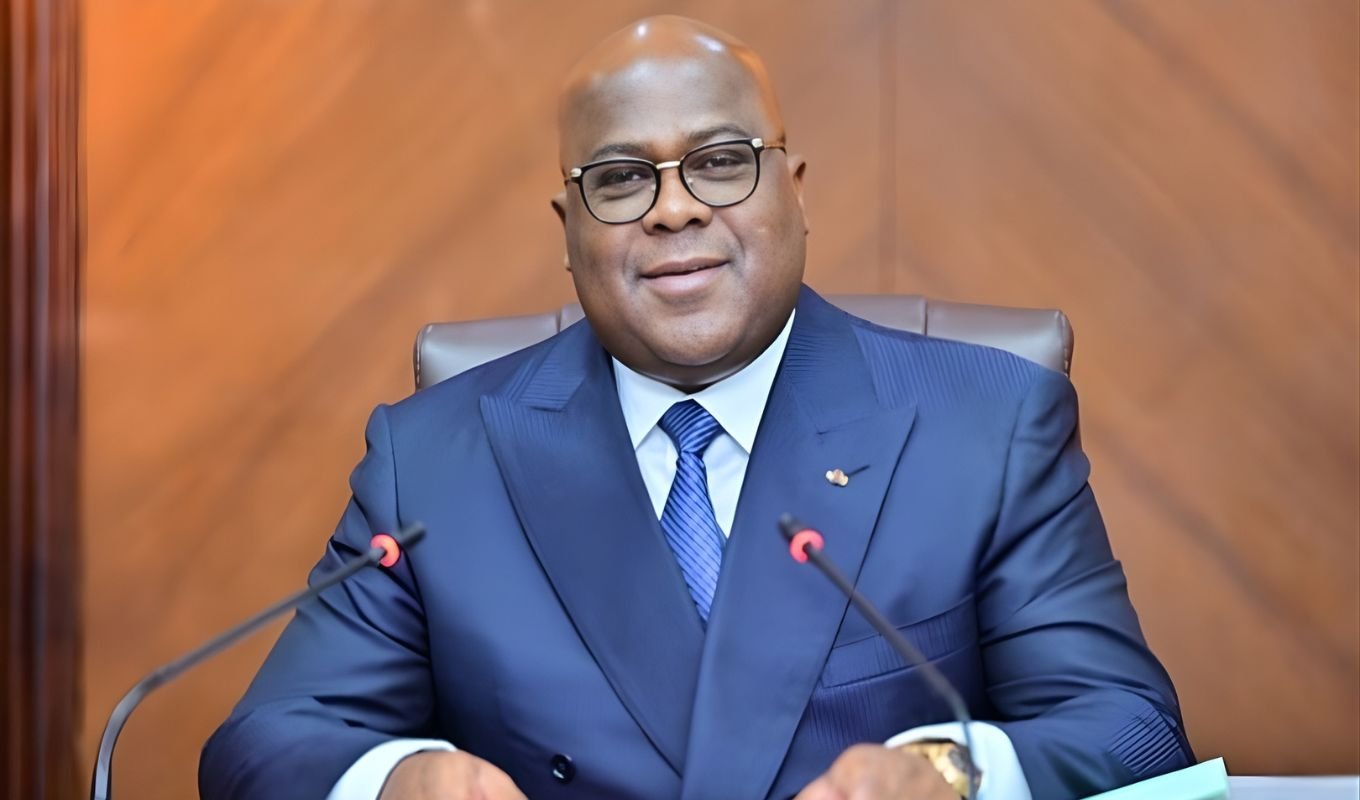
Congolese President Félix Tshisekedi has accused Rwandan President Paul Kagame of attempting to annex the mineral-rich eastern region of the Democratic Republic of Congo (DRC) by supporting the M23 rebel group.
According to Tshisekedi, Rwanda’s alleged backing of the M23 militia has enabled the group to seize large areas of eastern DRC since it resumed its insurgency in 2021, worsening an already dire humanitarian crisis and prolonging more than thirty years of armed conflict in the region.
The militia’s swift advance reportedly led to the capture of the strategic eastern cities of Goma and Bukavu, situated near the Rwandan border. The M23 has since established a parallel administration in these territories and assumed control of several lucrative mining sites.
While addressing members of the Congolese diaspora in Cairo on Saturday, President Tshisekedi accused Rwanda of harbouring “bellicose and hegemonic ambitions” towards the DRC. He further claimed that Kagame’s ultimate goal was “to divide our country and occupy, or even annex, the eastern part, which is immensely rich in mineral and agricultural resources,” according to a statement issued by his office on social media platform X.
Tshisekedi also attributed the collapse of a previous round of ceasefire negotiations, mediated by Angola, to Kagame’s absence. Despite recent diplomatic efforts, including a United States–brokered agreement between Rwanda and the DRC and a separate deal between Kinshasa and the M23 for a permanent ceasefire, violence in the east continues unabated.
Eastern DRC is home to vast reserves of valuable minerals such as gold and coltan, which are essential for the global electronics industry. The region has been ravaged for over three decades by continuous clashes involving armed groups, ethnic militias, and foreign interests competing for control over its abundant resources.
Rwanda, however, denies providing military assistance to the M23. Kigali maintains that its security concerns stem from the presence of fighters in eastern Congo allegedly linked to perpetrators of the 1994 Rwandan genocide, whom it considers an ongoing existential threat.