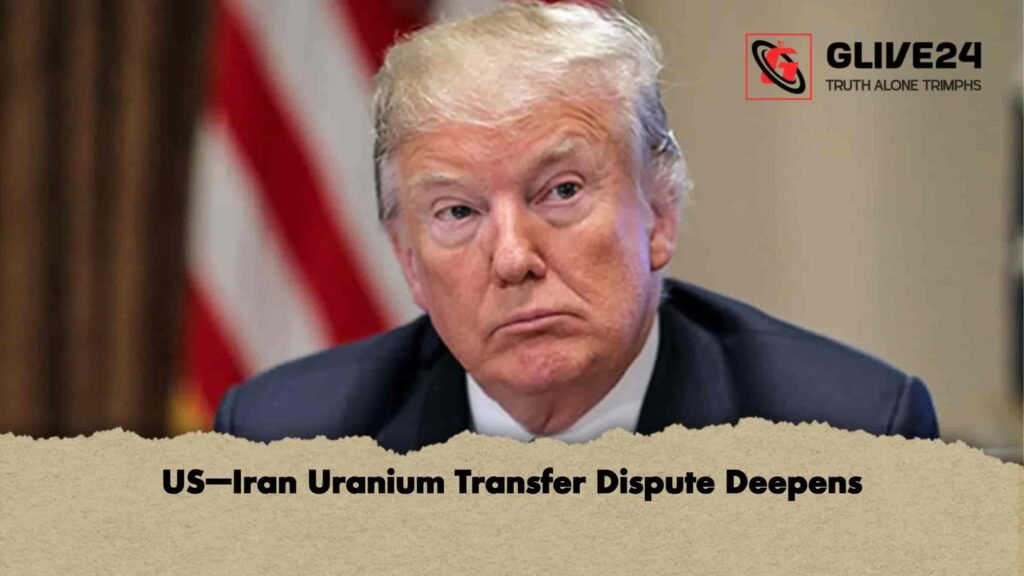
Tensions between the United States and Iran have intensified following conflicting statements over a reported proposal concerning the handling and possible transfer of enriched uranium, with both sides presenting opposing positions on the issue.
US President Donald Trump told Reuters in a telephone interview on Friday that Washington would cooperate with Iran in retrieving enriched uranium from inside the country and transporting it to the United States. He said the operation would involve coordinated activity within Iranian territory, including the use of heavy equipment for extraction, before the material—referred to by him as “nuclear dust”—is moved to the United States.
Trump associated the term with residual material he claimed resulted from strikes on Iranian nuclear facilities carried out by the United States and Israel in June of the previous year. He reiterated that a key objective of those actions was to prevent Iran from acquiring nuclear weapons, while maintaining that Iran must be stopped from developing such capabilities. Iran, however, continues to state that its uranium enrichment programme is intended solely for peaceful civilian use.
The US president also expressed confidence that a broader understanding with Tehran could be reached soon. He indicated that negotiations were ongoing and suggested that further discussions could take place over the weekend. Trump further stated that the United States would continue naval restrictions until a final agreement is reached. He also referred to cooperation with Iran on mine clearance operations in the Strait of Hormuz.
At the same time, Trump rejected reports suggesting a financial arrangement linked to uranium discussions, including claims of a $20 billion cash deal, describing them as entirely false and stating that no monetary exchange was involved.
Iran has categorically denied any possibility of transferring its enriched uranium abroad. Ismail Baghaei, spokesperson for Iran’s Ministry of Foreign Affairs, said in a statement on state television on Friday that Iran’s enriched uranium “will not be transferred anywhere” and that relocation to the United States “is not an option”.
He emphasised that Iran’s nuclear materials are of strategic importance and firmly under national control. Baghaei also addressed the issue of the Strait of Hormuz, stating that decisions regarding its status fall exclusively under Iranian authority. He added that civilian maritime traffic may pass through the strait under conditions set by Iranian officials following a ceasefire announcement, while warning that any attempt to impose a naval blockade would be met with a response and considered a violation of the ceasefire arrangement.
The issue of uranium enrichment and its control remains one of the central and most contentious elements in long-running negotiations between Washington and Tehran.
Key Positions on Uranium Issue
| Issue | United States Position | Iran Position |
|---|---|---|
| Enriched uranium transfer | Cooperation proposed for extraction and relocation to the US | Strongly rejected; not acceptable under any circumstance |
| Purpose of enrichment | Concern over nuclear weapons development | Claims enrichment is for peaceful civilian use |
| Reported financial deal | Denied existence of any payment arrangement | No acceptance of transfer framework |
| Strait of Hormuz | Cooperation on mine clearance activities | Sole authority over access and control |
| Negotiation outlook | Optimistic about reaching agreement soon | Rejects uranium transfer as part of any deal |