
Khabor Wala Desk
Published: 3rd March 2026, 6:21 AM
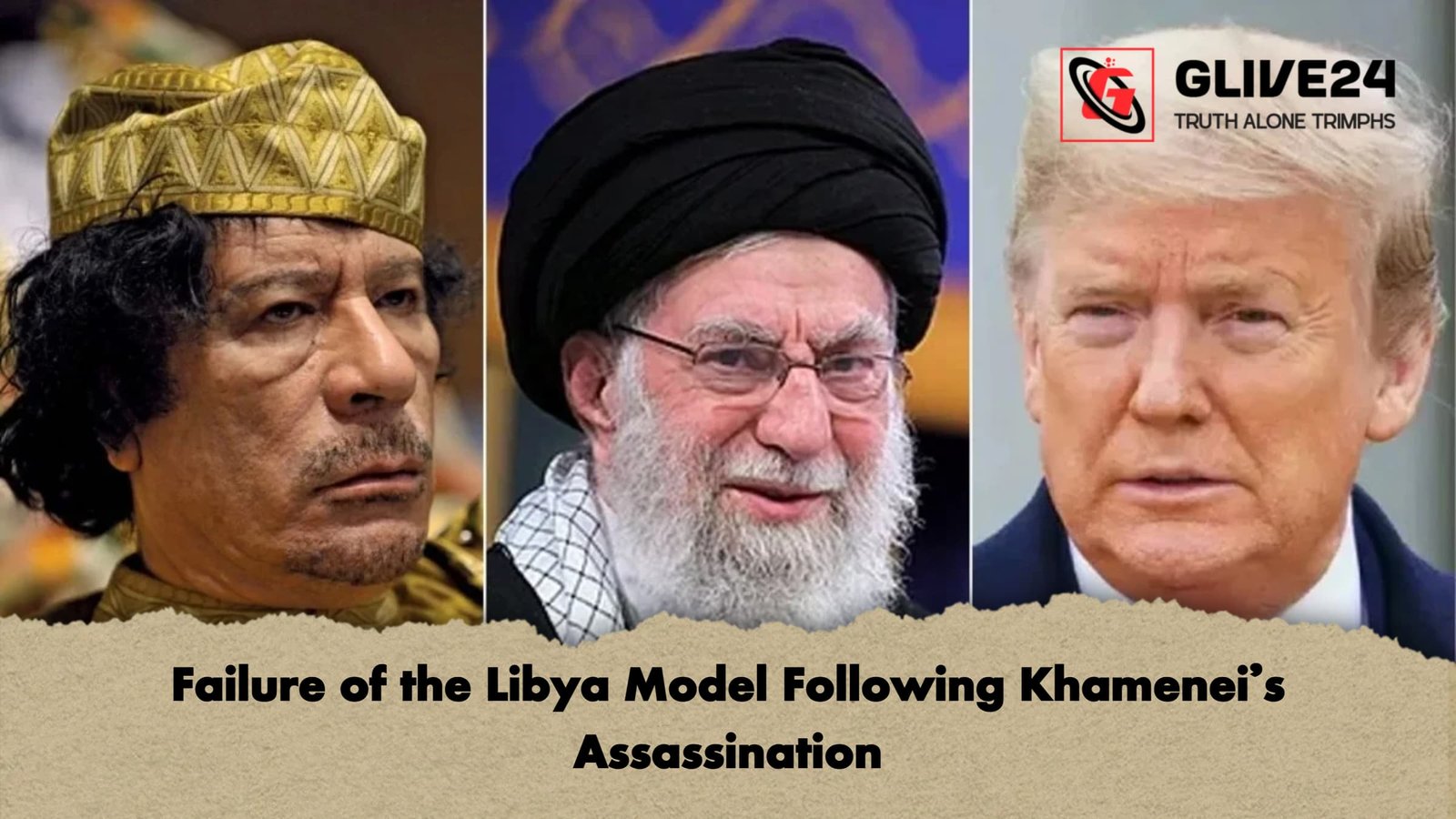
The targeted assassination of Grand Ayatollah Ali Khamenei by US and Israeli forces was intended as a decapitation strike—a tactical move designed to trigger the systemic collapse of the Islamic Republic. Proponents of this strategy appear to have been banking on a “Libya Model,” reminiscent of the fall of Muammar Gaddafi, where the demise of the central strongman leads to the immediate disintegration of the state. However, early analysis suggests that this Western gamble has fundamentally misread the DNA of the Iranian political structure.
Unlike the cults of personality that defined the regimes of Gaddafi or Saddam Hussein, Iran operates as a sophisticated institutionalised system. As noted by Ali Hashem, a researcher at the University of London, the Islamic Republic is not built upon a single individual, but rather a resilient network of overlapping constitutional bodies.
The bedrock of this philosophy was laid by Ayatollah Ruhollah Khomeini, who famously asserted that the preservation of the “Islamic Republic” takes precedence over any individual life. Consequently, the state is engineered to survive the sudden loss of its apex leadership through a redundant framework of councils.
The Iranian Constitution provides a clear and rapid roadmap for succession, ensuring that a power vacuum never truly forms. Under Article 111, the death of the Supreme Leader immediately transfers authority to a transitional council. This mechanism was recently tested and proven efficient following the sudden death of President Ebrahim Raisi in 2024.
| Body | Primary Function in Crisis |
| Assembly of Experts | Tasked with vetting and electing the new Supreme Leader. |
| Guardian Council | Ensures all new decrees and candidates align with Islamic law. |
| Expediency Council | Mediates disputes between the Parliament and the Guardian Council. |
| IRGC | Secures internal stability and prevents foreign-backed insurrections. |
The Islamic Revolutionary Guard Corps (IRGC) acts as the praetorian guard of the system’s survival. In the wake of Khamenei’s death, the IRGC typically adopts a “Fortress Iran” posture, tightening internal security and doubling down on regional proxies. Rather than fragmenting, the military and intelligence wings often consolidate their grip to prevent perceived Western-backed opportunism.
Furthermore, the concept of “Martyrdom” serves as a potent psychological tool. The killing of a high-ranking leader often acts as a catalyst for national unity rather than a prompt for rebellion. For the Iranian establishment, Khamenei’s death is being framed not as a defeat, but as a rallying cry that reinforces the “resistance” narrative, potentially hardening the regime’s resolve for decades to come.
Ultimately, while the strikes may have degraded Iran’s immediate military command, the political architecture remains robust. The Western expectation of a swift domestic collapse appears to have underestimated the durability of Tehran’s bureaucratic and ideological foundations.
Comments