
Khabor Wala Desk
Published: 5th March 2026, 4:42 AM
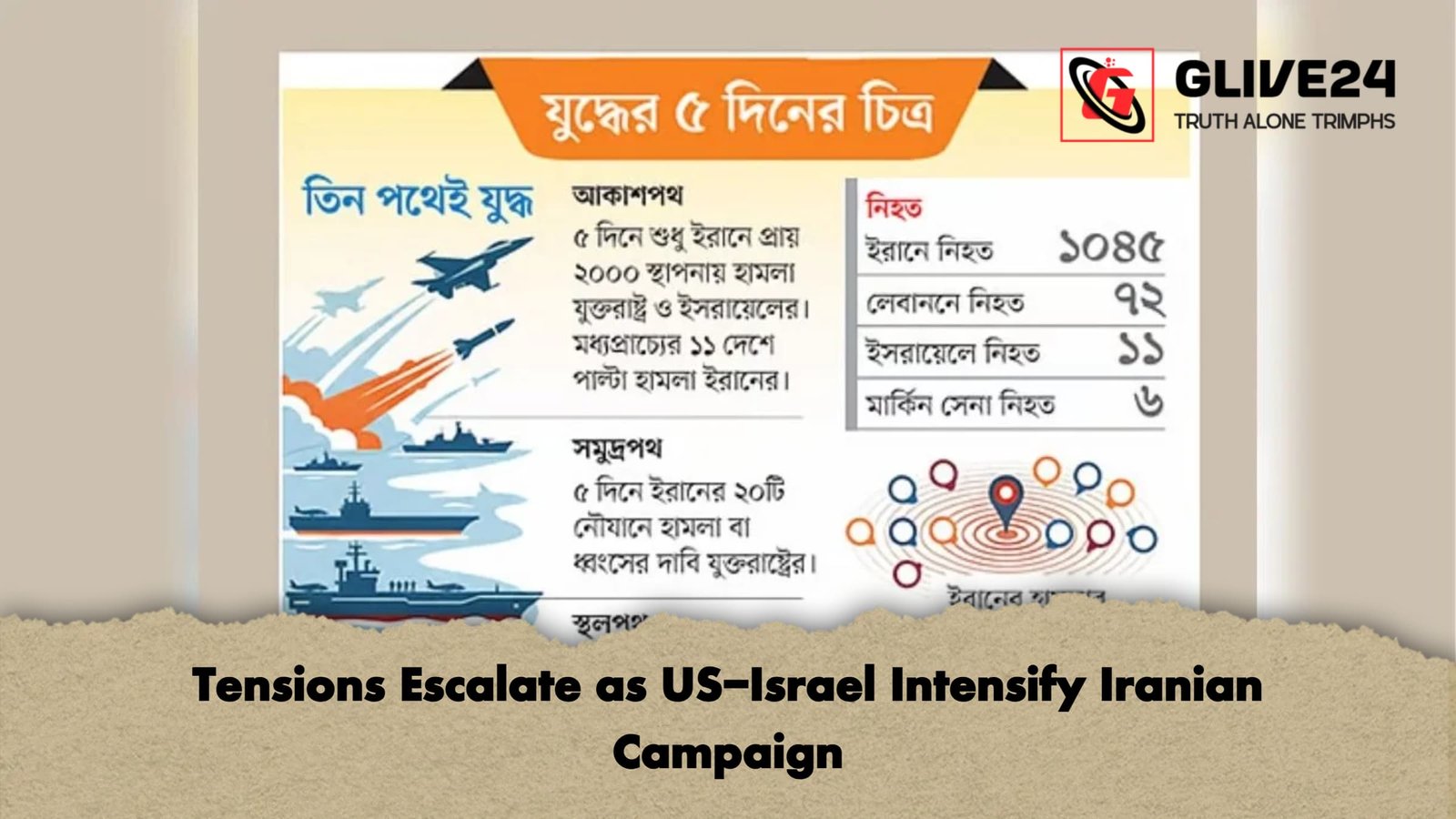
The geopolitical landscape of the Middle East has been thrust into unprecedented chaos as the conflict enters its fifth day of high-intensity warfare. On Wednesday, the military alliance between the United States and Israel significantly escalated its offensive operations within Iranian territory and Lebanon. Initial reports suggest a harrowing humanitarian toll, with fatalities in Iran now surpassing the 1,000 mark. In a forceful retaliation, Tehran has deployed a sophisticated arsenal of ballistic missiles and suicide drones against American strategic assets and allied interests across the region.
Table of Contents
The conflict, which ignited following coordinated US-Israeli air raids last Saturday, has rapidly evolved into a multi-domain war spanning land, sea, and air. According to US Central Command (CENTCOM), the scale of the bombardment is staggering. While 1,039 strikes were recorded by Tuesday, that figure nearly doubled within twenty-four hours, reaching approximately 2,000 targeted installations.
The Iranian response has been equally aggressive, effectively expanding the combat zone to twelve nations. Key developments include:
Al-Udeid Air Base: Iran’s ballistic missiles struck the largest US military facility in the Middle East, located in Qatar.
Dubai Consulate: A direct drone strike targeted the US Consulate in Dubai, resulting in fires and the subsequent suspension of diplomatic operations across the UAE.
Maritime Warfare: In a significant escalation in the Indian Ocean, a US submarine launched torpedoes at an Iranian warship off the coast of Sri Lanka, resulting in 87 deaths. Simultaneously, the Islamic Revolutionary Guard Corps (IRGC) claimed to have seized operational control of the strategic Strait of Hormuz.
Under the moniker “Operation Epic Fury,” the Trump administration has mobilised a formidable force. US Defence Secretary Pete Hegseth confirmed that the objective is the total suppression of Iranian airspace. The administration is reportedly coordinating with major defence contractors, including Lockheed Martin, to expedite the supply of advanced munitions.
| Feature | Details of Engagement |
| Operation Name | Operation Epic Fury |
| US Personnel | 50,000+ Troops |
| Naval Assets | 2 Aircraft Carriers, Multiple Submarines |
| Airstrike Volume | ~2,000 installations targeted (as of Wednesday) |
| Casualties (Iran) | 1,045 (State Media); 1,097 Civilians (HRANA) |
| Displacement | 65,000+ Lebanese civilians in shelters |
Despite the military’s confidence, the Trump administration faces a domestic firestorm. Democratic leaders, including Senator Elizabeth Warren and Richard Blumenthal, have characterised the campaign as an “illegal war based on lies.” Analysts at the Stimson Centre warn that Iran—three to four times the size of Iraq—presents a logistical nightmare that could trap the US in a decades-long quagmire.
In a bid to justify the intensity of the campaign, Secretary Hegseth alleged during a Pentagon briefing that the strikes were a preemptive necessity, claiming Iran had orchestrated a plot to assassinate Donald Trump in 2024.
While the world watches Tehran, the Israeli Defence Forces (IDF) have pushed six kilometres into Lebanese territory, engaging Hezbollah militants in the town of Khiam. Heavy aerial bombardment of Beirut and the Bekaa Valley has left dozens dead and thousands fleeing for their lives. Lebanon’s Social Affairs Minister, Hanin Sayed, reported that tens of thousands are now sleeping in the open air as shelters reach breaking point.
Political analysts suggest that a protracted conflict might inadvertently favour Tehran. Ali Alizadeh noted to Al-Jazeera that while the US and Israel use multi-million-dollar interceptors, Iran’s strategy relies on low-cost, mass-produced drones and missiles. The economic sustainability of “Operation Epic Fury” remains a looming question for Washington as the region teeters on the edge of total collapse.

Comments