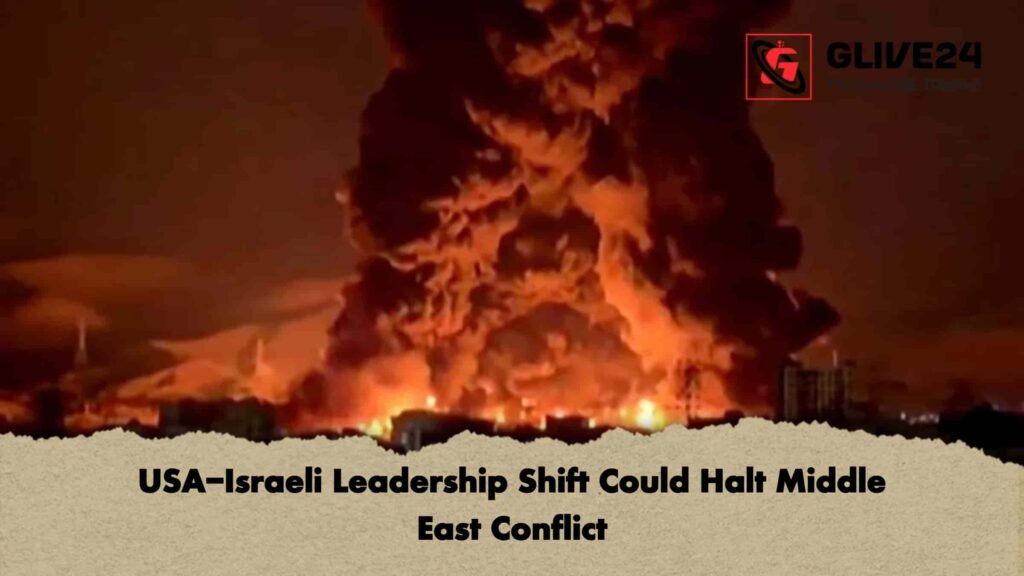
Last weekend, Tehran’s skies were engulfed in thick black smoke as Israeli airstrikes struck Iranian oil storage facilities. Fires raged through the streets, while toxic fumes threatened the health of millions, creating long-term risks of respiratory disease, cancer, and premature death—echoing the delayed fatalities observed in the United States after the September 11 attacks.
The destruction recalled the first Gulf War, when retreating Iraqi forces set Kuwaiti oil wells ablaze, darkening the skies. Yet unlike that conflict, today’s attacks occur in the heart of a densely populated city, affecting civilian populations directly.
The operation, labelled “Epic Fury” by the United States, was initiated with strikes targeting Iran’s Supreme Leader Ayatollah Ali Khamenei, several senior officials, and a girls’ school, where 165 students were killed. This mirrors past U.S. conduct in warfare, such as the 1991 Gulf War, when a single bombing of a shelter killed 400 children and their families.
Israel has simultaneously intensified military operations in southern Lebanon and Beirut, displacing roughly 700,000 civilians. Casualties in just one week include nearly 600 people, among them 86 children.
| Region | Civilian Deaths | Children Affected | Displaced Persons |
|---|---|---|---|
| Tehran, Iran | Thousands exposed to toxic smoke | Potential long-term health effects | — |
| Southern Lebanon | ~600 | 86 | 700,000 |
| Gaza Strip | Ongoing | Ongoing | Ongoing |
U.S. Defence Secretary Pete Hegseth openly praised the campaign’s disregard for conventional warfare, describing how Iranian leaders “see only U.S. and Israeli airpower” from above. Israel’s Prime Minister Benjamin Netanyahu, who has long planned military action against Iran, now has a U.S. ally willing to fully support these operations.
Republican Senator Lindsey Graham has framed the conflict in strategic and economic terms, highlighting that Venezuela and Iran together hold 31% of the world’s known oil reserves. “We are positioning ourselves to control that share,” he stated, suggesting that global energy influence is a primary objective.
Experts, including Columbia University economist Jeffrey Sachs, warn that this escalation in the Gulf could represent the opening stages of a wider global confrontation. Iran asserts readiness for a prolonged conflict, with its military and the Islamic Revolutionary Guard Corps prepared to sustain operations for an extended period.
History shows that regime-change wars—such as those in Iraq (2003) and Libya (2011)—often result in prolonged instability and human suffering. As tensions rise, the international community faces mounting questions: how far will the conflict expand, and what will be the cost to civilians and global stability?