
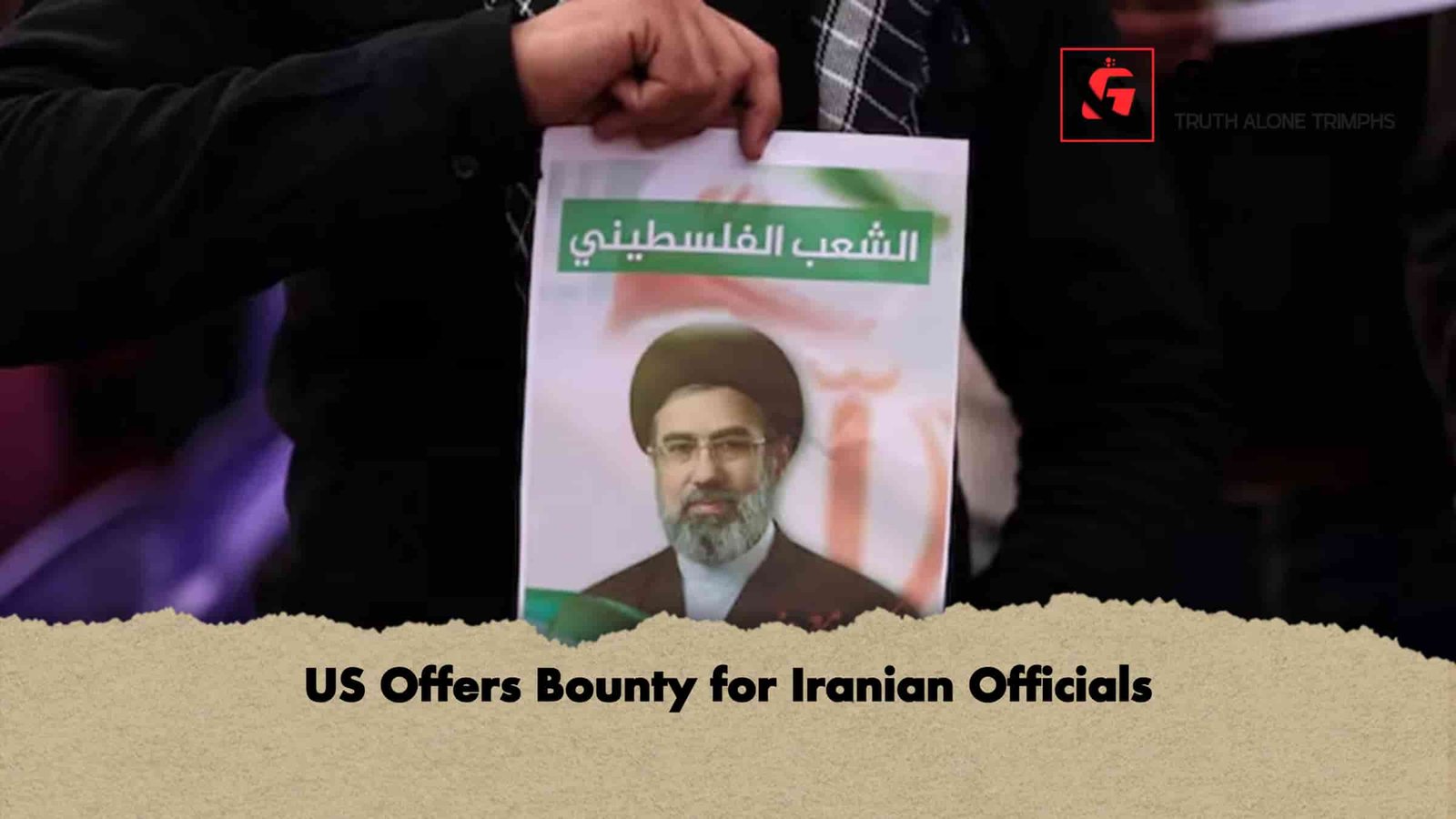
The United States government has announced a reward of up to 10 million dollars for information concerning several senior Iranian figures, including the newly appointed Supreme Leader Ayatollah Mojtaba Khamenei. The announcement, published on the website of the United States Department of State, seeks intelligence on officials believed to be connected to Iran’s powerful Islamic Revolutionary Guard Corps.
According to the statement, the reward programme covers information related to ten individuals associated with the Islamic Revolutionary Guard Corps. The organisation was established following the Islamic Revolution of 1979 and has since become a dominant force within Iran’s security and political structures. Unlike the regular military, the corps operates under the direct authority of the Supreme Leader and is tasked with safeguarding the country’s revolutionary ideology and religious institutions.
The announcement comes amid escalating tensions in the Middle East following joint military operations conducted by the United States and Israel beginning on 28 February. Those operations reportedly resulted in the deaths of several senior Iranian officials, including key members of the country’s security establishment. In the aftermath of these developments, Mojtaba Khamenei reportedly assumed leadership after the death of his father, Ali Khamenei, who had ruled Iran for decades as Supreme Leader.
Despite assuming the highest position in the Iranian political hierarchy, Mojtaba Khamenei has not appeared publicly since his reported appointment. However, he released his first official statement on Thursday. Some sources suggest he may have sustained injuries during the attacks in late February, although these claims have not been independently verified.
The United States is also seeking information regarding several prominent Iranian officials. These include Ali Larijani, a senior figure in Iran’s security structure; Intelligence Minister Ismail Khatib; Interior Minister Eskandar Momeni; and two senior staff members from the office of the Supreme Leader.
Interestingly, video footage verified by Reuters on Friday appeared to show Ali Larijani attending a public gathering in Tehran alongside President Masoud Pezeshkian and Foreign Minister Abbas Araghchi. The footage appears to contradict earlier claims by the United States Secretary of Defence that many Iranian leaders had relocated to undisclosed locations following the recent attacks.
The reward notice also includes references to four additional individuals believed to hold senior military or defence roles, including a commander within the Islamic Revolutionary Guard Corps and the secretary of Iran’s Defence Council. However, their identities and photographs were not disclosed.
Key Figures Mentioned in the Announcement
| Individual | Position | Details Sought |
|---|---|---|
| Mojtaba Khamenei | Supreme Leader | Intelligence information |
| Ali Larijani | Senior Security Official | Intelligence information |
| Ismail Khatib | Intelligence Minister | Intelligence information |
| Eskandar Momeni | Interior Minister | Intelligence information |
| Two unnamed officials | Supreme Leader’s Office | Intelligence information |
| Four unnamed figures | Military and Defence Leadership | Limited information requested |
In its statement, the United States Department of State alleged that the individuals named in the announcement play a role in directing the activities of the Islamic Revolutionary Guard Corps. Washington has long accused the organisation of supporting militant groups and orchestrating attacks abroad.
The United States formally designated the Islamic Revolutionary Guard Corps as a foreign terrorist organisation and has repeatedly blamed it for actions targeting American personnel and interests. In addition, American authorities have accused Iran of plotting retaliation against former President Donald Trump and other United States officials following the 2020 killing of Iranian military commander Qasem Soleimani.
Iranian authorities have strongly rejected accusations of sponsoring terrorism. Officials in Tehran frequently describe such claims as politically motivated allegations intended to justify economic sanctions and sustained diplomatic pressure from Washington. According to Iranian leaders, these accusations form part of a broader strategy to isolate the country internationally and undermine its regional influence.