
Khabor Wala Desk
Published: 16th March 2026, 12:00 PM
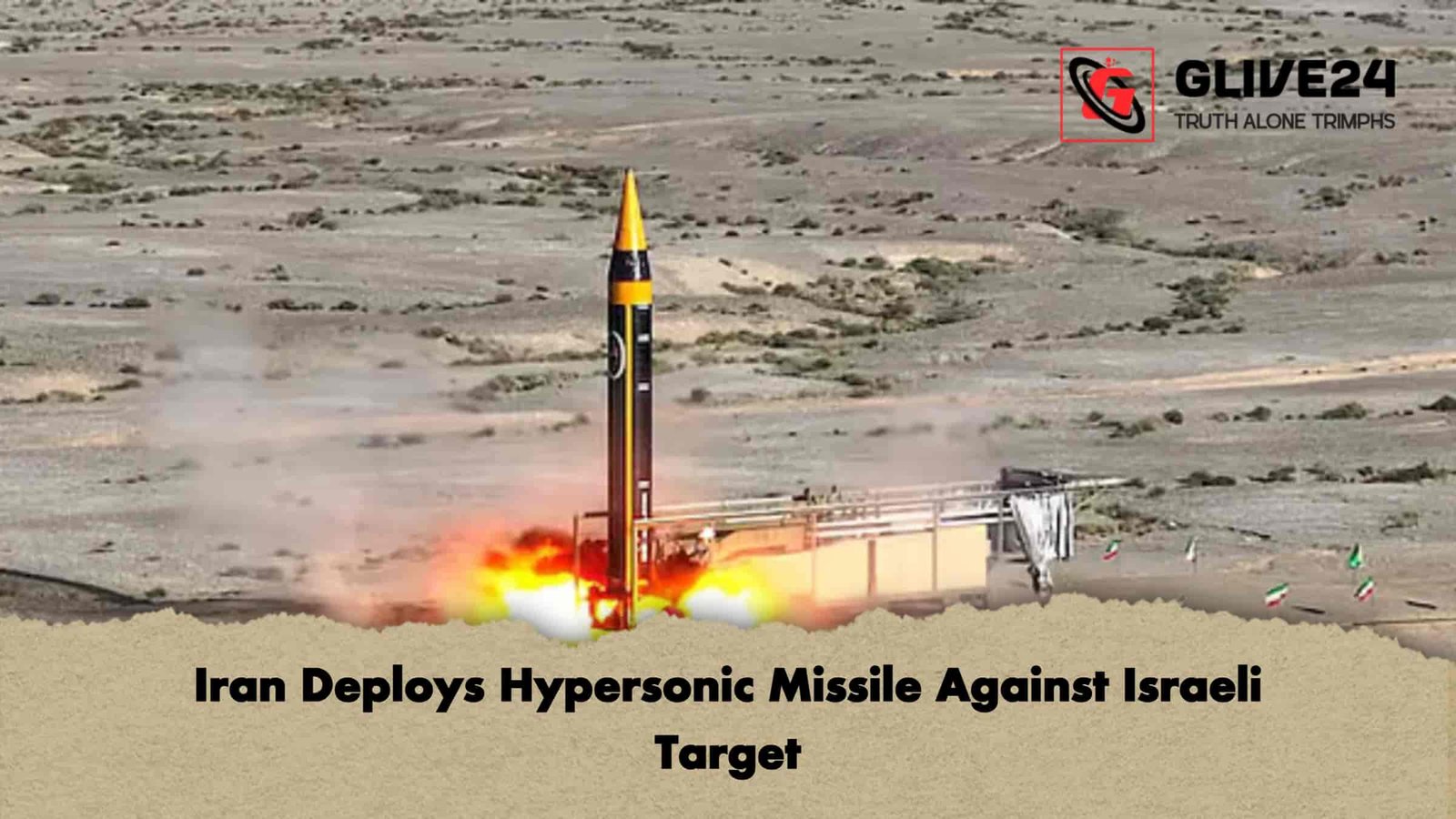
Iran’s Islamic Revolutionary Guard Corps (IRGC) has reportedly launched a missile strike targeting Israeli positions, employing a Sejil solid-fuel missile, according to reports from the semi-official Tasnim News Agency. The announcement was made on Sunday and marks a significant development in Tehran’s long-range missile capabilities.
Tasnim News indicated that this is the first operational deployment of the Sejil missile since the US–Israel escalation that began on 28 February, highlighting Iran’s intent to assert its strategic deterrence in the region.
The missile, as reported by Al Jazeera, has an estimated range of 2,000 to 2,500 kilometres and travels at approximately thirteen times the speed of sound, classifying it as a hypersonic weapon. This speed makes it extremely difficult to intercept using conventional missile defence systems, raising serious security concerns among neighbouring countries and international observers.
According to analysis by The National Interest, the Sejil missile is capable of striking a wide array of targets, potentially covering areas stretching from the Indian Ocean to the Mediterranean Sea, effectively extending Iran’s strategic reach far beyond its borders.
| Specification | Details |
|---|---|
| Type | Solid-fuel ballistic missile |
| Maximum Range | 2,000–2,500 km |
| Speed | ~13 Mach (13× speed of sound) |
| Deployment History | First use since 28 February escalation |
| Potential Strike Zone | Indian Ocean to Mediterranean Sea |
| Operator | Islamic Revolutionary Guard Corps (IRGC) |
Experts note that the use of hypersonic missiles represents a significant shift in regional military dynamics. While Iran presents this action as a defensive response to US–Israel military provocations, the capability to strike targets rapidly over such long distances increases the risk of escalation and strategic miscalculations.
The strike also underscores the growing sophistication of Iran’s missile programme, which now combines speed, precision, and extended range. Analysts suggest that continued deployment of such weapons could prompt neighbouring countries to accelerate their own defence systems, potentially triggering an arms race in the Middle East.
The IRGC’s announcement comes amid heightened tensions in the region, with global powers closely monitoring developments to assess the strategic implications of hypersonic missile technology.



Comments