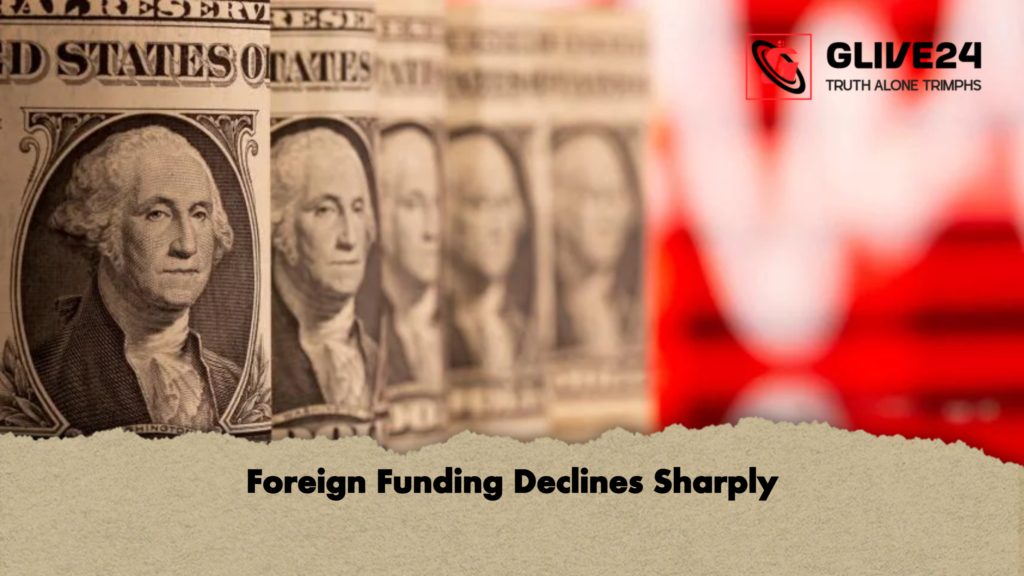
Foreign financing inflows into Bangladesh have registered a significant decline in the first nine months of the current fiscal year (July–March), reflecting slower implementation of development projects alongside rising debt servicing obligations. Officials and analysts warn that the simultaneous fall in inflows and rise in repayments is placing mounting pressure on the country’s external financial stability.
According to preliminary data from the Economic Relations Division, Bangladesh received approximately 38.9 billion US dollars in foreign loans during the period under review, compared with around 48.0 billion US dollars in the same period of the previous fiscal year. This represents a decline of nearly 19 per cent year-on-year.
Officials attribute the downturn largely to delays in project execution under the Annual Development Programme (ADP), particularly in foreign-funded initiatives. Data from the Implementation Monitoring and Evaluation Division shows that overall ADP implementation reached 34.56 per cent during the July–March period, slightly lower than the 35.8 per cent recorded a year earlier. Bureaucratic delays, land acquisition challenges, and slow procurement processes have been cited as key bottlenecks.
At the same time, external debt repayment obligations have risen notably. Bangladesh repaid approximately 35.2 billion US dollars in external debt during the period, marking a 9 per cent increase compared with the previous year. Of this amount, interest payments alone accounted for about 12.4 billion US dollars, underscoring the growing cost of servicing external liabilities.
Development partners’ fresh commitments have also declined. Total new commitments stood at roughly 28.0 billion US dollars, down about 6.6 per cent year-on-year. These commitments primarily came in the form of project assistance from bilateral and multilateral lenders. Among individual contributors, Russia accounted for approximately 8.28 billion US dollars, making it one of the largest single-country financiers during the period.
Economists caution that the combined effect of falling inflows and rising repayments could strain foreign exchange reserves and complicate macroeconomic management in the coming months. With domestic revenue growth not keeping pace with external obligations, maintaining fiscal and external balance is becoming increasingly challenging.
Key External Financing Indicators (July–March)
| Indicator | Current Fiscal Year | Previous Year | Change |
|---|---|---|---|
| Foreign financing inflow | USD 38.9 billion | USD 48.0 billion | ↓ 19% |
| ADP implementation rate | 34.56% | 35.8% | Slight decline |
| External debt repayment | USD 35.2 billion | USD 32.1 billion | ↑ 9% |
| Interest payments | USD 12.4 billion | Not available | Increase |
| Total commitments | USD 28.0 billion | Over USD 30.0 billion | ↓ 6.6% |
Experts argue that unless project implementation accelerates and administrative inefficiencies are addressed, the trend could continue to weigh on development financing. They further suggest that improving coordination among implementing agencies and reducing procedural delays will be crucial to restoring the momentum of foreign-funded development projects.