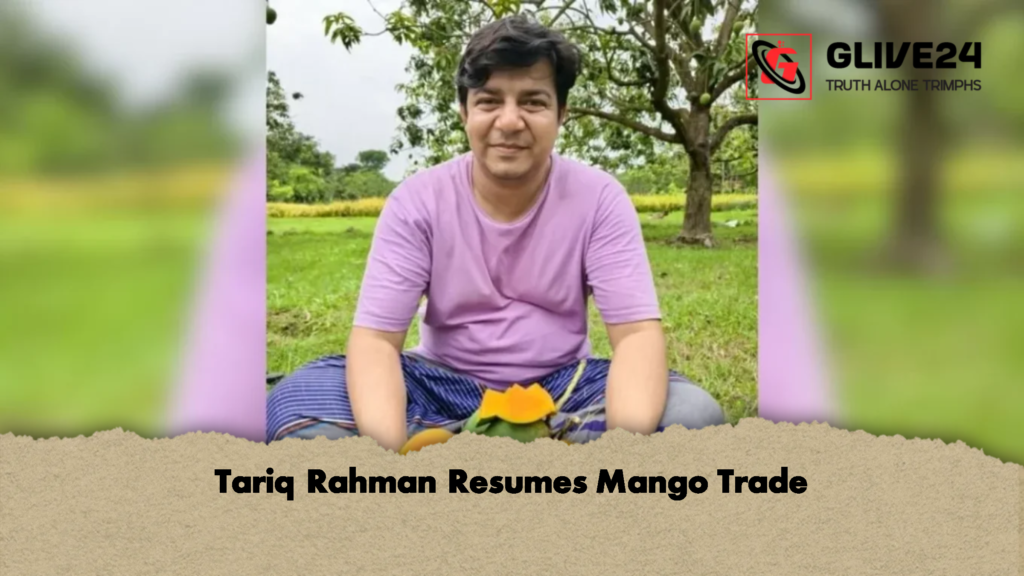
Tariq Rahman, an entrepreneur and political figure widely recognised by his popular moniker “Am-Janata” (The Common People’s Tariq), has officially returned to his seasonal mango trading enterprise. The announcement follows a period of concentrated political activity, during which Rahman contested the Dhaka-12 constituency in the recently concluded 13th National Parliamentary Election. Having completed his electoral responsibilities, Rahman has moved from the campaign trail back to his agricultural roots to oversee the harvest and distribution of premium mango varieties.
On Tuesday, 5 May 2026, Rahman utilised social media to inform his patrons and the public that he is once again active within the orchards. This transition marks his return to a professional life as a fruit merchant, a role that has historically defined his public identity alongside his political aspirations.
Table of Contents
Official Commencement of the Harvest Season
In a public statement released on Tuesday morning, Rahman expressed his gratitude and requested the continued support of his customers as he re-enters the market. He explicitly noted that his business operations have commenced in strict accordance with the government-mandated “Mango Calendar,” which dictates the legal start dates for harvesting various cultivars to ensure fruit quality and consumer safety.
Rahman stated in his announcement:
“By the grace of the Creator, I am back in the mango orchards. I seek everyone’s prayers and cooperation. From today, 5 May—the government-approved date—I am selling Gopalbhog, the sweetest variety, and the slightly less sweet but delicious Gobindobhog mangoes.”
The date of 5 May 2026 is significant as it aligns with the official harvest schedule set by regional administrations in Bangladesh. For instance, in districts such as Satkhira, 5 May marks the formal inauguration of the mango marketing season for indigenous varieties. These regulatory timelines are enforced by the Department of Agricultural Extension (DAE) and local magistrates to prevent the premature harvest of fruit and the illicit use of ripening agents, such as calcium carbide, which are hazardous to public health.
Detailed Overview of the Varieties: Gopalbhog and Gobindobhog
The mangoes highlighted in Rahman’s announcement are among the most prestigious varieties available in the early summer season. Their arrival in the market is often met with high demand due to their superior flavour profiles and limited seasonal availability.
-
Gopalbhog: Frequently cited by pomologists as one of the finest mangoes globally, the Gopalbhog is renowned for its intense sweetness and fibreless, butter-like pulp. It is typically the first high-quality variety to ripen, usually appearing in the first or second week of May. Its thin skin and delicate nature require careful handling, often resulting in premium pricing in the markets of Dhaka and other urban hubs.
-
Gobindobhog: This variety is distinguished by its unique, pleasant aroma and slightly firmer texture. While it contains a marginally lower sugar content compared to the Gopalbhog, it is highly valued for its balanced flavour and better shelf life, making it a preferred choice for long-distance transport.
The Confluence of Political Life and Traditional Trade
Tariq Rahman’s resumption of business is particularly noteworthy given his recent prominence in the political sphere. As a candidate for Dhaka-12—a vital electoral seat comprising central areas of the capital—Rahman’s campaign was significantly built upon his identity as a “common man” (Am-Janata) involved in the nation’s agricultural backbone.
The 13th National Parliamentary Election, held earlier in 2026, saw a significant shift in the country’s political landscape. For Rahman, the conclusion of the polls allows for a pivot back to “grassroots entrepreneurship.” His professional background was frequently cited during the election cycle as a point of relatability with the electorate, contrasting the traditional perception of career politicians. By returning to the orchards immediately following the election, Rahman reinforces the seasonal and demanding nature of the mango industry, which provides a livelihood for millions in the northern and southwestern districts of Bangladesh.
Market Context, Logistics, and Economic Impact
The mango industry is a cornerstone of the Bangladeshi agricultural economy, with the 2026 season seeing high production targets across key districts. In Satkhira alone, the production target for this year was set at approximately 70,000 tonnes, with an estimated commercial value exceeding £23 million (Tk 350 crore).
For independent traders like Rahman, the business model involves a sophisticated logistical chain:
-
Orchard Sourcing: Securing leases or purchasing yields from orchards in high-yield zones such as Rajshahi, Chapainawabganj, or Satkhira.
-
Regulatory Adherence: Ensuring all fruit is harvested only after reaching physiological maturity, as per the DAE guidelines.
-
Direct-to-Consumer Distribution: Utilising digital platforms and social media to bypass traditional middlemen (Beparis and Aratdars). This method allows for a more transparent supply chain, ensuring that consumers receive fresh, chemical-free fruit while the trader retains a higher percentage of the retail value.
As the 2026 mango season progresses, Rahman appears focused on leveraging his public platform to ensure the commercial success of his harvest, bridging the gap between the rural orchards and the urban consumer base in Dhaka.