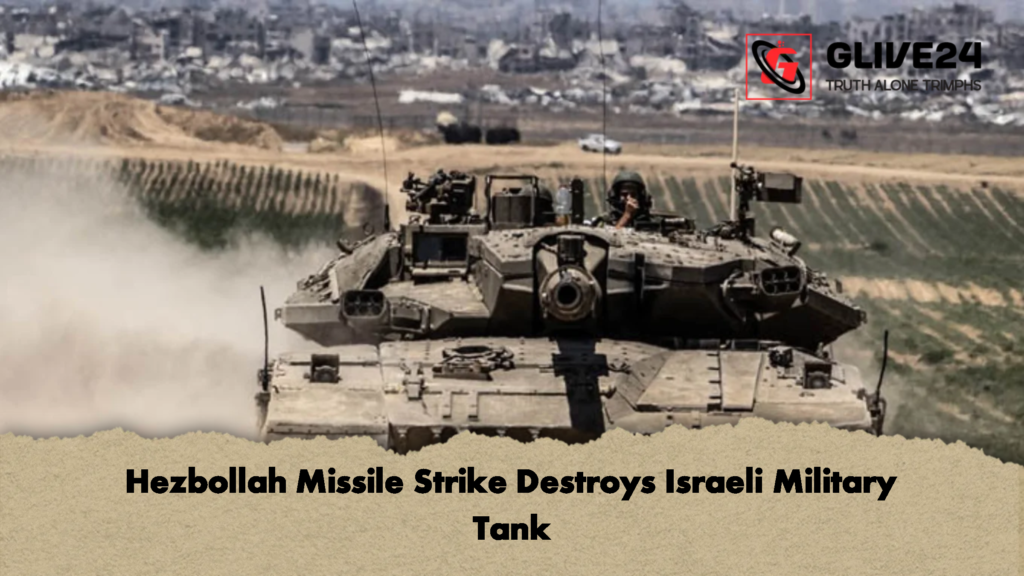
The Lebanese armed group, Hezbollah, has launched a successful guided missile attack targeting an Israeli military tank stationed at the historic Beaufort Castle in southern Lebanon. According to an official statement released by Hezbollah, the strike resulted in the complete destruction of the sophisticated Merkava tank. This major escalation comes amidst intense cross-border hostilities following the recent capture of the strategically positioned fortress by Israeli ground forces.
The Battle for Beaufort Castle and Advanced Drone Tactics
On 31 May, Israeli soldiers crossed the international boundary and took control of Beaufort Castle, located near the southern Lebanese city of Nabatiyeh. Following the capture of the site, Israel extensively publicised the development, framing the occupation of the historic fortress as a highly significant symbolic victory against Hezbollah’s defensive network. However, since the initial takeover, Hezbollah fighters have maintained a continuous and relentless counter-offensive against the Israeli forces deployed in and around the immediate vicinity of the citadel.
Military reports and tactical data indicate that these persistent counter-attacks have inflicted notable casualties upon the Israeli Defence Forces. Since the occupation of Beaufort Castle, multiple Israeli soldiers have been killed, while numerous others have sustained varying degrees of injury. To execute these precise operations, Hezbollah has primarily utilised advanced fibre-optic drones. Because these unmanned aerial vehicles rely on physical fibre-optic tethers for data transmission, the advanced electronic warfare systems and radar networks deployed by Israel are completely unable to jam or electronically detect them. Consequently, these specialised drones are able to bypass conventional aerial defences, suddenly crashing directly into Israeli military positions and causing substantial infrastructural damage.
In tandem with the missile strike that incapacitated the Merkava tank at Beaufort Castle, the Lebanese armed group expanded its operations to strike an Israeli logistics support hub. This newly established support facility had been set up by Israeli forces within Qalaat al-Shaqif. Geographically, Beaufort Castle is situated directly within this specific Qalaat al-Shaqif sector, making the entire ridge a primary focal point for the current round of military confrontations.
Iran’s Revolutionary Guard Warns Against Continuing Occupation
The Islamic Republic of Iran has intervened diplomatically regarding the escalating border conflict, issuing a stern warning to Israel through its elite military wing. On Thursday, 4 June, the Islamic Revolutionary Guard Corps (IRGC) released an official press statement asserting that sustainable peace cannot be achieved in the Middle East until Israel completely withdraws its military personnel from Lebanese territory. The official declaration was widely circulated by the Tasnim News Agency, Iran’s semi-official media outlet.
In its published communique, the IRGC explicitly clarified its broader diplomatic stance, noting that Iran’s initial acceptance of a regional ceasefire was entirely contingent upon the simultaneous and effective implementation of a comprehensive ceasefire across all active combat fronts, including Lebanon. The IRGC statement directly admonished the opposing forces, declaring that the enemy must immediately cease all military operations and bombardments targeting the civilian population of Lebanon. Furthermore, the Iranian military leadership demanded that Israeli troops completely evacuate all occupied areas, retreat behind established international borders without delay, and formally recognise the sovereign territorial integrity of the Lebanese state.
Hezbollah Leadership Rejects Terms of Disarmament Talks
Simultaneously, Sheikh Naim Qassem, the Secretary-General of Hezbollah, issued a separate public address fiercely criticizing the ongoing diplomatic coordination and direct negotiations occurring between the central Lebanese government and Israeli authorities. The Hezbollah chief expressed total opposition to any proposed diplomatic frameworks that would require the Lebanese resistance forces to surrender their arsenal or disarm in exchange for a cessation of hostilities.
Sheikh Naim Qassem strongly condemned and rejected the concept of weapon relinquishment, describing it as an unacceptable concession that undermines national defence. He emphasized that a legitimate and lasting ceasefire on Lebanese soil can only be achieved through a total cessation of aggression combined with the unconditional and absolute withdrawal of all Israeli soldiers from every inch of Lebanese territory. According to the group’s leadership, maintaining their military readiness remains vital to resisting foreign occupation.