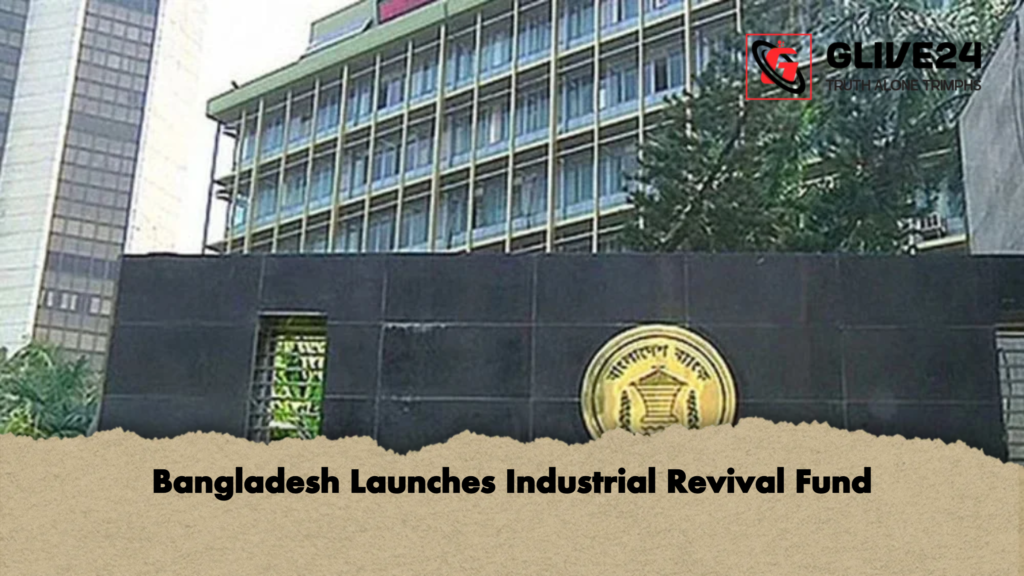
Bangladesh Bank has unveiled a substantial financing initiative aimed at revitalising large-scale industrial and service-sector enterprises that are either closed or operating at reduced capacity. A dedicated fund of Tk 200 billion has been established to restore production activity, strengthen economic momentum, and support recovery across key sectors of the economy.
Under the newly issued policy framework, commercial banks will be able to access resources from this fund and extend loans to eligible clients at a maximum interest rate of 7 per cent. This represents a significant concession compared with prevailing market lending rates, which typically range between 12 and 14 per cent. Policymakers expect the lower cost of borrowing to provide meaningful relief to struggling industrial operators facing liquidity constraints.
The guidelines stipulate that an individual company or industrial group may receive working capital loans of up to Tk 2 billion. Priority will be given to enterprises that possess adequate physical infrastructure and machinery but are unable to maintain full production due to insufficient working capital. Export-oriented industries, as well as indirect exporters, are expected to be the principal beneficiaries of the scheme.
The central bank issued a formal circular on Thursday, distributing it to all scheduled commercial banks. The initiative forms part of a broader Tk 600 billion stimulus package designed to rejuvenate industrial and service activities across the country.
Officials involved in policy formulation indicated that the scheme is not solely focused on boosting production volumes. It is also intended to expand export capacity, generate new employment opportunities, and reactivate dormant factories. In particular, firms engaged in export markets are expected to receive preferential consideration due to their contribution to foreign exchange earnings.
The policy also introduces provisions for experienced operators to take over or lease inactive factories and restart operations, with access to the same financing facilities. However, strict eligibility criteria apply: borrowing entities must have a clean credit record, verified through the Credit Information Bureau, and must not have any history of loan default, misuse of funds, or financial misconduct.
To ensure proper utilisation of funds, participating banks may assign representatives to monitor financed enterprises. This oversight mechanism is intended to improve transparency and accountability in loan deployment. Additionally, institutions and banks demonstrating exemplary compliance and effective use of the fund may receive official recognition and awards.
Economists believe the initiative could ease the long-standing liquidity crunch in the industrial sector while also contributing to a gradual reduction in overall market interest rates. The measure is widely viewed as a strategic intervention to stabilise production capacity and strengthen economic resilience.
Key Features of the Industrial Revival Fund
| Item | Details |
|---|---|
| Fund size | Tk 200 billion |
| Maximum loan limit | Tk 2 billion per company/group |
| Interest rate | Up to 7% |
| Current market rate | Approximately 12–14% |
| Target sectors | Large-scale industry and services |
| Priority recipients | Closed/partially closed factories; export-oriented firms |
| Eligibility conditions | Clean credit history; no record of misuse or default |
Overall, the scheme is expected to play a significant role in restoring industrial activity, encouraging fresh investment, and supporting job creation across Bangladesh’s key productive sectors.