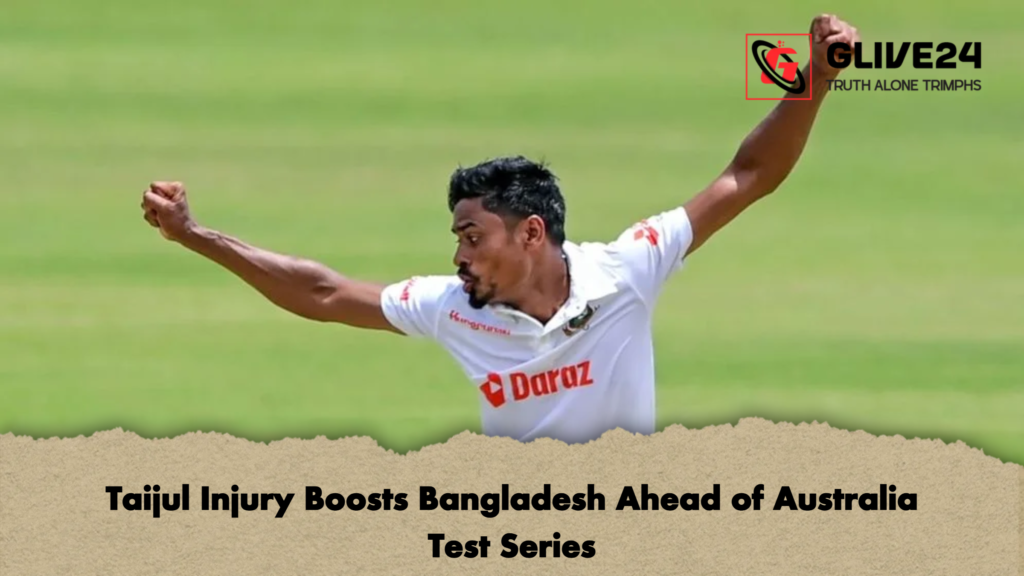
Bangladesh have received a significant boost ahead of their two-Test series in Australia, with experienced left-arm spinner Taijul Islam making encouraging progress after suffering a finger injury during the tour match against a Cricket Australia XI.
The news comes at a welcome moment for Bangladesh, who endured a deeply disappointing outing in their warm-up fixture, being bowled out for just 54 runs and subsequently losing by an innings. While the heavy defeat exposed concerns over the batting unit, Taijul’s improving condition has eased some of the uncertainty surrounding the team’s bowling resources.
Taijul sustained the injury while batting on the opening day of the match. He subsequently developed pain and swelling in the affected finger and was unable to continue participating normally. He did not bowl after Bangladesh’s first innings and was also unavailable for their second-innings batting effort.
His absence had raised concerns because Bangladesh are already dealing with questions over their squad balance. Fast bowler Nahid Rana is unavailable for the Australia tour, while uncertainty also surrounds the availability of Litton Das. Losing Taijul for the opening Test would therefore have created another significant problem for the visitors, particularly given his experience in the longer format.
Bangladesh team physiotherapist Bayzidul Islam, however, has provided an encouraging update. According to the physiotherapist, the pain and swelling in Taijul’s finger have reduced considerably since the injury. With several days still available before the opening Test, the team have an opportunity to continue his rehabilitation and gradually assess his readiness.
In a video message released by the Bangladesh Cricket Board, Bayzidul explained that Taijul had experienced pain and swelling following the incident on the first day, but that both symptoms had improved substantially. The medical team will now use the remaining preparation period to work towards getting him ready for competitive action.
Taijul’s availability could prove particularly valuable in Australian conditions. The 34-year-old has established himself as one of Bangladesh’s leading Test spinners and brings considerable experience to an otherwise demanding overseas assignment. His left-arm orthodox bowling also provides variety to the attack and gives the captain another option when attempting to control the scoring rate or break partnerships.
Nevertheless, Bangladesh are unlikely to take unnecessary risks with the spinner. His finger will need to withstand the demands of bowling in a Test match, and his ability to grip and release the ball effectively will be an important part of the final assessment. The medical and coaching staff are therefore expected to monitor his progress closely before confirming his participation.
The warm-up defeat has already highlighted areas that Bangladesh need to address before the Test series begins. Being dismissed for 54 against a Cricket Australia XI was particularly concerning, as the innings exposed the difficulties the batters faced against disciplined bowling. Adjusting to Australian conditions, coping with movement from the new ball and spending long periods at the crease will be crucial if Bangladesh are to compete effectively in the Tests.
Against that backdrop, Taijul’s improving fitness represents a timely piece of good news. His experience can strengthen Bangladesh’s bowling plans, while his ability to contribute with the bat lower down the order can also add depth to the side.
The first Test between Bangladesh and Australia is scheduled to begin in Darwin on 13 August, followed by the second and final Test in Mackay from 22 August. Those few days will give Taijul valuable time to recover, resume bowling and demonstrate that the injured finger is capable of handling the demands of Test cricket.
For Bangladesh, the immediate priority will be to put the heavy warm-up defeat behind them and build a more competitive side for the opening Test. If Taijul completes his recovery as hoped, his return could provide an important measure of stability to a team already facing several selection challenges.