
Khabor Wala Desk
Published: 21st December 2025, 8:56 AM
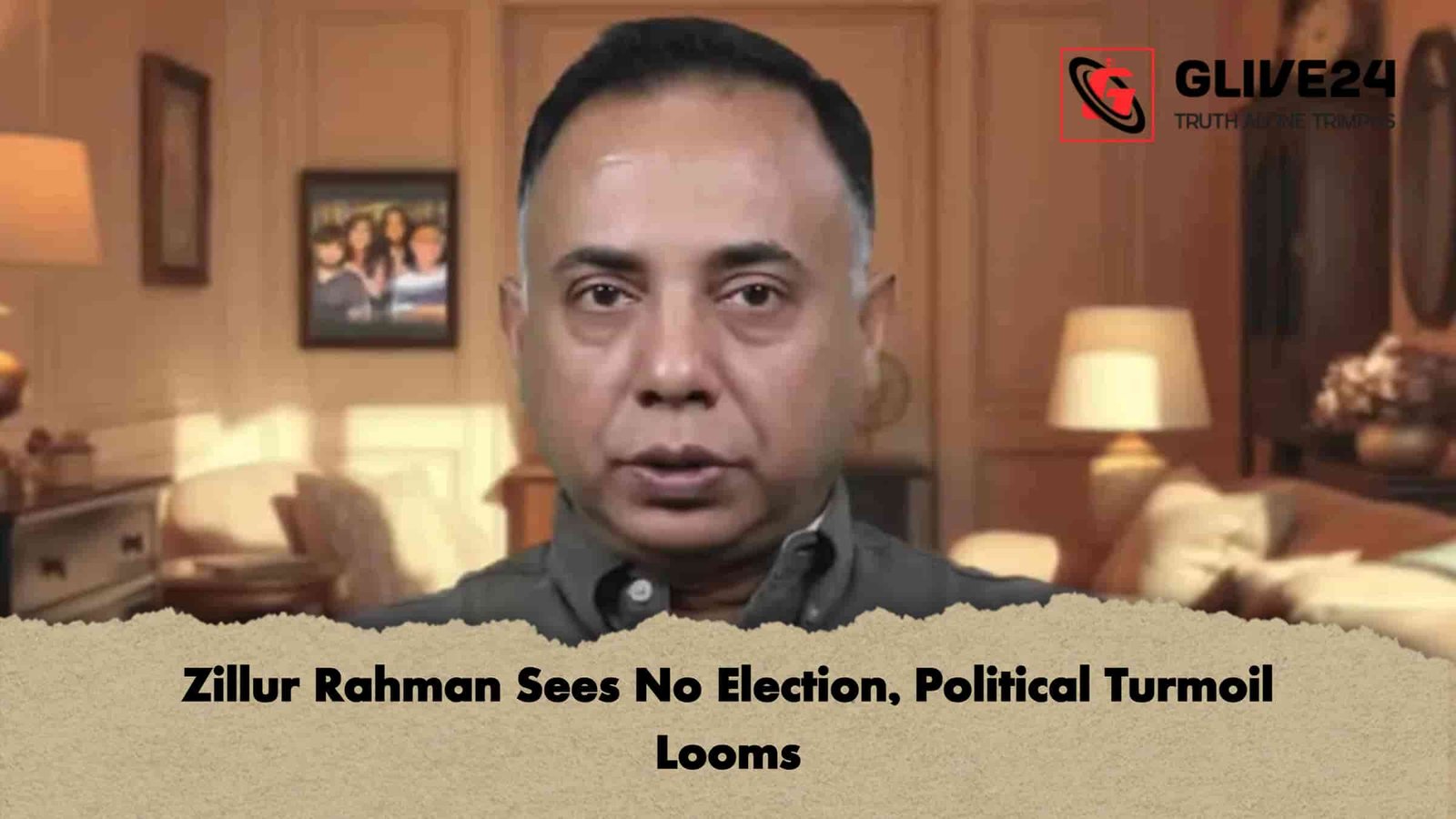
Prominent television presenter and journalist Zillur Rahman has expressed deep scepticism about the possibility of an imminent election in Bangladesh. Speaking candidly, he asserted that, given the current political realities, the country is far from being in an election-ready state. On the contrary, he warned that the nation could face increased unrest, larger public gatherings, and a surge of unforeseen events in the near future.
In a video message released on his YouTube channel on Saturday night (20 December), Zillur Rahman elaborated on his assessment of the political climate. He noted that Bangladesh is currently experiencing a period in which calls for a ‘revolutionary government’ have grown increasingly vocal. He added that he had predicted such developments well in advance, yet he observed that many people continue to hold out hope for elections. “Amid all this, much more will unfold. When and why millions of people will converge on Dhaka—whether in sorrow or celebration—I am not speculating. The reality is, I do not foresee an election,” he said.
Addressing the recent assassination of Sharif Osman Hadi, a July uprising leader, spokesperson for the Inquilab Platform, and potential independent candidate for Dhaka-8, Zillur Rahman emphasised that no death should ever be trivialised. “Every loss is painful, sorrowful, and tragic. The formal honours, large funerals, or state declarations of mourning cannot truly alleviate the grief experienced by the family. Despite official statements, questions remain over how much responsibility the state actually bears,” he remarked.
Zillur also reflected on the risks of speaking the truth in such a charged environment. He admitted that his political commentary has occasionally led to tensions, even with close associates. Nevertheless, he stressed that his consistency in expressing views through writing and public statements has remained intact. Many of the events he had warned about in previous years have, he noted, materialised in various forms.
He paid tribute to those who sacrificed their lives during the July–August uprising, highlighting the courage of Abu Saeed in particular. Standing resolutely before armed threats, Abu Saeed’s defiance was, he suggested, crucial to the uprising’s character, prompting society to reflect on how much it has done to honour such contributions.
Concluding his remarks, Zillur Rahman criticised the current political landscape, where parties and factions frequently attack one another. “It is vital to acknowledge past injustices and to recognise wrongdoing in the present. Those who once remained silent now speak loudly, while many shy from defending their rights, shifting all blame onto others. This contradiction is striking,” he observed.



Comments