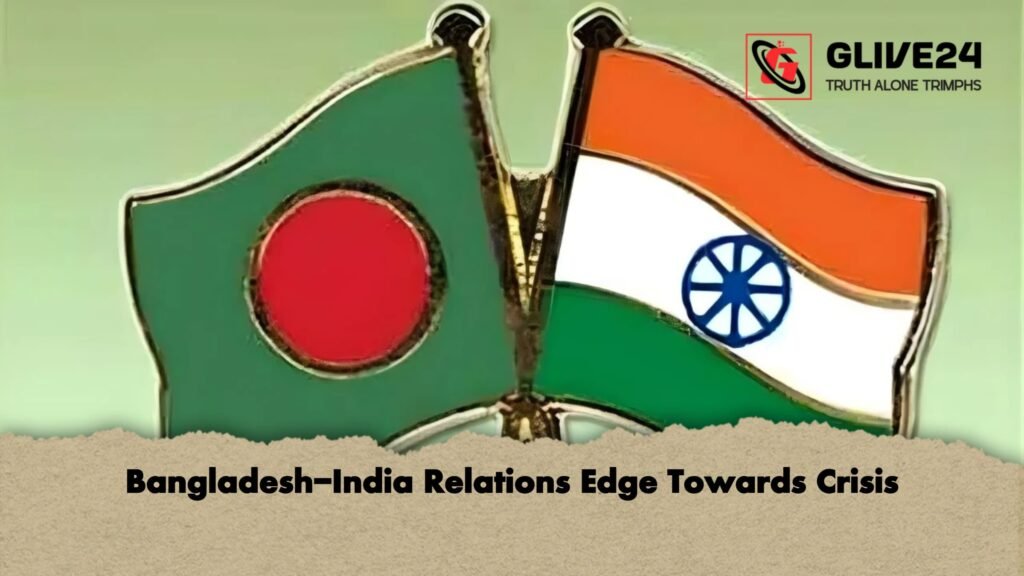
Tensions between Bangladesh and India, which escalated following the dramatic political developments of 5 August, have intensified, raising serious concerns over the security of diplomatic missions in both countries. The latest incidents have underscored the fragility of bilateral ties and the potential for further diplomatic strain.
On Monday, the Indian Visa Application Centre (IVAC) in Chattogram suspended operations indefinitely, citing security concerns. This follows temporary closures last week of IVAC offices in Dhaka, Khulna, and Rajshahi, which were each shut for a single day amid protests and perceived threats to staff safety.
The diplomatic row has been exacerbated by contrasting accounts of recent demonstrations in Bangladesh and India. India’s Ministry of External Affairs spokesperson, Randeep Jaiswal, claimed that a protest in Mymensingh on Saturday involving 20–25 youths against the killing of garment worker Dipu Chandra Das posed no threat to the Indian mission. He criticised Bangladeshi media for spreading what he described as “misleading propaganda,” stating that police had quickly dispersed the demonstrators.
However, Bangladesh’s Foreign Affairs Adviser, Md. Tauhid Hossain, strongly rejected India’s version during a press briefing in Dhaka. He maintained that the Bangladeshi High Commission in New Delhi had been directly threatened and that protesters, identified as Hindu extremists, had entered sensitive areas, shouting slogans and issuing threats against High Commissioner Riaz Hamidullah, who resides there with his family. Hossain emphasised that the staff felt vulnerable with only two guards on duty, and he stressed that it is the host country’s responsibility to ensure the safety of diplomatic missions, in line with standard international practice.
Hossain also addressed the killing of Dipu Chandra Das in Mymensingh, stressing that it was a brutal murder of a Bangladeshi citizen and could not be equated with concerns over minority security in India. He noted that Bangladeshi authorities had taken immediate action and urged other regional states to uphold similar standards.
Bilateral tensions have also been inflamed by long-standing grievances, including restrictions on Indian visas and trade following former Prime Minister Sheikh Hasina’s flight to India on 5 August. Dhaka has repeatedly requested her return after death sentences were issued by the International Crimes Tribunal, but India has deferred these requests. Reports that a suspect in the killing of Inkilab Manch leader Sharif Osman Hadi has fled to India have further strained relations.
In mid-December, Bangladesh summoned Indian High Commissioner Pranay Verma to express concern over alleged anti-Bangladesh activities by Awami League leaders in India, calling for the arrest and repatriation of suspects. India denied the allegations, asserting its territory was not being used against Bangladesh. Later, India summoned the Bangladeshi High Commissioner to express concern over “deteriorating security” and the lack of evidence shared regarding ongoing investigations.
Security concerns have also affected operational decisions in Dhaka. On the same day, the Jamuna Future Park IVAC closed at 2 pm as a precaution, following protests under the “July Unity” banner demanding Hasina’s return. Police successfully prevented the marchers from reaching the High Commission.
Analysts warn that unless both governments take coordinated action to address security issues and restore trust, Bangladesh-India relations could deteriorate further, with implications for trade, diplomacy, and regional stability.