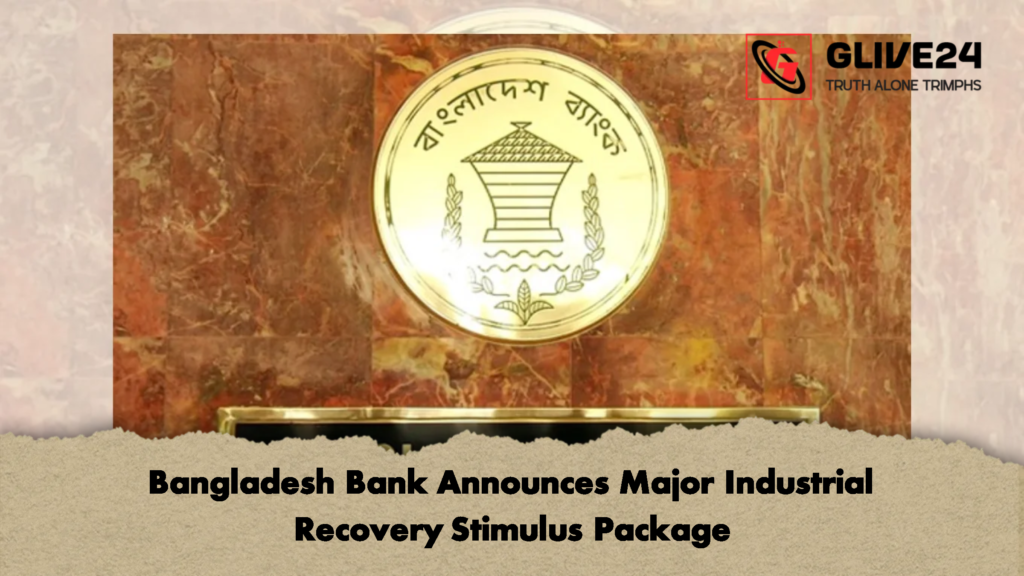
Bangladesh Bank has officially introduced a substantial macroeconomic stimulus package valued at 60,000 crore Taka. This specialized incentive fund has been designed to revitalise the industrial sector and stimulate the wider national economy, allowing domestic entrepreneurs to secure credit lines at a heavily subsidised interest rate of 7 per cent.
The strategic initiative was formally announced on Saturday, 23 May 2026, by the Governor of Bangladesh Bank, Mostakur Rahman, during a press conference held in the capital city of Dhaka. The Governor specified that the fundamental objectives of this multi-billion Taka intervention are to facilitate the reopening of closed factories, generate fresh employment opportunities, and systematically counteract the prevailing economic stagnation.
Governor Rahman elaborated that the central bank is actively utilising a “counter-cyclical intervention” policy framework to boost credit flow, private sector investment, and aggregate domestic demand. He noted that during periods of pronounced economic deceleration, tailored monetary stimulus packages serve as critical regulatory mechanisms to restore operational momentum across key production sectors.
Structural Funding Mechanism and Interest Subsidies
The financial architecture of the 60,000 crore Taka stimulus package relies on a joint funding model involving commercial banking channels and central bank reserves. The capital allocation is split into two primary components to ensure liquidity:
-
Commercial Bank Liquidity: Private and public commercial banks will directly supply 41,000 crore Taka from their loanable funds.
-
Central Bank Refinancing: Bangladesh Bank will establish a dedicated refinance scheme worth 19,000 crore Taka to support participating financial institutions.
To make the borrowing terms financially viable for industrial owners, the Government of Bangladesh will provide a 6 per cent interest subsidy. Consequently, while the actual market cost of capital remains higher, the final borrowing entrepreneurs will only be liable to pay a net interest rate of 7 per cent.
According to statistical projections compiled by Bangladesh Bank, the implementation of this comprehensive economic recovery programme is estimated to generate direct and indirect employment for approximately 2.5 million individuals nationwide.
Sectoral Allocations and Employment Targets
The central bank has segmented the total stimulus package into targeted allocations based on the urgency and economic output of various sectors:
| Targeted Sector / Industry | Capital Allocation | Primary Eligible Expenses | Expected Employment Generation |
| Closed Industries & Services | 20,000 crore Taka | Raw material imports, production costs, worker salaries, export activities | 200,000 individuals |
| Agriculture & Rural Economy | 10,000 crore Taka | Rural credit expansion, farming infrastructure, agricultural inputs | 900,000 individuals |
| Export Diversification & Northern Agro-Hubs | 6,000 crore Taka | Supply chain development, agro-processing facilities in northern districts | Specified regional growth |
| CMSMEs | 5,000 crore Taka | Cottage, micro, small, and medium enterprise working capital | 500,000 individuals |
The single largest portion of the fund, amounting to 20,000 crore Taka, has been ring-fenced exclusively for the resuscitation of closed manufacturing plants and struggling service sectors. Borrowers in this category are permitted to utilise the capital to clear outstanding workers’ wages, manage operational overheads, import essential raw materials, and resume international export operations.
Furthermore, the allocation of 6,000 crore Taka for export diversification aims to reduce the country’s reliance on single-sector exports while simultaneously establishing specialized agricultural processing hubs across the northern regions of the country.
Refinance Scheme Priorities
The 19,000 crore Taka refinance window managed directly by Bangladesh Bank will prioritize specific high-impact segments of the economy. Financial institutions drawing from this refinancing facility must direct credit toward pre-shipment credit lines, micro-entrepreneurs, and the leather and footwear manufacturing sectors.
Additional priority guidelines cover fisheries exports, green financing initiatives, tech-focused startups, and the creative economy. The central bank has also integrated a distinct social aspect into the scheme, instructing banks to prioritize loan applications that directly facilitate employment for returnee migrant workers and unemployed youths.
Bangladesh Bank concluded its briefing by stating that the coordinated capital injection will effectively drive industrial investments, re-establish idle manufacturing capacity, enhance cash liquidity within the market, and strengthen internal demand across the domestic economy.